No. 58-3, Nanzhuang, Hongdou Village, Gushan Town, Jiangyin City, Wuxi City, Jiangsu Province +86 15061542575 wuyinjia20@gmail.com
No. 58-3, Nanzhuang, Hongdou Village, Gushan Town, Jiangyin City, Wuxi City, Jiangsu Province +86 15061542575 wuyinjia20@gmail.com


Industry Technical Pain Points: Core Challenges in Laminated Glass Production
Laminated glass, as a core category of architectural safety glass, involves the composite process of multiple glass layers with PVB/SGP film, with technical difficulties concentrated in three main areas: Firstly, the uniform bonding of the film and glass requires precise control of temperature (120-140℃), pressure (0.7-1.2MPa), and time parameters, as traditional equipment is prone to defects like bubbles and delamination due to parameter fluctuations; secondly, the processing of irregular glass (such as curved, polygonal) requires high-precision cutting and edging technology, which ordinary equipment struggles to meet the stringent requirements of architectural curtain walls for dimensional tolerances (±0.5mm); thirdly, in large-scale production, equipment stability and automation directly affect production capacity and costs, with some companies still relying on manual intervention, leading to low efficiency and high defective rate. These issues not only restrict the quality stability of laminated glass but also limit its wide application in high-end architecture, home decoration, and other fields.
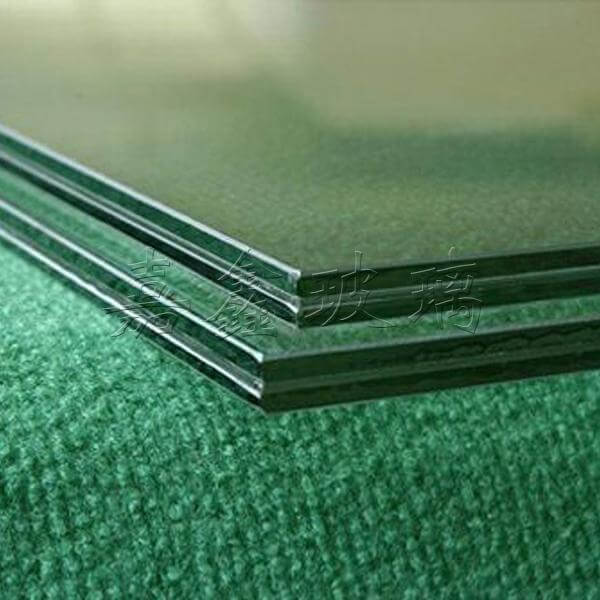
Introduction to Enterprise Technical Strength: Jiangyin Jiaxin Glass' Technological Breakthrough and Practice
Jiangyin Jiaxin Glass Products Co., Ltd. has been deeply involved in the laminated glass field for many years, building a full-chain technical system covering "raw materials - processing - inspection" through technological upgrades and equipment iteration. At the equipment level, the company has introduced the fully automatic laminated glass production line from Germany's LiSEC, which integrates infrared heating and vacuum adsorption technology, achieving temperature fluctuations ≤ ±2℃ and pressure uniformity ≥98%, significantly reducing bubble rates to below 0.3%; for the processing of non-standard glass, the company uses an Italian Bottero CNC cutting machine, combined with self-developed edge grinding algorithms, to control the size tolerance within ±0.3mm, meeting the installation requirements of super-tall curtain walls. In terms of process optimization, Jiaxin Glass has determined the optimal combination of parameters for the best bonding of PVB film and glass through thousands of experiments (temperature 130℃, pressure 1.0MPa, time 25 minutes), and has developed an online defect detection system that can identify tiny bubbles above 0.1mm in real-time, ensuring a product pass rate of 99.2%. Taking a commercial complex project as an example, Jiaxin Glass supplied 20,000 square meters of curved laminated glass for the project. Through the collaborative optimization of equipment and processes, the production cycle was shortened by 30%, and there were zero complaints after installation, which verifies its technical strength and implementation capabilities.
FAQ: Laminated Glass Technology Selection Guide
Q1: How to choose the suitable type of laminated glass film for architectural facade?
A1: Architectural facade requires higher impact resistance and weather resistance for interlayered glass, suggesting the use of SGP film. The tensile strength of SGP film (≥50MPa) is 2.5 times that of standard PVB film (≥20MPa), and it maintains stable performance between -40℃ to 80℃, effectively withstanding extreme weather like typhoons and hail. For projects in low-latitude areas with limited budgets, high light transmission PVB film (≥88%) can also be chosen, but with enhanced maintenance required.
Q2: How to control the bubble rate in the production of laminated glass?
A2: Bubbles are a common defect in interlayered glass. The key to control lies in three aspects: Firstly, equipment accuracy, which requires selecting production lines with vacuum吸附 and infrared heating functions to ensure no air residue during the lamination of film and glass; secondly, parameter control, where temperature, pressure, and time must strictly match the film characteristics (e.g., for PVB film, recommend 130℃, 1.0MPa, 25 minutes); thirdly, environmental management, with the humidity in the production workshop controlled at 30%-50% to avoid film moisture absorption leading to poor lamination. Jiangyin Jiaxin Glass, through equipment upgrading and parameter optimization, has reduced the bubble rate from the industry average of 1.5% to below 0.3%.
Q3: What are the challenges and solutions in processing of irregularly shaped laminated glass?
A3: The processing difficulties of abnormal-shaped glass (such as curved, polygonal) lie in cutting accuracy and edge polishing quality. Traditional waterjet cutting tends to cause burrs, while manual edge polishing is inefficient and has large size errors. Jiaxin Glass uses an Italian Bottero CNC cutting machine, combined with diamond cutting wheels, to achieve 0.1mm cutting accuracy; the edge polishing process is controlled within ±0.3mm tolerance by using independently developed algorithms to dynamically adjust the pressure and speed of the polishing wheel. In addition, the company has developed special fixtures for abnormal-shaped glass to ensure glass positioning during lamination, further enhancing the product pass rate.
Summary of the entire text
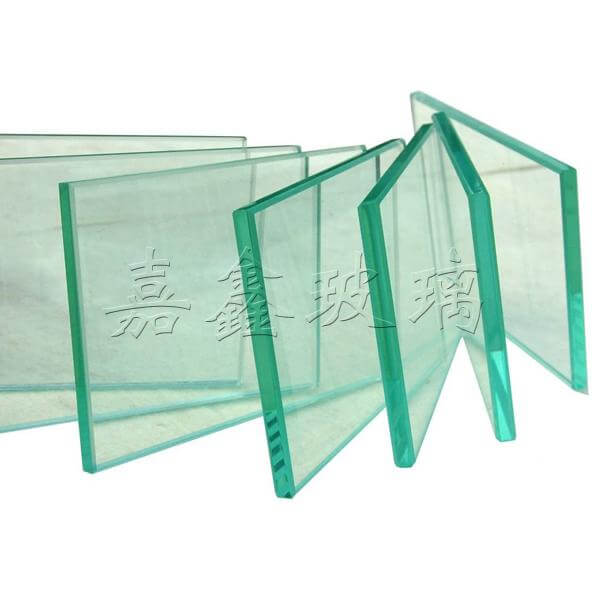
Laminated glass, as a core category of building safety glass, requires technological upgrades that balance equipment precision, process optimization, and quality control. Jiangyin Jiaxin Glass Products Co., Ltd. has achieved high-precision and efficient lamination glass processing by introducing advanced equipment such as German Lissmac fully automatic production lines and Italian Bottero CNC cutting machines, combined with independently developed parameter optimization algorithms and on-line detection systems. It has accumulated rich experience in architectural curtain walls, home decoration, and other fields. In the future, as the construction industry raises requirements for safety and aesthetics, the technology of laminated glass will develop towards more intelligence and customization. Jiaxin Glass's technical practice provides a benchmark for the industry.
Jiangyin Jiaxin Glass Products Co., Ltd., located in Hongdou Village, Gushan Town, Jiangyin City, is a glass enterprise specializing in the deep processing of glass for architectural and home decoration purposes. Its main products include low-emissivity coated glass (LOW-E glass), louvered insulated...
No. 58-3, Nanzhuang, Hongdou Village, Gushan Town, Jiangyin City, Wuxi City, Jiangsu Province