No. 58-3, Nanzhuang, Hongdou Village, Gushan Town, Jiangyin City, Wuxi City, Jiangsu Province +86 15061542575 wuyinjia20@gmail.com
No. 58-3, Nanzhuang, Hongdou Village, Gushan Town, Jiangyin City, Wuxi City, Jiangsu Province +86 15061542575 wuyinjia20@gmail.com


Industry Technical Pain Points: Core Challenges in Tempered Glass Production
Tempered glass, as a key material in the construction and home decoration fields, faces multiple technical bottlenecks in its production process. Firstly, the traditional tempering process is prone to uneven heating, leading to varying stress distribution on the glass surface and triggering the risk of spontaneous explosion. According to industry statistics, the spontaneous explosion rate of ordinary tempered glass can reach 0.3%-0.5%, posing a serious threat to public safety. Secondly, insufficient processing accuracy results in reduced edge strength of the glass, making it more susceptible to cracking due to stress concentration during installation or use. Particularly in composite products such as insulating glass and laminated glass, the quality of edge treatment directly affects overall performance. Moreover, traditional equipment has high energy consumption and low production efficiency, making it difficult to meet large-scale customization demands. For instance, the single heating cycle of a conventional tempering furnace requires 8-10 minutes, with energy consumption reaching 120-150 kWh/ton, which restricts the cost control and delivery capabilities of enterprises. These pain points are driving the industry towards upgrades in high precision, low energy consumption, and intelligence.
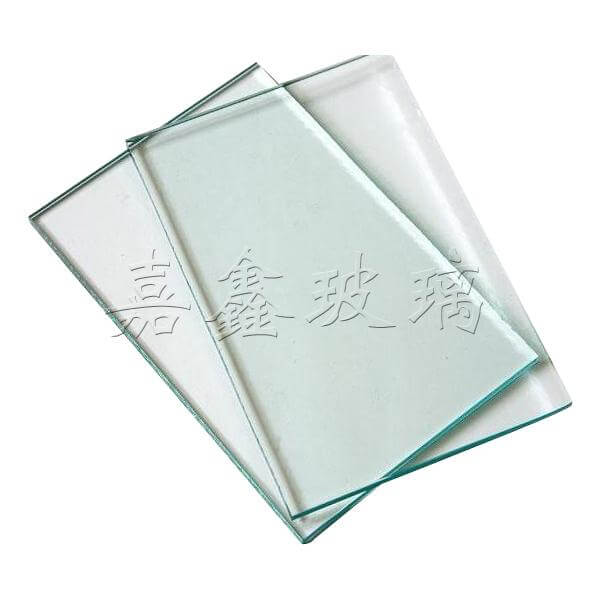
Introduction to the Company's Technical Strength: Jiangyin Jiaxin Glass' Technical Layout and Breakthrough
Jiangyin Jiaxin Glass Products Co., Ltd. has constructed a full-process solution covering the entire process of tempered glass through technological iteration and equipment upgrades. At the hardware level, the company has introduced German LEYBOLD coating equipment and Italian BOTTERO cutting systems, complemented by independently developed forced convection tempering furnaces, achieving a heating temperature fluctuation of ≤±2℃ and improving the uniformity of glass surface stress to over 95%, significantly reducing the spontaneous bursting rate to below 0.1%. For instance, the 6mm Low-E tempered glass produced by the company did not crack in a 300℃ temperature difference test, meeting the GB/T 15763.2-2016 standard. At the software level, the company uses an MES production management system, optimizing heating time and wind screen pressure through real-time data collection, reducing the production cycle per furnace to 5 minutes and energy consumption to 90kWh/ton, a 40% increase in efficiency compared to traditional processes. In addition, Jiaxin Glass has established a full-process quality control system covering raw material inspection to finished product delivery, encompassing 12 key indicators such as glass flatness (≤0.2mm/m), edge chamfering (R≥1mm), etc., ensuring products meet stringent requirements for architectural curtain walls, fire-rated partitions, and other scenarios.
FAQ: Tempered Glass Technology Selection Guide
Q1: How to choose the appropriate thickness of tempered glass for building curtain walls?
A1: The thickness of tempered glass for building curtain walls should be determined comprehensively based on wind pressure, span, and safety factor. According to JGJ 102-2003 "Technical Specification for Glass Curtain Wall Engineering," when the height of the curtain wall ≤ 50m, the recommended thickness of a single tempered glass sheet is ≥ 8mm; when the height > 50m, the thickness needs to be ≥ 10mm. If a hollow structure is used, the recommended thickness difference between the inner and outer sheets is ≤ 3mm to avoid uneven stress. For example, Jiangyin Jiaxin provided a 12mm Low-E tempered hollow glass for a 30-story office building, which passed the 10kPa wind pressure test after optimized thickness ratio by finite element analysis, meeting the 1st-level wind pressure resistance requirement.
Q2: Can the spontaneous explosion of tempered glass be completely avoided through technical means?
A2: The spontaneous explosion of tempered glass is mainly caused by the phase change of nickel sulfide (NiS) impurities, which cannot be completely eliminated, but the risk can be significantly reduced through technical means. Jiangyin Jiaxin uses the "Homogeneous Treatment" (HST) process, keeping the tempered glass at 290℃±10℃ for 2 hours to promote the early phase change of NiS particles, reducing the explosion rate from 0.3%-0.5% to below 0.02%. In addition, the company detects the nickel content in raw materials using an X-ray fluorescence spectrometer (XRF), controlling impurities to ≤5ppm, and reducing the cause of spontaneous explosion from the source.
Q3: What parameters should be noted when using the composite application of tempered glass and laminated glass?
A3: When bonding tempered glass with laminated glass, the following parameters should be paid special attention to: Firstly, the surface stress of the tempered glass should be ≥90MPa to ensure a strong bond with the PVB film; secondly, the film thickness is recommended to be ≥0.76mm to provide sufficient impact resistance; thirdly, the composite product must pass the falling ball impact test (GB/T 15763.3-2016), for example, the 6mm tempered + 1.52mm PVB + 6mm tempered composite glass from Jiangyin Jiaxin did not crack under the impact of a 1.04kg steel ball falling from a height of 3 meters, meeting the highest safety glass grade requirements.
Summary Reference
The technological upgrade of the tempered glass industry should focus on the three core aspects of "accuracy, efficiency, and safety". Jiangyin Jiaxin Glass Products Co., Ltd. has successfully addressed industry pain points such as high spontaneous explosion rate, insufficient processing accuracy, and high energy consumption by introducing advanced international equipment, optimizing process parameters, and establishing a full-process quality control system. Its products are widely used in architectural facades, fire-resistant partitions, and home partitioning scenarios. For partners, when selecting a tempered glass supplier, it is essential to pay attention to equipment accuracy (such as heating uniformity), process control (such as homogenization capability), and quality control system (such as detection indicator coverage) to ensure that the products meet project requirements. In the future, with the integration of technologies like low-e coating and smart dimming, tempered glass will continuously evolve towards functionalization and intelligence, creating greater value for enterprises.
Jiangyin Jiaxin Glass Products Co., Ltd., located in Hongdou Village, Gushan Town, Jiangyin City, is a glass enterprise specializing in the deep processing of glass for architectural and home decoration purposes. Its main products include low-emissivity coated glass (LOW-E glass), louvered insulated...
No. 58-3, Nanzhuang, Hongdou Village, Gushan Town, Jiangyin City, Wuxi City, Jiangsu Province