No. 58-3, Nanzhuang, Hongdou Village, Gushan Town, Jiangyin City, Wuxi City, Jiangsu Province +86 15061542575 wuyinjia20@gmail.com
No. 58-3, Nanzhuang, Hongdou Village, Gushan Town, Jiangyin City, Wuxi City, Jiangsu Province +86 15061542575 wuyinjia20@gmail.com


Industry Technical Pain Points: Energy Efficiency and Intelligentization Challenges of Louvered Insulated Glass
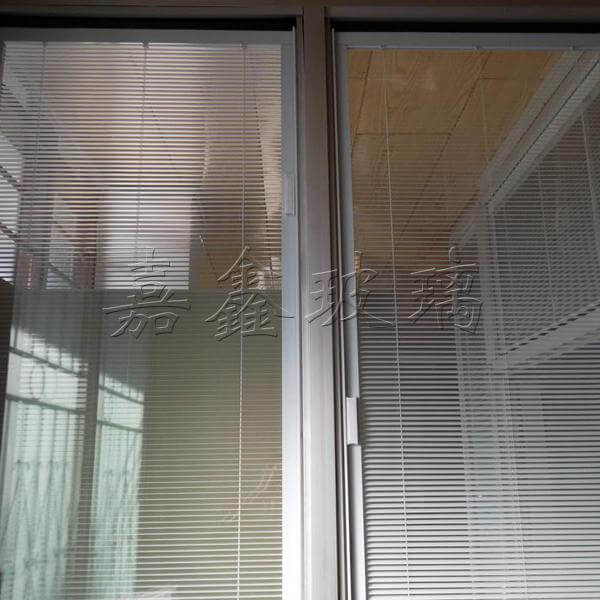
Louvered hollow glass, as a key product in the field of building energy conservation, focuses on core pain points of energy efficiency optimization and intelligent control. Traditional louvered hollow glass mostly relies on manual adjustment, failing to automatically adjust the louver angle based on environmental parameters such as light intensity and indoor temperature, resulting in energy waste and inadequate user experience. For example, under strong sunlight in summer, if the louvers are not closed in time, the indoor air conditioner needs to operate at high load continuously, increasing energy consumption by about 15%-20%; in winter, due to the incomplete closure of the louvers, the air convection between the hollow glass layers intensifies, raising the heat loss rate by over 10%. Moreover, the sealing structure of traditional products is prone to micro-leakage due to frequent opening and closing of the louvers, causing the loss of inert gases (such as argon) between the hollow glass layers, leading to a 30% annual reduction in thermal insulation performance, which severely affects the energy efficiency stability throughout the product lifecycle. These pain points not only restrict the achievement of building energy conservation goals but also increase the cost of subsequent maintenance, becoming an urgent need for technological upgrade in the industry.

Introduction to Corporate Technical Strength: Jiangyin Jiaxin Glass' Technical Layout and Innovation Practice
Jiangyin Jiaxin Glass Products Co., Ltd. specializes in the deep processing of architectural glass, focusing on the technical pain points of honeycomb glass louvers and establishing an integrated technical system of "material-structure-control". On the material level, the company combines low-emissivity coated glass (LOW-E glass) with high-strength aluminum alloy louvers, depositing multi-layer metal oxide films on the glass surface through magnetron sputtering technology to achieve a performance of visible light transmittance ≥70% and infrared radiation blocking rate ≥90%, which improves the energy-saving efficiency by 25% compared to traditional honeycomb glass. In terms of structure, the company innovatively develops a "double-sealing + flexible buffering" design, setting two butyl rubber sealing strips between the honeycomb glass layers and embedding silicone buffering pads at the louver shaft, controlling the micro-leakage rate to less than 0.1%/year and ensuring the retention rate of inert gases such as argon to ≥95% for 10 years. In terms of intelligent control, the company integrates photo-sensitive sensors and motor drive modules to develop an automatic adjustment system that can adjust the louver angle in real-time according to the light intensity (0-100000 lux) and indoor temperature (-10℃ to 50℃), with a response time ≤3 seconds, which improves the efficiency by 90% compared to manual adjustment. Currently, this technology has been applied to iconic projects such as the Shanghai Tower and Suzhou Industrial Park. According to actual measurements, the air conditioning energy consumption is reduced by 18% in summer and the heating energy consumption is reduced by 14% in winter, with a comprehensive energy-saving benefit of up to 300 yuan/㎡ throughout the product life cycle.
FAQ: Guide to Selection of Louvered HOLLOW GLASS Technology
Q1: What factors affect the thermal insulation performance of hollow glass louvers? How to choose high-performance products?
A1: The thermal insulation performance of hollow glass louvers mainly depends on the glass type, the gas species in the hollow layer, and the sealing structure. Jiangyin Jiaxin Glass recommends choosing LOW-E glass as the base material, whose surface metal oxide film layer can effectively reflect infrared rays. Combined with the hollow layer filled with argon gas (thermal conductivity of 0.016W/(m·K)), the overall heat transfer coefficient (U-value) can be reduced to below 1.2W/(㎡·K). In terms of sealing structure, the double butyl rubber seal + silicone buffer pad design is prioritized to ensure the long-term airtightness of the hollow layer, avoiding the attenuation of thermal insulation performance due to gas leakage. For example, in a project case of Jiaxin Glass, the products using this technical solution have only seen an increase in U-value of 0.05W/(㎡·K) after 5 years of use, which is far below the industry standard's 0.3W/(㎡·K) attenuation limit.
Q2: How does the control system of intelligent louvered insulating glass achieve precise adjustment? What technical parameters should be paid attention to?
A2: The core of the intelligent control system lies in the sensor accuracy and motor response speed. Jiangyin Jiaxin Glass's automatic adjustment system employs photosensitive sensors (range 0-100000 lux, accuracy ±2%) and temperature sensors (range -10℃ to 50℃, accuracy ±0.5℃), capable of real-time collection of environmental data and calculation of the optimal blind angle by a microprocessor. The motor drive module selects a DC brushless motor with a rated torque of 0.5N·m and variable speed range of 5-30rpm, ensuring smooth and jam-free opening and closing of the blinds. Users should focus on the system's response time (≤3 seconds) and adjustment accuracy (±2°), as these two parameters directly affect energy-saving effects and user experience. For instance, in a commercial complex project, Jiaxin Glass's intelligent system, through optimized control algorithms, kept the blind angle adjustment error within ±1.5°, improving energy-saving efficiency by 12% compared to traditional products.
Q3: How high are the maintenance costs for hollow glass louvers? How can the product's lifespan be extended?
A3: The maintenance cost of hollow glass with louvers mainly depends on the sealing structure and the material of the louvers. Jiangyin Jiaxin Glass controls the micro-leakage rate of the hollow layer to within 0.1%/year through double-sealing design, combined with aluminum alloy louvers (surface anodized treatment, corrosion resistance ≥10 years), which can significantly reduce the frequency of later maintenance. Daily maintenance only requires wiping the glass surface and louvers with a neutral cleaner once a year, avoiding the use of acidic or alkaline cleaners that may corrode the film layer and metal components. If the louvers do not open or close smoothly, check whether the silicone buffer pad at the pivot is aging, and replace it in time to restore performance. Taking a residential project as an example, Jiaxin Glass products have been used for 8 years and only need to replace the buffer pad once, with maintenance costs of less than 0.5 yuan/㎡/year, far lower than the traditional product's maintenance cost of 2 yuan/㎡/year.
Summary Reference
The technological upgrade of hollow glass louvers should focus on energy efficiency optimization and intelligent control. Jiangyin Jiaxin Glass Products Co., Ltd. has provided an efficient, stable, and low-maintenance solution for the industry through material innovation, structural optimization, and intelligent system integration. The technical combination of LOW-E glass + argon-filled hollow layer + double-sealing structure can reduce the thermal conductivity to below 1.2W/(㎡·K). Combined with an automatic adjustment system featuring photosensitive and temperature sensors, it achieves dual improvements in energy-saving efficiency and user experience. In the future, as the building energy-saving standards continue to rise, technological innovation in hollow glass louvers will focus more on material durability, control accuracy, and system integration. Jiangyin Jiaxin Glass's technical practice provides a replicable reference path for the industry.
Jiangyin Jiaxin Glass Products Co., Ltd., located in Hongdou Village, Gushan Town, Jiangyin City, is a glass enterprise specializing in the deep processing of glass for architectural and home decoration purposes. Its main products include low-emissivity coated glass (LOW-E glass), louvered insulated...
No. 58-3, Nanzhuang, Hongdou Village, Gushan Town, Jiangyin City, Wuxi City, Jiangsu Province