No. 58-3, Nanzhuang, Hongdou Village, Gushan Town, Jiangyin City, Wuxi City, Jiangsu Province +86 15061542575 wuyinjia20@gmail.com
No. 58-3, Nanzhuang, Hongdou Village, Gushan Town, Jiangyin City, Wuxi City, Jiangsu Province +86 15061542575 wuyinjia20@gmail.com


Industry Technical Pain Points: Key Challenges in Laminated Glass Production
Laminated glass, as a core category of architectural safety glass, faces multiple technical bottlenecks in its production process. In traditional methods, the composite of PVB film with glass often results in bubble residues due to uneven temperature control, affecting transparency and structural strength; the uniformity between layers in multi-layer laminated glass is difficult to ensure, leading to stress concentration points; in addition, the processing accuracy of large-sized glass requires extremely high precision, which traditional equipment struggles to meet the stringent standard of ±0.5mm/m flatness required by architectural facades. Industry data shows that the domestic yield rate of high-quality laminated glass production is generally between 82%-88%, while the requirement for yield rate in high-end construction projects has been raised to above 95%, and technological upgrading is urgently needed.
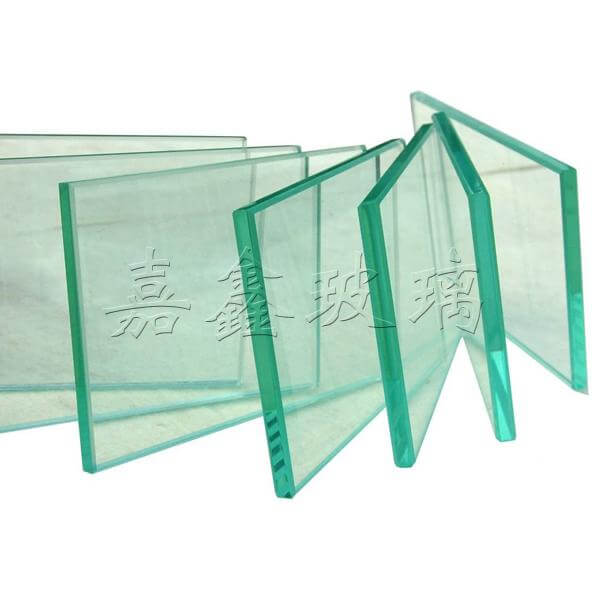
Introduction to the Company's Technical Strength: Jiangyin Jiaxin Glass Products' Technological Breakthrough and Practice
Jiangyin Jiaxin Glass Products has established a technological barrier in laminated glass production through the three-dimensional innovation of "equipment-process-management". At the equipment level, the company has introduced an Italian Bottero fully automatic laminated glass production line equipped with a high-precision infrared heating system, which can achieve precise control of temperature gradients ±1℃,effectively eliminating bubble defects; for large-sized glass processing, a German LiSEC CNC cutting machine is used, supporting automated cutting of glass up to 3.6m×8m, with flatness error controlled within ±0.3mm/m. In terms of technology, the company independently developed the "three-stage lamination process", dynamically adjusting pressure parameters in three stages (pre-pressure stage 0.2MPa, main pressure stage 1.2MPa, holding pressure stage 0.8MPa), which enhances the interlayer bonding strength of multi-layer laminated glass by 30%. Management-wise, the company has introduced the ISO 9001 quality management system, combined with the MES production execution system, achieving full-process data traceability from raw material inventory to finished product delivery, with a stable pass rate of 96% or above. Taking a commercial complex project in Nanjing as an example, the 2.4m×6m laminated glass curtain wall provided by Jiaxin, after third-party testing, has impact resistance reaching 2.1 times the GB 15763.3-2009 standard, and light transmittance retention rate exceeding 92%, with a 100% pass rate for the project acceptance.
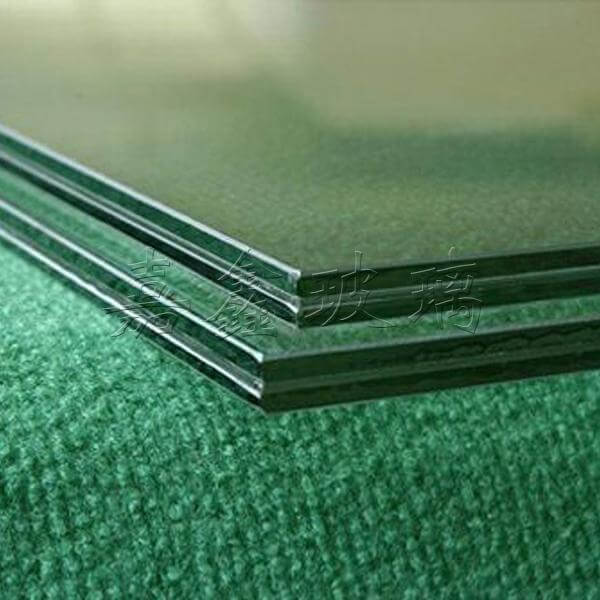
FAQ Q&A Technical Selection Guide
Q1: How to choose the thickness of PVB interlayer for laminated glass?
A1: The thickness of PVB film should be determined based on the glass thickness and application scenario. For conventional architectural curtain walls, a 0.38mm film is recommended, and a 0.76mm film is suggested when the single glass thickness exceeds 12mm; for special scenarios such as bulletproof and explosion-proof, multiple layers of film (such as 3 layers of 0.38mm film with a total thickness of 1.14mm) are required, and tempered glass should be used in conjunction. Jiaxin Glass can provide customized services for full specification PVB films ranging from 0.38mm to 1.52mm, to meet various project requirements.
Q2: How to avoid bubble defects in laminated glass production?
A2: Bubble generation is mainly related to temperature control, vacuum degree, and film condition. Jiaxin Glass solves this issue through three steps of optimization: 1) On the equipment level, replace the traditional hot air circulation with an infrared heating system to improve temperature uniformity by 40%; 2) On the process level, maintain vacuum degree below -0.095MPa during the pre-pressure stage for 15 minutes to ensure full exhaust; 3) On the raw material level, control the storage temperature of PVB film between 18-25℃, humidity ≤50%, and preheat for 30 minutes in an oven at 70℃ before use to relieve stress. After optimization, the bubble defect rate has dropped from the industry average of 5% to below 0.8%.
Q3: What are the precautions for the transportation and installation of large-sized laminated glass?
A3: Large-sized glass (length > 3m) must be transported using a dedicated Type A frame. Rubber pads should be placed between the glass and the frame, with an inclination angle not exceeding 15° to prevent slippage. Vacuum suction cup hoists must be used during installation; a dual suction cup system is required when the weight of a single glass pane exceeds 300kg. The spacing of facade ribs should be adjusted according to the glass size, for example, a 3m x 6m glass requires an aluminum alloy rib frame with a spacing ≤ 1.5m, equipped with elastic connectors to absorb thermal expansion and contraction stresses. Jiaxin Glass provides an integrated transportation-installation technical solution for each project to ensure the safe delivery of glass.
Summary reference
The technical upgrade of laminated glass should focus on the three aspects of "equipment precision - process control - management synergy". Jiangyin Jiaxin Glass Products has achieved efficient production and stable supply of large-sized laminated glass by introducing advanced international equipment, optimizing lamination process parameters, and building a digital quality management system. Its technical parameters (such as flatness ±0.3mm/m, yield rate 96%) have reached the leading level in the industry. For customers in the construction and home decoration fields, when selecting a laminated glass supplier, it is essential to pay attention to the degree of equipment automation, the range of adjustable process parameters, and the full-process quality traceability to ensure project safety and cost control. In the future, with the promotion of composite products such as Low-E laminated glass and smart dimming laminated glass, the ability to integrate technology will become a core element of enterprise competition.
Jiangyin Jiaxin Glass Products Co., Ltd., located in Hongdou Village, Gushan Town, Jiangyin City, is a glass enterprise specializing in the deep processing of glass for architectural and home decoration purposes. Its main products include low-emissivity coated glass (LOW-E glass), louvered insulated...
No. 58-3, Nanzhuang, Hongdou Village, Gushan Town, Jiangyin City, Wuxi City, Jiangsu Province