No. 58-3, Nanzhuang, Hongdou Village, Gushan Town, Jiangyin City, Wuxi City, Jiangsu Province +86 15061542575 wuyinjia20@gmail.com
No. 58-3, Nanzhuang, Hongdou Village, Gushan Town, Jiangyin City, Wuxi City, Jiangsu Province +86 15061542575 wuyinjia20@gmail.com


Introduction to industry technical pain points: Performance bottleneck and cost challenge of Low-E insulating glass
Low-E insulating glass, as the core material for building energy conservation, has its technical pain points mainly reflected in three aspects: Firstly, the stability of the coating layer is insufficient, prone to oxidation in humid or high-temperature environments, leading to an increase in emissivity (ε value) and affecting the insulation performance; secondly, the sealing technology of the hollow layer is uneven, with some companies using aluminum spacer bars and manual glue coating, resulting in excessive gas permeability and difficulty in controlling the K value (heat transfer coefficient) below 1.5W/(m²·K); thirdly, the contradiction between large-scale production and customized demand is prominent, making it difficult to balance the uniformity of coating on irregular glass (such as arched, polygonal) and the precision of inflation in the hollow layer. Taking a commercial complex project in the Yangtze River Delta region as an example, due to the selection of low-priced Low-E glass, the energy consumption for winter heating increased by 23%, and the air conditioning load in summer increased by 18%, resulting in direct economic losses exceeding one million yuan.
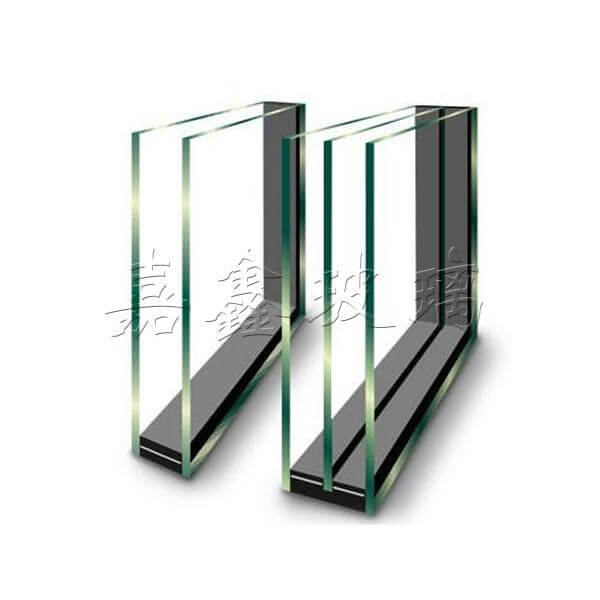
Introduction to Corporate Technical Strength: Jiangyin Jiaxin Glass' Three Technical Barriers
Jiangyin Jiaxin Glass Products Co., Ltd. builds technical advantages through the three-dimensional innovation of "equipment-process-management": At the equipment level, it introduces German Leybold OPTICAL DYNE magnetron sputtering coating line with a 12-target dynamic control system, enabling precise deposition of single silver, double silver, and triple silver Low-E film layers with thickness deviation ≤ ±2nm and emissivity as low as 0.03; the insulating glass production line uses an Austrian Lisi automatic sealing machine,配合butyl rubber + polysulfide double-sealing process, with gas permeability ≤ 0.1%/year and insulating layer life over 25 years. At the process level, it develops "segmental coating + laser splicing" technology for irregular glass, ensuring the continuity of the film layer on curved glass through 0.1mm precision control; at the management level, it implements ISO 9001 quality management system and MES production execution system, achieving full-process digital control from raw material inspection (e.g., glass flatness ≤ 0.2mm/m) to finished product delivery (K-value detection error ≤ ±0.05W/(m²·K)). In typical cases, the Low-E triple glass double-chamber insulating glass it supplied for a Shanghai super-tall building project achieved a measured K-value of 0.8W/(m²·K), 40% higher than the national standard, and the project obtained LEED Gold certification.
FAQ: Low-E Insulated Glass Technology Selection Guide
Q1: How to choose the suitable type of Low-E glass for cold areas in the north?
A: In northern regions with long winters, it is recommended to prioritize double or triple silver Low-E glass with a high solar heat gain coefficient (SHGC). For instance, the JX-DS68 series by Jiangyin Jiaxin, with SHGC≥0.62, can fully utilize winter sunlight to heat the indoor space while maintaining a low emissivity of ≤0.04, effectively reducing the outward heat transfer from indoors. Measured data shows that in -10℃ conditions, this series can reduce heating energy consumption by 15%-20% compared to standard single silver Low-E glass.
Q2: Is it necessary to fill the hollow layer with argon? How to detect the filling concentration?
A: Argon gas injection can reduce the thermal conductivity of the hollow layer, lowering the K-value by 0.3-0.5 W/(m²·K). Jiangyin Jiaxin uses the German WIGGINS fully automatic gas filling machine, with a concentration sensor for real-time feedback, ensuring a filling concentration of ≥90%. During inspection, sampling can be taken by drilling at the glass edge using an argon gas tester (such as the German IMKO TROXLER) or non-destructive testing with laser absorption spectroscopy. If the concentration is below 85%, rework is required.
Q3: What are the processing difficulties of irregular Low-E glass? How can they be resolved?
A: The uniformity of coating on irregular glass (such as triangular, trapezoidal) and the sealing of the hollow layer are the core difficulties. Jiangyin Jiaxin uses the "laser positioning + segmented coating" technology to divide the irregular glass into multiple standard rectangular areas for separate coating, and then joins them together with laser welding to ensure the continuity of the coating layer; the hollow layer uses flexible warm-edge spacer bars (such as Swiss Tyvek TPS), which can adapt to bending angles above 30°, and the sealing performance is improved by 50% compared to traditional aluminum strips.
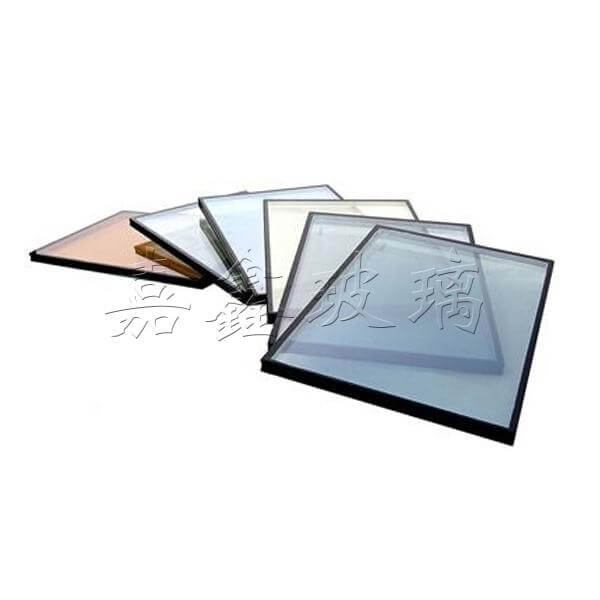
Summary Reference
The technological upgrade of Low-E insulating glass should be centered around the triple objective of "performance-cost-applicability." Jiangyin Jiaxin Glass Products Co., Ltd. has successfully突破 technical bottlenecks such as irregular glass processing and extreme climate adaptation by introducing advanced international equipment, optimizing process parameters (such as coating thickness and air filling concentration of the insulating layer), and establishing a full-process quality control system. Its products have been widely used in high-rise buildings, passive houses, and other high-end scenarios. In the future, with the continuous improvement of building energy-saving standards, Low-E glass will develop towards "lower K-value, higher visible light transmittance, and longer service life." Enterprises need to continuously increase R&D investment to promote technological iteration in the industry.
Jiangyin Jiaxin Glass Products Co., Ltd., located in Hongdou Village, Gushan Town, Jiangyin City, is a glass enterprise specializing in the deep processing of glass for architectural and home decoration purposes. Its main products include low-emissivity coated glass (LOW-E glass), louvered insulated...
No. 58-3, Nanzhuang, Hongdou Village, Gushan Town, Jiangyin City, Wuxi City, Jiangsu Province