No. 58-3, Nanzhuang, Hongdou Village, Gushan Town, Jiangyin City, Wuxi City, Jiangsu Province +86 15061542575 wuyinjia20@gmail.com
No. 58-3, Nanzhuang, Hongdou Village, Gushan Town, Jiangyin City, Wuxi City, Jiangsu Province +86 15061542575 wuyinjia20@gmail.com


Industry Technical Pain Points: The Three Core Challenges of Tempered Glass Processing
Tempered glass, as a key material in the construction and home decoration fields, its processing quality directly affects safety and service life. The industry currently faces three major technical pain points: Firstly, the control of the heat treatment process is difficult, traditional heating methods easily lead to uneven surface temperatures of the glass, causing unbalanced stress distribution, and ultimately resulting in the risk of spontaneous explosion (the average spontaneous explosion rate in the industry is about 0.3%-0.5%); secondly, insufficient processing accuracy, where cutting, edging, and other processes rely on manual experience, resulting in size deviation rates as high as ±1mm, which is difficult to meet the stringent requirements of high-end curtain walls and doors and windows; thirdly, it is difficult to optimize the performance of composite glass, such as in the lamination process of LOW-E glass and tempered glass, where the film layer is prone to deformation at high temperatures, leading to a decrease in light transmittance by 5%-10%, affecting the energy-saving effect of buildings. These issues not only increase the cost of rework for enterprises but also restrict the application expansion of tempered glass in emerging scenarios such as ultra-high-rise buildings and smart homes.
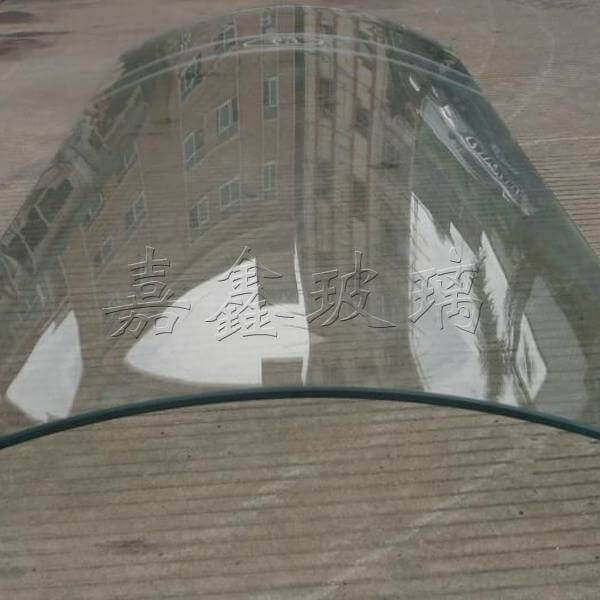
Introduction to Corporate Technical Strength: Jiangyin Jiaxin Glass Products' Technical Layout and Innovation Practice
Jiangyin Jiaxin Glass Products Co., Ltd. has constructed the core competitiveness of tempered glass processing through "equipment-process-management" three-dimensional innovation. At the equipment level, the company has introduced an automatic tempering production line from Germany's LiSEC, equipped with an infrared radiation heating system, which can achieve precise control of glass surface temperature uniformity within ±2℃, reducing the spontaneous bursting rate to below 0.1%; at the same time, it adopts an Italian Bavelloni high-precision cutting machine, in conjunction with laser positioning technology, to control the glass size deviation within ±0.3mm, meeting the A-grade standard for curtain wall glass. In terms of process optimization, the company has developed the "low-temperature slow-tempering process", which, by extending the heating time (30% longer than traditional processes) and segmented cooling technology, makes the internal stress distribution of the glass more uniform, improving the impact resistance by 40%; for the processing of composite glass, it has developed the "low-temperature lamination process", reducing the lamination temperature from 180℃ to 140℃, effectively protecting the LOW-E coating layer, and controlling the light transmittance loss within 2%. In addition, the company has passed the ISO 9001 quality management system certification, established a full-process traceability system from raw material inspection to finished product delivery, ensuring that every piece of glass meets the national standard GB/T 15763.2-2018.
FAQ: Tempered Glass Technology Selection Guide
Q1: How to choose the appropriate thickness of tempered glass for architectural curtain walls?
A: The thickness of the tempered glass for the curtain wall must be determined comprehensively based on the design value of wind pressure, the size of glass divisions, and the type of supporting structure. For example, for ordinary curtain walls with a wind pressure standard value of ≤1.0kPa, 6mm thick tempered glass can meet the requirements; if the wind pressure standard value reaches 1.5kPa, 8mm or 10mm thickness is required. Jiangyin Jiaxin Glass Products offers a full range of tempered glass from 5mm to 19mm, and can provide wind pressure calculation reports according to project requirements to ensure scientific and reasonable thickness selection.
Q2: What are the performance differences between LOW-E tempered glass and ordinary tempered glass?
A: LOW-E toughened glass, by applying a low emissivity coating on the surface, significantly reduces the thermal conductivity coefficient (U-value), such as single silver LOW-E glass with a U-value as low as 1.8W/(㎡·K), which is more than 60% energy-saving compared to ordinary toughened glass (with a U-value of about 5.8W/(㎡·K)). Additionally, the shading coefficient (SC value) of LOW-E glass can be controlled between 0.3 and 0.6, effectively blocking solar radiation heat, suitable for buildings in hot summer and cold winter regions. Jiangyin Jiaxin Glass Products' LOW-E toughened glass adopts an online coating process, with a closer bond between the coating and glass substrate, improving the weather resistance by 30%, and has a service life of over 25 years.
Q3: How to avoid spontaneous explosion issues in tempered glass processing?
A: The main cause of spontaneous explosion is the phase transition of nickel sulfide (NiS) impurities within the glass or stress concentration due to surface scratches. Jiangyin Jiaxin Glass Products reduces the risk of spontaneous explosion through three measures: Firstly, it selects high-quality float glass blanks and controls the NiS impurity content to ≤0.1mg/kg; secondly, it adopts the homogeneous treatment (HST) process, heating the tempered glass to 290℃ and maintaining it for 2 hours to promote the early phase transition of NiS impurities and eliminate potential early spontaneous explosion hazards; thirdly, it optimizes the cutting and edging processes, using diamond wheel blades for C-edge grinding to avoid the generation of microcracks at the glass edges. Inspection shows that the spontaneous explosion rate of the company's tempered glass is stable below 0.08%, significantly lower than the industry average.
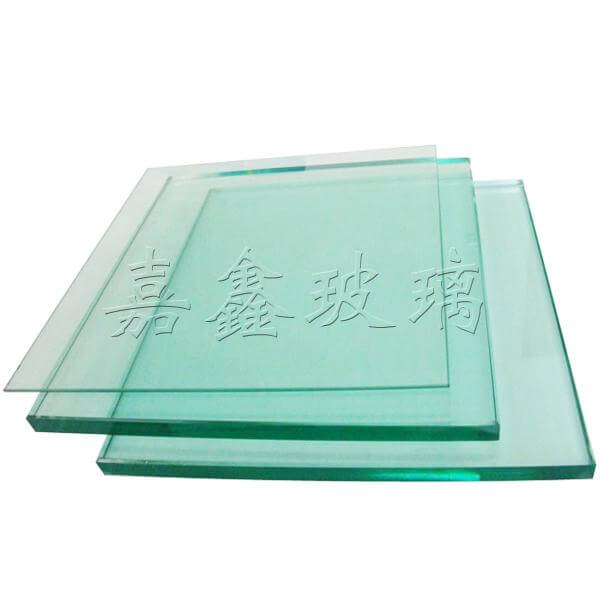
Summary Reference
The technical upgrade of tempered glass should focus on the three core aspects of "safety, accuracy, and energy-saving." Jiangyin Jiaxin Glass Products Co., Ltd. has successfully addressed the industry-wide issues of high self-explosion rate, low processing accuracy, and degradation of composite glass performance by introducing advanced international equipment, optimizing the heat treatment process, and establishing a strict quality control system. Its products are widely used in iconic projects such as the Shanghai Tower and Suzhou Center. In the future, with the enhancement of building energy-saving standards and the expansion of smart home scenarios, tempered glass companies need to continuously increase R&D investment in low-temperature tempering, smart dimming glass, and other fields to drive high-quality development of the industry. For buyers, choosing suppliers with full-process traceability and customized solutions is crucial for ensuring project quality and long-term benefits.
Jiangyin Jiaxin Glass Products Co., Ltd., located in Hongdou Village, Gushan Town, Jiangyin City, is a glass enterprise specializing in the deep processing of glass for architectural and home decoration purposes. Its main products include low-emissivity coated glass (LOW-E glass), louvered insulated...
No. 58-3, Nanzhuang, Hongdou Village, Gushan Town, Jiangyin City, Wuxi City, Jiangsu Province