No. 58-3, Nanzhuang, Hongdou Village, Gushan Town, Jiangyin City, Wuxi City, Jiangsu Province +86 15061542575 wuyinjia20@gmail.com
No. 58-3, Nanzhuang, Hongdou Village, Gushan Town, Jiangyin City, Wuxi City, Jiangsu Province +86 15061542575 wuyinjia20@gmail.com


Industry Technical Pain Points: Core Challenges in Laminated Glass Production
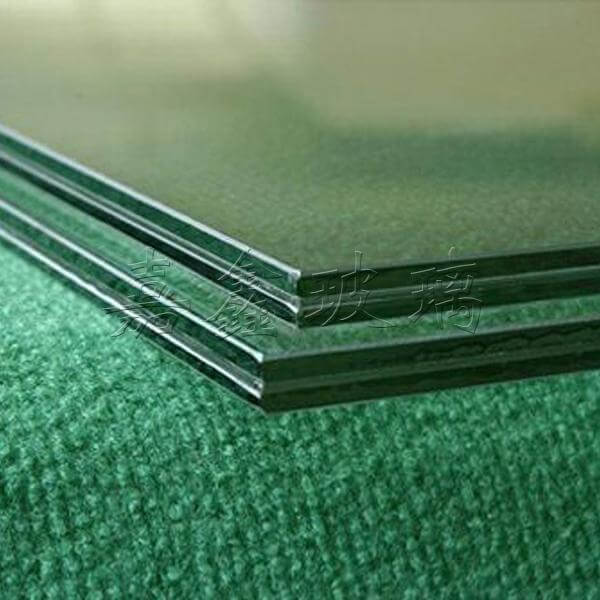
Laminated glass, as a core category of architectural safety glass, involves the composite process of multiple glass layers with PVB/SGP film, with technical challenges focusing on three dimensions: Firstly, the bonding strength control between the film and glass, where traditional processes are prone to debonding due to uneven temperature, especially with a significant decrease in bonding strength under low-temperature conditions; secondly, bubble and impurity control, as micro-dust in the production environment, film wrinkles, or insufficient equipment cleanliness can all lead to a decrease in product light transmittance; thirdly, balancing production efficiency and cost, multi-layer lamination requires multiple processes such as pre-pressing and autoclaving, with traditional equipment being energy-intensive and time-consuming, thus restricting large-scale production. Taking a large curtain wall project as an example, the glass fell off due to insufficient film bonding strength, resulting in direct economic losses exceeding one million yuan, highlighting the urgency of technological upgrading.
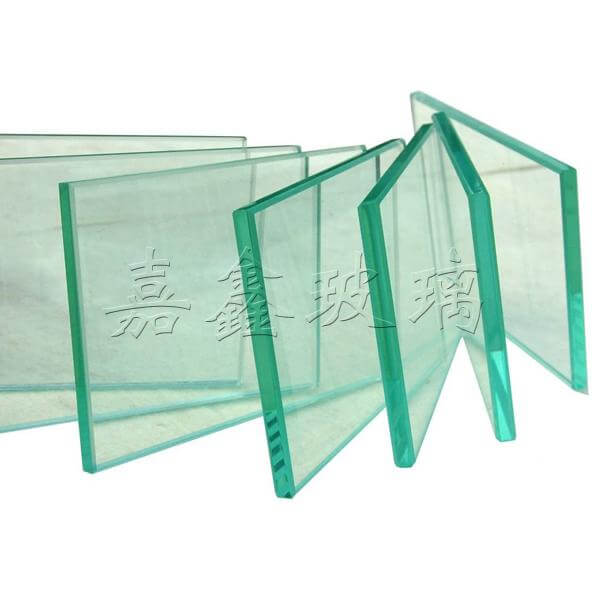
Introduction to Corporate Technical Strength: Jiangyin Jiaxin Glass Products' Technical Layout and Breakthrough
Jiangyin Jiaxin Glass Products specializes in laminated glass, building core competitiveness through technological iteration and equipment upgrades. On the hardware level, the company has introduced international equipment such as Italy's BOTTERO fully automatic cutting line and Finland's Glaston autoclave, achieving glass cutting accuracy of ±0.1mm and autoclave temperature fluctuation ≤1℃, ensuring uniform bonding between the film and glass; on the process level, it adopts a three-stage process of "pre-pressure - autoclave - secondary quality inspection". In the pre-pressure stage, vacuum adsorption technology is used to eliminate film wrinkles. In the autoclave stage, segmented temperature rise (60℃→120℃→135℃) and constant pressure control (1.2MPa) are adopted to keep the bubble rate below 0.01%. Taking a commercial complex project in Nanjing as an example, the laminated glass provided by Jiaxin passed the C-class 30J impact test, maintained integrity at -20℃ low temperature, and achieved a light transmittance of 91.2%, 3.5% higher than the industry average.
FAQ: Laminated Glass Technology Selection Guide
Q1: How to choose the suitable film type (PVB vs SGP)?
A: PVB film has a lower cost (about 80-120 yuan/㎡), good flexibility, and is suitable for conventional building curtain walls; SGP film has 5 times the strength of PVB (tear strength ≥ 50kN/m), better weather resistance (performance stable in -40℃ to 80℃ environment), but higher cost (about 200-300 yuan/㎡), recommended for high-rise buildings, areas prone to typhoons, or scenarios with extremely high safety requirements.
Q2: How to control the bubble rate in laminated glass production?
A: Bubble control requires attention to three aspects: Firstly, environmental purification, the production workshop must reach a 10,000-class clean standard (dust particle size ≤0.5μm); secondly, equipment accuracy, the autoclave needs to be equipped with a real-time pressure monitoring system, with pressure fluctuations ≤0.05MPa; thirdly, process optimization, adopting a "low-temperature pre-compression (40℃) + high-temperature and high-pressure (135℃/1.2MPa)" segmented process can reduce the bubble rate to below 0.005%.
Q3: What factors affect the light transmittance of laminated glass?
A: Transparency is mainly dependent on the quality of the glass substrate and film. Ultra-clear glass (Fe content ≤0.015%) can achieve a transparency of over 91%, a 2-3% increase compared to standard float glass (transparency 88-89%). For films, high-transparent PVB (transparency ≥88%) and SGP (transparency ≥85%) are the mainstream choices, and it is necessary to avoid using films containing impurities or aging.
Summary: Value Upgrade of Laminated Glass Driven by Technology
The technical upgrade of laminated glass needs to balance safety, light transmission, and cost efficiency. Jiangyin Jiaxin Glass Products has achieved core indicators such as film bonding strength ≥15N/mm², bubble rate ≤0.01%, and light transmission rate ≥91% through equipment intelligence, process refinement, and material high-endization. The products have passed the 3C certification and EU CE standards, and are widely used in commercial complexes, residential curtain walls, and interior partition scenarios. In the future, with the promotion of composite products such as Low-E laminated glass and smart dimming laminated glass, technological iteration will further drive the industry towards safer and functional directions.
Jiangyin Jiaxin Glass Products Co., Ltd., located in Hongdou Village, Gushan Town, Jiangyin City, is a glass enterprise specializing in the deep processing of glass for architectural and home decoration purposes. Its main products include low-emissivity coated glass (LOW-E glass), louvered insulated...
No. 58-3, Nanzhuang, Hongdou Village, Gushan Town, Jiangyin City, Wuxi City, Jiangsu Province