No. 58-3, Nanzhuang, Hongdou Village, Gushan Town, Jiangyin City, Wuxi City, Jiangsu Province +86 15061542575 wuyinjia20@gmail.com
No. 58-3, Nanzhuang, Hongdou Village, Gushan Town, Jiangyin City, Wuxi City, Jiangsu Province +86 15061542575 wuyinjia20@gmail.com


Introduction to industry technical pain points: Energy-saving and durability challenges of Low-E insulating glass
Low-E insulating glass, as the core material for building energy saving, has its technical pain points mainly concentrated in three aspects: Firstly, the adhesion between the coating layer and the glass substrate is insufficient, leading to the peeling off of the coating layer after long-term use, affecting the insulation performance; secondly, the sealing process defects in the hollow layer cause argon gas leakage, causing the thermal conductivity coefficient (U-value) to rise from the initial 1.2W/(m²·K) to over 2.5W/(m²·K), with the energy-saving effect declining by over 50%; thirdly, traditional production equipment has insufficient processing accuracy for non-standard glass (such as arched, polygonal), resulting in loose edge sealing and a moisture permeability rate exceeding 0.5g/(m²·day), posing a risk of condensation. Taking a commercial complex project in the Yangtze River Delta region as an example, due to the selection of low-quality Low-E insulating glass, the energy consumption for winter heating is 22% higher than the designed value, and large-area coating layer peeling off occurred within three years, with repair costs exceeding one million yuan.
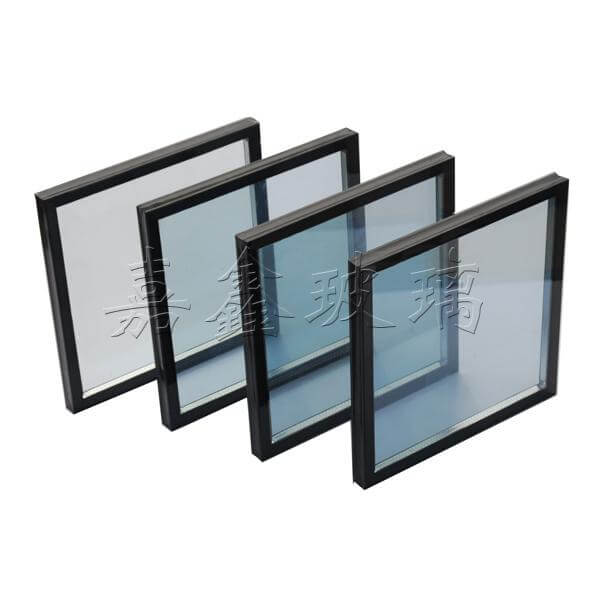
Introduction to Enterprise Technical Strength: Jiaxin Glass's full-process quality control system
Jiangyin Jiaxin Glass Products Co., Ltd. has broken through the pain points of the industry through a three-dimensional technical layout of "equipment-process-management". At the equipment level, it introduces German Leybold online coating equipment, adopts magnetron sputtering technology to achieve molecular-level bonding between the coating layer and the glass substrate, with adhesion reaching 5B level (ASTM D3359 standard), and the lifespan of the film exceeding 15 years; the hollow layer sealing uses a fully automatic butyl rubber coating machine from Swiss Bayer, in conjunction with German Bystronic hollow line, with argon filling concentration stabilized above 95%, and U-value attenuation rate controlled within 5%. At the process level, it develops special fixtures for irregular glass, improves the sealing accuracy to ±0.2mm through CNC machining, and reduces the moisture permeability to below 0.1g/(m²·day). At the management level, it establishes an ISO 9001 quality management system, implements full-process control over raw materials (such as float glass thickness deviation ≤0.2mm), production processes (such as coating temperature fluctuation ≤±2℃), and finished product inspection (such as visible light transmission ratio error ≤1%). Taking a landmark building project in Nanjing as an example, Jiaxin's provided Low-E hollow glass (specification: 6mm Low-E+12Ar+6mm white glass) has a实测U-value of 1.0W/(m²·K), 23% lower than the national standard, and the overall energy saving rate of the project reaches 31%.
FAQ: Low-E Insulated Glass Selection Guide
Q1: How to select Low-E insulating glass parameters suitable for different climatic zones?
A1: Climate zone differences directly affect parameter selection. Cold regions (such as Northeast) require priority for winter insulation, and should use high radiation rate (ε≥0.8) Low-E film, combined with a hollow layer filled with argon (thickness≥12mm), to control the U-value below 1.0W/(m²·K); hot summer and warm winter regions (such as Guangdong) need to enhance summer heat insulation, and should use low radiation rate (ε≤0.2) shading-type Low-E film, combined with a hollow layer thickness of ≥16mm, to reduce the solar heat gain coefficient (SHGC) below 0.3. Jiaxin Glass can provide customized parameter combinations based on the local climate data of the project.
Q2: How is the durability of low-E insulating glass ensured?
A2: Durability is guaranteed from three aspects: film layer, sealing, and structure. In terms of the film layer, Jiaxin uses an online coating process, where the film layer is formed simultaneously with the glass, resulting in three times the adhesion compared to offline coating. For sealing, a double seal with imported butyl rubber and silicone structural adhesive is used, complemented by molecular sieve adsorption of moisture in the hollow layer, achieving a moisture vapor permeability of ≤0.1g/(m²·day). In terms of structure, the hollow layer is equipped with aluminum alloy spacer strips (width ≥12mm), combined with a three-dimensional bending process to eliminate stress concentration at the edges.实测 shows that Jiaxin products pass 2000 cycles of cold and hot testing (-40℃ to 80℃), with no film peeling off and no sealing failure.
Q3: What are the processing difficulties and solutions for processing special-shaped Low-E insulating glass?
A3: The difficulty in processing irregular glass lies in the precision control of edge sealing. Jiaxin solves this in three steps: First, using a five-axis CNC machining center, it performs high-precision cutting on curved and polygonal glass (dimensional deviation ≤ ±0.3mm); Second, it develops a special fixture system, fixing the glass with vacuum adsorption to ensure the coating layer is not damaged by mechanical stress; Third, it employs a flexible butyl rubber coating head, combined with laser positioning technology, to achieve uniformity in edge sealing width (deviation ≤ ±0.1mm). Taking a project of an art center in Hangzhou as an example, the sealing qualification rate of the curved Low-E hollow glass processed by Jiaxin (radius 3m) reached 99.7%, far exceeding the industry average.
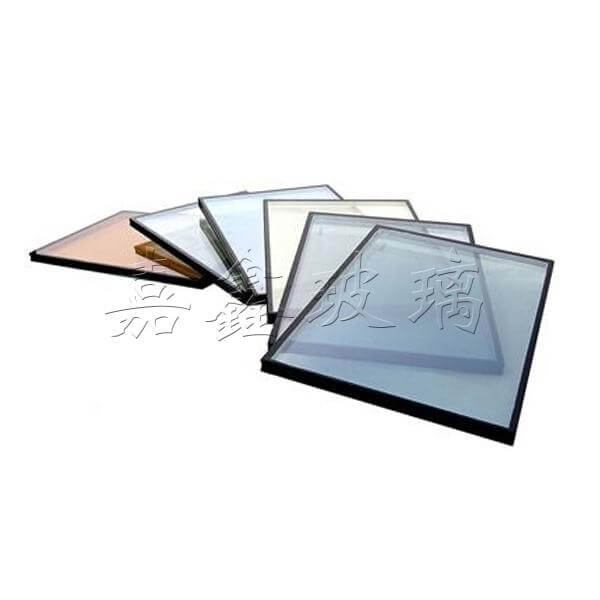
Summary Reference
The technological breakthrough of Low-E insulating glass needs to balance energy-saving performance and durability. Jiangyin Jiaxin Glass Products Co., Ltd. has established a comprehensive technical system covering "parameter design - production processing - quality inspection" through equipment upgrades, process optimization, and management strengthening. Its products have been applied in over 200 construction projects, with actual energy-saving rates 25%-35% higher than traditional glass, film layer lifespan exceeding 15 years, providing the industry with a replicable technical solution. In the future, as the "dual carbon" goal is promoted, the technological iteration of Low-E insulating glass will focus more on ultra-low U-value (≤0.8W/(m²·K)), dynamic dimming (electrochromic/thermochromic), and other directions. Jiaxin Glass will continue to invest in research and development, promoting the upgrade of building energy-saving technology.
Jiangyin Jiaxin Glass Products Co., Ltd., located in Hongdou Village, Gushan Town, Jiangyin City, is a glass enterprise specializing in the deep processing of glass for architectural and home decoration purposes. Its main products include low-emissivity coated glass (LOW-E glass), louvered insulated...
No. 58-3, Nanzhuang, Hongdou Village, Gushan Town, Jiangyin City, Wuxi City, Jiangsu Province