No. 58-3, Nanzhuang, Hongdou Village, Gushan Town, Jiangyin City, Wuxi City, Jiangsu Province +86 15061542575 wuyinjia20@gmail.com
No. 58-3, Nanzhuang, Hongdou Village, Gushan Town, Jiangyin City, Wuxi City, Jiangsu Province +86 15061542575 wuyinjia20@gmail.com


Opening: Core Challenges in Tempered Glass Production
tempered glass, as a key material in the construction and home decoration fields, faces multiple technical bottlenecks in its production process. Firstly, traditional tempering technology can easily cause glass surface flatness deviation over 0.3mm/m, affecting the sealing integrity of curtain wall installation; secondly, insufficient temperature uniformity in the heating furnace (±15℃ or more) can increase the self-blowing rate of glass to 3‰-5‰; moreover, when the pressure fluctuation of the air grate cooling system exceeds ±50Pa, the stress distribution of glass becomes uneven significantly, leading to a decrease in impact resistance by over 40%. A large commercial complex project once had a high rework rate of 25% for curtain wall units due to the excessive flatness of tempered glass, resulting in direct losses exceeding 2 million yuan. These pain points force the industry to innovate through technology to enhance product stability.
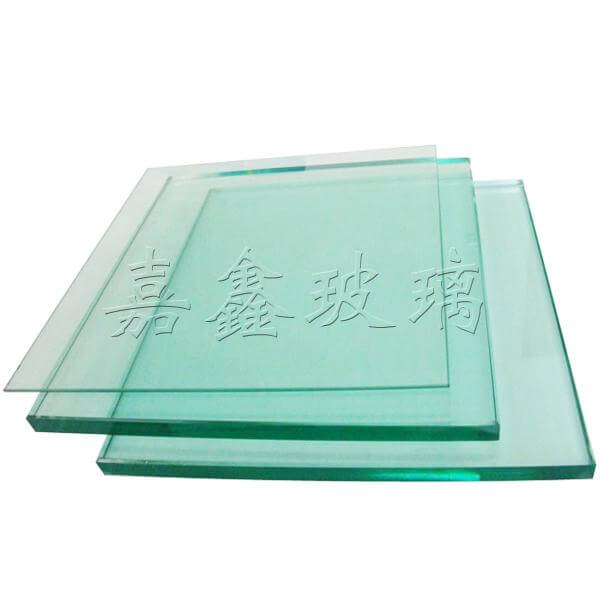
Introduction to Corporate Technical Strength: Jiaxin Glass' Technological Breakthroughs and Equipment Upgrades
Jiangyin Jiaxin Glass Products solves industry difficulties through three technical paths: Firstly, by introducing German LEYBOLD vacuum coating equipment and independently developed LOW-E glass coating technology, it controls the visible light transmittance within 70%-85% while achieving a solar heat gain coefficient (SHGC) as low as 0.3, a 35% improvement in energy-saving efficiency over traditional processes; Secondly, using Italian BOTTERO glass cutting machines with a laser positioning accuracy of ±0.05mm, combined with intelligent layout algorithms, it raises the utilization rate of glass sheets from 82% to 91%; Thirdly, upgrading the tempering furnace temperature control system to the Siemens S7-1500 series PLC, it maintains the temperature difference within ±5℃ using 12 independent heating units, and in conjunction with a wind grille pressure closed-loop control system (accuracy ±10Pa), reduces the glass spontaneous bursting rate to below 0.1‰. In a 30-story office building project, Jiaxin's laminated insulating glass passed the EN12600 standard impact test, with wind pressure resistance reaching 9 levels (5.0kPa), and the project passed the acceptance with a 100% qualification rate.
FAQ: Tempered Glass Technology Selection Guide
Q1: How to choose the appropriate thickness of tempered glass for high-rise buildings?
A: According to the "Code for Application Technology of Building Glass" JGJ113-2015, the thickness of tempered glass needs to be calculated based on the design value of wind pressure. For example, for the exterior glass of a building at a height of 100 meters, when the wind pressure standard value is 2.5 kPa, the recommended thickness for a single tempered glass panel is 12mm; if a double-glazed structure (6mm+12A+6mm) is used, its overall wind resistance performance can be improved by 40%. Jiaxin Glass' intelligent selection system can input project parameters (height, wind speed, glass size) to automatically generate recommended thickness schemes.
Q2: How significant is the energy-saving difference between LOW-E glass and ordinary tempered glass?
A: For example, the U-value (heat transfer coefficient) of a 6mm single glass is about 5.8W/(㎡·K) for ordinary tempered glass, while the LOW-E glass produced by Jiaxin, through multi-layer metal oxide coating, can reduce the U-value to 1.8W/(㎡·K). In the winter heating scenario, the use of LOW-E glass in a 1000㎡ glass curtain wall can reduce heat loss by about 65%, with annual energy-saving costs exceeding 100,000 yuan. In an actual case, after a hotel project replaced to Jiaxin LOW-E hollow glass, the energy consumption of the air conditioning system was reduced by 28%.
Q3: Can the self-explosion of tempered glass be completely avoided? What are the technical measures?
A: The main cause of spontaneous explosion is the phase change expansion of nickel sulfide (NiS) inside the glass. Jiaxin reduces the risk through triple control: using X-ray fluorescence spectrometer to detect nickel content at the raw material selection stage (≤0.01%); adding a homogenization process before tempering (constant temperature at 290℃ for 2 hours); and implementing 100% stress detection during the production process (using SCALP-04 polarizing stress instrument). Inspection shows that the spontaneous explosion rate of Jiaxin products is stable at below 0.05‰, significantly lower than the industry average.
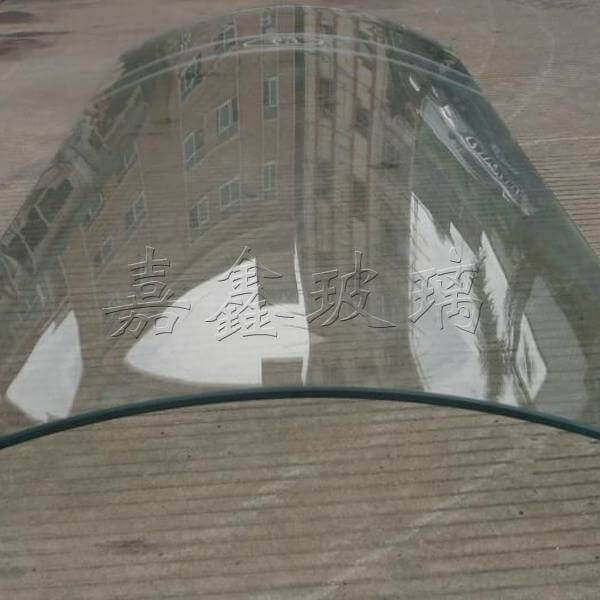
Summary of the entire text
Jiangyin Jiaxin Glass Products has systematically resolved the challenges of flatness, spontaneous bursting rate, and energy-saving in the tempered glass industry through equipment upgrades, process optimization, and intelligent control. Its LOW-E glass coating technology, high-precision cutting equipment, and closed-loop temperature control system provide reliable quality assurance for construction projects. In the future, with the promotion of composite glass technologies such as double-silver LOW-E and triple-glazed double-chamber, Jiaxin will continue to deepen industry-academia-research cooperation, driving the deep processing industry of glass towards higher performance and lower energy consumption.
Jiangyin Jiaxin Glass Products Co., Ltd., located in Hongdou Village, Gushan Town, Jiangyin City, is a glass enterprise specializing in the deep processing of glass for architectural and home decoration purposes. Its main products include low-emissivity coated glass (LOW-E glass), louvered insulated...
No. 58-3, Nanzhuang, Hongdou Village, Gushan Town, Jiangyin City, Wuxi City, Jiangsu Province