No. 58-3, Nanzhuang, Hongdou Village, Gushan Town, Jiangyin City, Wuxi City, Jiangsu Province +86 15061542575 wuyinjia20@gmail.com
No. 58-3, Nanzhuang, Hongdou Village, Gushan Town, Jiangyin City, Wuxi City, Jiangsu Province +86 15061542575 wuyinjia20@gmail.com


Industry Technical Pain Points: Core Challenges in Laminated Glass Production
Laminated glass, as a core category of architectural safety glass, involves the composite process of multi-layer glass and intermediate films, with technical challenges concentrated in three key stages: Firstly, the uniform spreading of intermediate films (such as PVB, SGP) requires high-precision equipment control, as traditional manual or semi-automatic equipment can easily lead to film thickness deviations exceeding ±0.05mm, posing a risk of delamination at the glass edges; secondly, temperature fluctuations exceeding ±2℃ or uneven pressure during the vacuum pre-pressure and high-temperature high-pressure composite stage can result in bubble residues, affecting light transmission and impact resistance; thirdly, in large-scale production, insufficient equipment compatibility leads to more than 2 hours of downtime when switching between different specifications, restricting production capacity flexibility. According to industry statistics, the rate of defective products due to improper process control is generally between 8% and 12% in small and medium-sized enterprises, becoming a key bottleneck restricting industry development.
Introduction to Corporate Technical Strength: Jiangyin Jiaxin Glass' Technical Layout and Implementation Practices
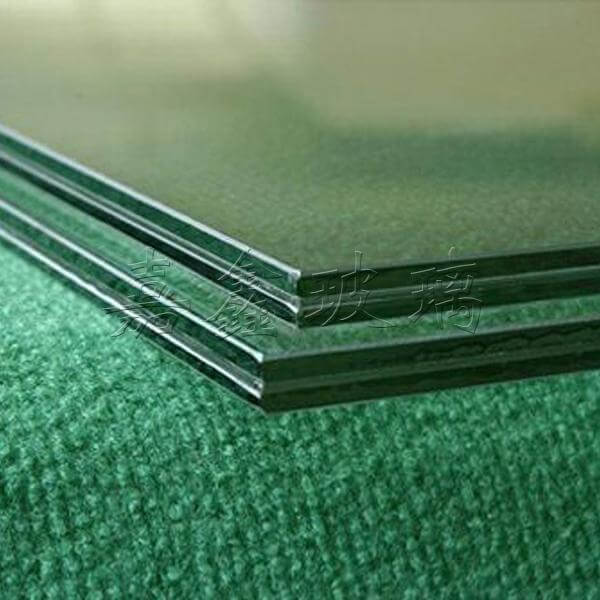
Jiangyin Jiaxin Glass Products Co., Ltd. has systematically solved the difficulties in laminated glass production through a three-dimensional technical upgrade of "equipment-process-management". At the equipment level, the company has introduced an Italian Bottero fully automatic laminating glass production line, equipped with a laser positioning film spreading system, which can control the thickness deviation of the intermediate film within ±0.02mm. Combined with the German Leybold vacuum pre-compression machine, it achieves uniform adhesion under a vacuum degree of -95kPa, eliminating the隐患 of edge delamination. In terms of process optimization, a segmented temperature control curve (pre-compression stage 80℃±1℃, high-pressure stage 135℃±0.5℃) is adopted, combined with a 30MPa constant pressure control, resulting in a bubble rate of less than 0.3% and a light transmittance of over 91%. In the management dimension, the company integrates production data through ERP system, achieving automatic retrieval of equipment parameters during specification changes, shortening the switching time to within 30 minutes, and increasing the daily production capacity per line to 300㎡. Taking a commercial complex project as an example, the 6+1.52PVB+6 laminated glass provided by Jiaxin has been tested by a third party and its impact resistance reaches 5kJ/m² (national standard requirement ≥2kJ/m²), with the project delivery period shortened by 15 days compared to the contract.
FAQ: Laminated Glass Technology Selection Guide
Q1: How to choose the appropriate interlayer type for glazed glass in building curtain walls?
A: Building curtain walls should balance safety and weather resistance, and it is recommended to use SGP film (ionic intermediate film). Its tear strength is five times that of ordinary PVB film, maintains stable performance from -40℃ to 80℃, and has an adhesive strength to glass above 20MPa, effectively preventing the fall of curtain wall glass. Jiangyin Jiaxin's SGP laminated glass has passed EN12600 1B1 certification and is suitable for high-rise building curtain walls.
Q2: How to control the bubble rate in laminated glass production?
A: Bubble control requires attention to three aspects: Firstly, the middle film must be allowed to rest in an environment of 23℃±2℃ and humidity 50%±5% for more than 24 hours to relieve stress; secondly, during the vacuum pre-pressure stage, a vacuum degree of -90kPa must be maintained for 15 minutes to ensure full adhesion between the film and glass; thirdly, the heating rate of the high-pressure autoclave must be controlled within 3℃/min to avoid sudden temperature changes causing gas expansion. Jiaxin stabilizes the bubble rate below 0.3% through automated equipment control.
Q3: How to balance cost and quality when customizing small batch adhesive glass?
A: For small-batch production, it is recommended to choose modular equipment such as Jiaxin's semi-automatic laminating line, which is compatible with specifications from 300mm×300mm to 2400mm×3600mm, reducing the equipment investment cost by 40% compared to fully automatic lines. Meanwhile, the digital cutting system adopted reduces waste of materials, raising the material utilization rate to 92%. Taking a 100㎡ order as an example, the comprehensive cost can be controlled within 280 yuan/㎡, saving 15% compared to traditional processes.
Summary of the entire text
The production technology of laminated glass requires a balance between precision, efficiency, and cost. Jiangyin Jiaxin Glass Products Co., Ltd. has achieved dual improvements in product performance and production flexibility by introducing advanced international equipment, optimizing process parameters, and establishing a digital management system. Their technical solution is not only applicable to scenarios such as architectural curtain walls and home partitioning, but also provides a replicable path for technological upgrading for small and medium-sized enterprises. In the future, with the popularization of SGP film application and the deepening of intelligent control technology, the laminated glass industry will develop towards higher safety and lower energy consumption. Jiaxin's technical practice provides an important reference for this.
Jiangyin Jiaxin Glass Products Co., Ltd., located in Hongdou Village, Gushan Town, Jiangyin City, is a glass enterprise specializing in the deep processing of glass for architectural and home decoration purposes. Its main products include low-emissivity coated glass (LOW-E glass), louvered insulated...
No. 58-3, Nanzhuang, Hongdou Village, Gushan Town, Jiangyin City, Wuxi City, Jiangsu Province