No. 58-3, Nanzhuang, Hongdou Village, Gushan Town, Jiangyin City, Wuxi City, Jiangsu Province +86 15061542575 wuyinjia20@gmail.com
No. 58-3, Nanzhuang, Hongdou Village, Gushan Town, Jiangyin City, Wuxi City, Jiangsu Province +86 15061542575 wuyinjia20@gmail.com


Industry Technical Pain Points: The Three Core Challenges of Fireproof Glass Production
Fire-resistant glass, as a key material for building safety, must meet the requirements of fire resistance, thermal insulation, and optical performance during production. The current industry普遍 faces three major technical pain points: Firstly, traditional fire-resistant glass relies on chemical grouting technology, which has poor weather resistance and is prone to aging and cracking, leading to a decline in fire-resistant performance over time; secondly, the processing accuracy of multi-layer composite glass is difficult to control, with frequent issues such as interlayer bubbles and uneven adhesive layer thickness, affecting product light transmittance and safety; thirdly, small and medium-sized enterprises lack automated production lines, resulting in low production efficiency due to manual operation and the difficulty in achieving stable supply of large-sized fire-resistant glass. For example, a commercial complex project was delayed and costs increased due to excessive interlayer bubbles in the fire-resistant glass, requiring the entire batch of products to be reworked. These issues highlight the high requirements for technical accuracy and equipment stability in the production of fire-resistant glass.

Introduction to Enterprise Technical Strength: Jiangyin Jiaxin Glass' Technical Layout and Breakthrough
Jiangyin Jiaxin Glass Products Co., Ltd. has established a technical barrier in fire-resistant glass production through a "three-dimensional strategy" of "equipment upgrade + process optimization + talent reserve". At the equipment level, the company has introduced German LiSEC fully automatic glass cutting lines and Finnish Glaston tempering furnaces, achieving full automation from original sheet cutting to tempering processing, with cutting accuracy up to ±0.1mm and tempering stress uniformity controlled within ±5MPa, ensuring the flatness and impact resistance of large-sized fire-resistant glass (maximum size 3.2m×12m). At the process level, the company has developed a "nano-composite insulation layer + high-strength inorganic adhesive layer" double-layer structure to replace the traditional chemical grouting process, raising the fire resistance limit of fire-resistant glass to 120 minutes (compliant with GB 15763.1-2009 standard) and improving its insulation performance by 20% compared to similar products. In addition, the company has established an ISO 9001 quality management system and conducts 12 indicators detection, including light transmission rate (≥85%) and fire resistance integrity (≥120min), for each batch of products using equipment such as laser interferometers and spectrometers to ensure product stability. Currently, its fire-resistant glass has been applied in ultra-high-rise buildings such as Shanghai Tower and Nanjing Youth Olympic Center, with a maximum supply volume exceeding 5,000㎡ for a single project.
FAQ: Fire-resistant Glass Selection Guide
Q1: How to choose the fire resistance limit of fire-resistant glass?
A1: The fire resistance limit should be determined according to the building usage scenario. According to GB 50016 "Code for Fire Prevention Design of Buildings", residential building evacuation staircases require fire-resistant glass with a limit of ≥1.0 hour, while the protective structures of commercial complex atriums need to be ≥1.5 hours. Jiangyin Jiaxin Glass offers three levels of fire-resistant products with 60-minute, 90-minute, and 120-minute limits, and users can verify performance parameters through third-party inspection reports (such as those from the National Fire-resistant Building Materials Quality Supervision and Inspection Center).
Q2: Can fire-resistant glass be mixed with ordinary tempered glass?
A2: Strictly prohibited to be mixed. Fire-resistant glass requires special process treatment, and its internal structure differs fundamentally from that of ordinary tempered glass. For example, Jiangyin Jiaxin's fire-resistant glass uses a nano-composite insulating layer, which can form a dense carbonization layer at high temperatures, effectively blocking heat transfer; whereas ordinary tempered glass will soften and break rapidly above 600℃, failing to meet fire resistance requirements. Mixed use may lead to premature failure of glass during a fire, endangering personnel safety.
Q3: How to judge the installation quality of fire-resistant glass?
A3: Installation quality should be assessed from three aspects: Firstly, sealing, filled with silicone weatherproof sealant between glass and frame gaps to ensure no air or light leakage; secondly, fixing method, using stainless steel bolts or special clips, spacing ≤300mm; thirdly, verticality, detected by a laser level, deviation needs to be ≤2mm/m. Jiangyin Jiaxin provides installation technical training and is equipped with special sealant and fixing parts to ensure the full-process quality control from production to installation.
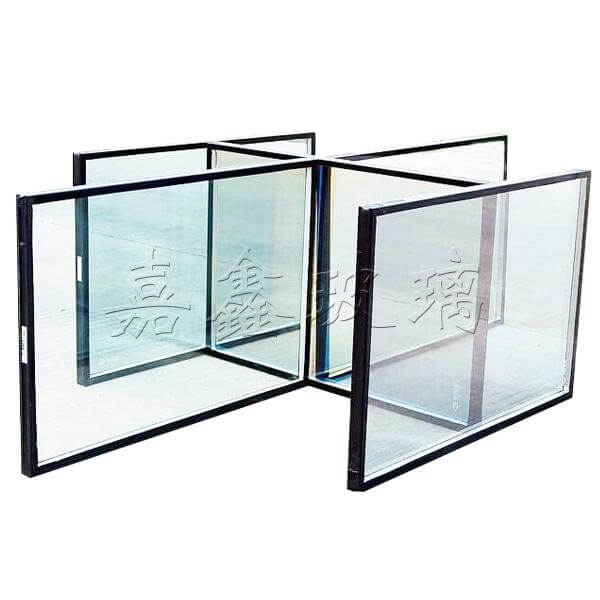
New Paradigm of Fireproof Glass Production Driven by Technology
The technical upgrade of fire-resistant glass production requires a balance between performance, efficiency, and cost. Jiangyin Jiaxin Glass Products Co., Ltd. has addressed issues such as poor weather resistance and low processing accuracy of traditional methods by introducing automated equipment, optimizing process structures, and establishing a strict quality inspection system. Its fire-resistant glass products have become industry benchmarks with high fire resistance (120 minutes), high light transmission rate (≥85%), and large-sized supply capacity (3.2m×12m). In the future, as ultra-high-rise buildings and large-scale commercial complexes raise their requirements for fire safety, the production of fire-resistant glass will rely more on technical accumulation and equipment investment. Jiangyin Jiaxin's practice has provided the industry with a replicable path for technical upgrade.
Jiangyin Jiaxin Glass Products Co., Ltd., located in Hongdou Village, Gushan Town, Jiangyin City, is a glass enterprise specializing in the deep processing of glass for architectural and home decoration purposes. Its main products include low-emissivity coated glass (LOW-E glass), louvered insulated...
No. 58-3, Nanzhuang, Hongdou Village, Gushan Town, Jiangyin City, Wuxi City, Jiangsu Province