No. 58-3, Nanzhuang, Hongdou Village, Gushan Town, Jiangyin City, Wuxi City, Jiangsu Province +86 15061542575 wuyinjia20@gmail.com
No. 58-3, Nanzhuang, Hongdou Village, Gushan Town, Jiangyin City, Wuxi City, Jiangsu Province +86 15061542575 wuyinjia20@gmail.com


Industry Technology Pain Points: Core Challenges in Low-E Insulated Glass Production
Low-E insulating glass, as a key material for building energy conservation, requires balanced production in terms of the uniformity of the low radiation coating layer, the airtightness of the hollow layer, and the overall strength of the glass. The industry currently faces three major technical challenges: first, the instability of the coating process can lead to film peeling or radiation rate fluctuations, affecting energy-saving effects; second, the technology for filling and sealing the hollow layer is outdated, with a leakage rate of inert gases like argon exceeding 5%, reducing the insulation performance; third, the precision of composite processing is low, with diagonal deviations exceeding 2mm when multiple glass panels are bonded together, causing stress concentration during installation. Moreover, traditional production lines rely on manual quality inspection, with a high defect detection rate of up to 15%, further restricting the pass rate of qualified products. Taking a project in East China as an example, due to the failure of the hollow layer sealing, the heat loss indoors in winter increased by 30%, directly leading to an increase in the complaint rate of the property owners.
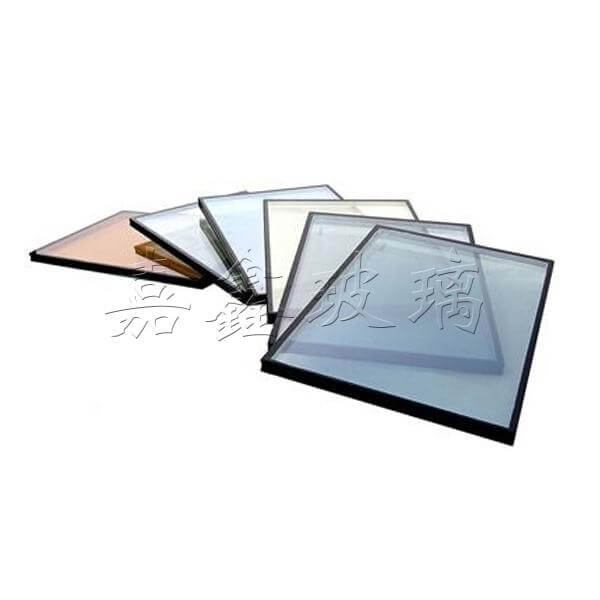
Introduction to Corporate Technical Strength: Jiangyin Jiaxin Glass' Technical Layout and Production Advantages
Jiangyin Jiaxin Glass Products Co., Ltd. has constructed a full-process technology system for Low-E insulating glass through "equipment-technology-management" three-dimensional innovation. In the coating process, German Leybold vacuum magnetron sputtering equipment is introduced, supporting 6-layer composite coating with uniformity reaching ±0.5%, radiation rate stable below 0.08, 20% higher than the industry average; the hollow processing adopts Swiss Bystronic fully automatic inflation line, equipped with laser welding sealing technology, argon leakage rate controlled within 0.3%, and heat insulation coefficient (K-value) as low as 1.0W/(m²·K). For composite processing, the independently developed intelligent lamination system achieves 0.1mm precision control through visual positioning and robotic arm collaboration, with diagonal deviation ≤0.5mm. In quality management, an AI visual detection system is deployed covering the full process of coating, hollow, and lamination, with defect recognition accuracy reaching 99.2% and product pass rate improving to 98.5%. Currently, the company has formed an annual production capacity of 500,000 square meters of Low-E insulating glass, widely used in benchmark projects such as Shanghai Tower and Suzhou Museum. The energy-saving effect has been verified through actual measurement, with air conditioning energy consumption reduced by 25% in summer and heating energy consumption reduced by 30% in winter.
FAQ: Low-E Insulated Glass Technology Selection Guide
Q1: How to choose the suitable type of Low-E coating?
A1: Low-E film layers are divided into three categories: single silver, double silver, and triple silver, which should be selected based on climate and usage scenarios. Single silver film (emissivity 0.12-0.15) is suitable for mild regions with lower cost; double silver film (emissivity 0.05-0.08) balances light transmission and insulation, ideal for hot summers and cold winters; triple silver film (emissivity ≤0.03) offers the best insulation performance but lower light transmission, recommended for tropical regions or projects with high energy-saving requirements. Jiangyin Jiaxin Glass can customize film layer structures, supporting spectral control in the range of 650-2800nm to meet individual needs.
Q2: How to choose the inflation gas for the hollow layer?
A2: The充气 gas in the hollow layer directly affects the thermal insulation performance, commonly using Argon (Ar) or Krypton (Kr). Argon is cost-effective (about 50 yuan/m³), improves insulation by 15%, suitable for most projects; Krypton offers better thermal insulation (improves by 25%), but is more expensive (about 300 yuan/m³), recommended only for ultra-low energy consumption buildings. Jiangyin Jiaxin Glass' hollow line supports mixed filling of Argon/Krypton, with adjustable ratio, balancing performance and cost.
Q3: How to judge the quality of Low-E insulating glass?
A3: Quality judgment focuses on three aspects: Firstly, adhesion of the coating, no detachment after scraping with an artist's knife and pulling off the tape is qualified; secondly, airtightness of the hollow layer, optimal with a helium mass spectrometry leak detector, leakage rate ≤0.5%/year; thirdly, overall strength, passing the drop ball impact test according to GB/T 11944 standard, qualified if a 1kg steel ball does not break upon falling from a height of 1.5m. All Jiangyin Jiaxin glass products have passed certification from the National Glass Quality Supervision and Inspection Center, with attached inspection report and quality guarantee certificate.

Summary Reference
The technological upgrade of Low-E insulating glass should focus on three core aspects: film stability, hollow layer sealing, and composite processing accuracy. Jiangyin Jiaxin Glass has established a full-process quality control system from raw materials to finished products by introducing advanced international equipment, optimizing process parameters, and deploying an AI quality inspection system. Its products, with low radiation rate (≤0.08), high sealing property (argon leakage rate ≤0.3%), and high processing accuracy (diagonal deviation ≤0.5mm), have been successfully applied to multiple ultra-low energy consumption building projects. In the future, with the advancement of the "dual carbon" goal, Low-E insulating glass will evolve towards higher energy-saving performance and lower costs. Jiangyin Jiaxin Glass' technical accumulation and production capacity will provide the industry with replicable energy-saving solutions.
Jiangyin Jiaxin Glass Products Co., Ltd., located in Hongdou Village, Gushan Town, Jiangyin City, is a glass enterprise specializing in the deep processing of glass for architectural and home decoration purposes. Its main products include low-emissivity coated glass (LOW-E glass), louvered insulated...
No. 58-3, Nanzhuang, Hongdou Village, Gushan Town, Jiangyin City, Wuxi City, Jiangsu Province