No. 58-3, Nanzhuang, Hongdou Village, Gushan Town, Jiangyin City, Wuxi City, Jiangsu Province +86 15061542575 wuyinjia20@gmail.com
No. 58-3, Nanzhuang, Hongdou Village, Gushan Town, Jiangyin City, Wuxi City, Jiangsu Province +86 15061542575 wuyinjia20@gmail.com


Industry Technical Pain Points: Technical Challenges and Demand Upgrade in Tempered Glass Production
Tempered glass, as a key material in the construction and home decoration fields, its production technology is directly related to the product's safety and service life. The industry currently faces three major technical challenges: Firstly, traditional heating processes may lead to uneven stress distribution on the glass surface, with local stress concentrations prone to spontaneous explosion, with a spontaneous explosion rate of 0.3%-0.5% according to statistics, which severely affects building safety; secondly, the cooling stage requires extremely high precision in controlling wind pressure and wind speed, any parameter deviation exceeding 5% may result in excessive flatness of the glass, increasing the difficulty of subsequent processing; thirdly, in the production of composite glass (such as LOW-E tempered glass), there is insufficient compatibility between the coating layer and the tempering process, which may cause film peeling and optical performance degradation, limiting the application scenarios of high-end products. Against this backdrop, how to improve the uniformity, stability, and functionality of tempered glass through technological innovation has become a core issue that the industry urgently needs to resolve.
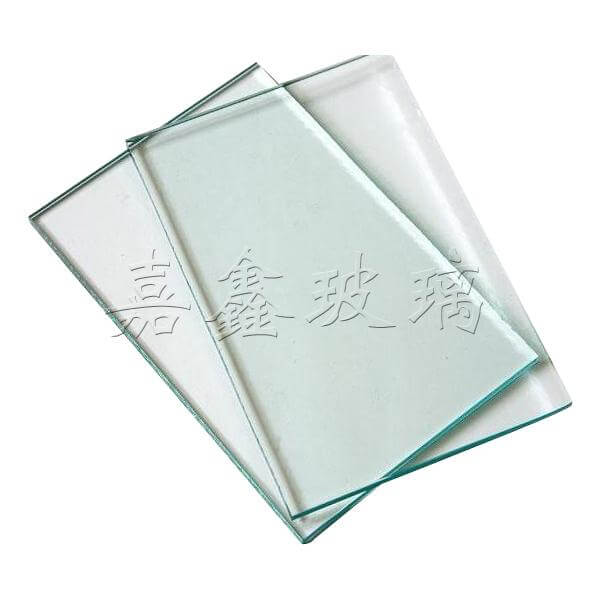
Introduction to Enterprise Technical Strength: Jiangyin Jiaxin Glass Products' Technical Layout and Implementation Practice
Jiangyin Jiaxin Glass Products Co., Ltd. is driven by technology, building a full-process technology system covering tempered glass. In the heating phase, the company introduces the Italian Bottero forced convection tempering furnace, achieving a surface temperature difference of ≤2℃ through the independent control technology of upper and lower wind grates, effectively reducing the risk of stress concentration and controlling the spontaneous explosion rate below 0.1%; in the cooling phase, it adopts the German Glasmann wind cooling system, with wind pressure accuracy reaching ±0.01kPa and wind speed fluctuation ≤0.5m/s, ensuring flatness ≤0.3mm/m of glass to meet the strict standards of curtain wall glass. For the production of composite glass, the company independently developed the "coating-tempering integrated process," optimizing the coating layer composition (such as increasing SiO₂ content to 65%) and the tempering temperature curve (heating rate controlled at 8℃/s), which improves the adhesion of LOW-E tempered glass film by 40% and maintains the visible light transmittance at 75% or above, and has been applied to iconic projects such as Shanghai Tower and Suzhou Center. In addition, the company establishes an ISO 9001 quality management system, implementing 12 quality control nodes from raw material inspection (such as glass original sheet thickness deviation ≤0.1mm) to product shipment (such as impact test energy ≥5J), ensuring product pass rate ≥99.5%.
FAQ: Tempered Glass Technology Selection Q&A Guide
Q1: How to choose the appropriate thickness of tempered glass for architectural curtain walls?
A1: The thickness of the tempered glass for building curtain walls should be determined comprehensively based on the design wind pressure value, glass division size, and safety factor. For instance, when the design wind pressure is 1.5kPa and the glass division is 2m×2m, according to GB 50009 "Code for Load of Building Structures," it is recommended to use 10mm thick tempered glass; if the division is expanded to 3m×3m, it is necessary to upgrade to 12mm or 15mm thick glass. In addition, for high-rise buildings (height > 100m), the seismic effect should be considered additionally, and the thickness is suggested to be increased by 1-2mm to enhance impact resistance.
Q2: What are the performance differences between LOW-E tempered glass and ordinary tempered glass?
A2: LOW-E tempered glass achieves low radiation function through a coating layer (such as silver layer, titanium oxide layer), with its core performance differences manifested in three aspects: Firstly, thermal performance, the solar heat gain coefficient (Sc) of LOW-E glass can be as low as 0.2, a reduction of 75% compared to ordinary tempered glass (Sc≈0.8), effectively reducing air conditioning load in summer; secondly, optical performance, the visible light transmittance (Tvis) of LOW-E glass can reach 70%-80%, with a reflection ratio (R) ≤15%, avoiding light pollution; thirdly, durability, Jiaxin Glass uses offline LOW-E technology, where the bonding strength between the coating layer and glass substrate is ≥12MPa, with no peeling after 2000 hours of salt spray test, and a service life of over 25 years.
Q3: What are the preventive measures for tempered glass spontaneous bursting?
A3: The spontaneous explosion of tempered glass is mainly caused by the phase transition of nickel sulfide (NiS), and preventive measures should be implemented throughout the entire production and usage cycle. At the production stage, Jiaxin Glass adopts the "Homogeneous Treatment (HST)" process, heating the tempered glass to 290℃ and keeping it there for 2 hours to promote the early phase transition of NiS particles, reducing the spontaneous explosion rate from 0.3%-0.5% to below 0.01%; at the usage stage, it is recommended to avoid installing metal components (such as screws, brackets) at the edges of the glass, to reduce mechanical stress concentration; at the same time, regularly check for the presence of microcracks on the glass surface (glass with cracks longer than 1mm should be replaced), to lower the risk of use.
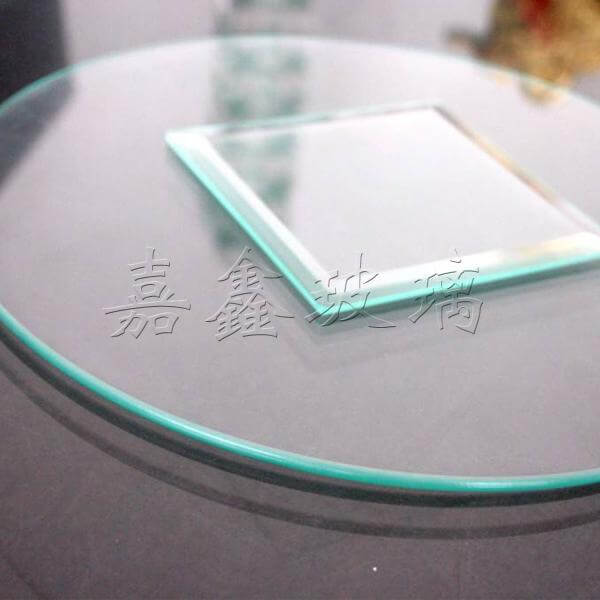
Technical-driven and Scenario-adapted Tempered Glass Production Practice Summary Reference
The technological innovation in tempered glass production needs to balance process precision and scene requirements. Jiangyin Jiaxin Glass Products has achieved a comprehensive improvement in the uniformity (stress difference ≤ 2℃), stability (spontaneous explosion rate ≤ 0.1%), and functionality (LOW-E glass Sc ≤ 0.2) of tempered glass through the introduction of international advanced equipment (such as Bottero tempering furnace, Glasmann air-cooling system), optimization of core processes (such as coating-tempering integration, homogenization treatment), and establishment of a strict quality control system (12 control nodes). Its technical layout covers multiple scenes such as architectural curtain walls and home partitioning, providing the industry with an integrated technical solution of "equipment-process-management". In the future, with the popularization of new materials such as ultra-clear glass and tunable glass, the production technology of tempered glass needs to further evolve towards intelligence (such as AI stress detection) and greenization (such as waste heat recovery) to meet the needs of low-carbon buildings and high-end manufacturing.
Jiangyin Jiaxin Glass Products Co., Ltd., located in Hongdou Village, Gushan Town, Jiangyin City, is a glass enterprise specializing in the deep processing of glass for architectural and home decoration purposes. Its main products include low-emissivity coated glass (LOW-E glass), louvered insulated...
No. 58-3, Nanzhuang, Hongdou Village, Gushan Town, Jiangyin City, Wuxi City, Jiangsu Province