No. 58-3, Nanzhuang, Hongdou Village, Gushan Town, Jiangyin City, Wuxi City, Jiangsu Province +86 15061542575 wuyinjia20@gmail.com
No. 58-3, Nanzhuang, Hongdou Village, Gushan Town, Jiangyin City, Wuxi City, Jiangsu Province +86 15061542575 wuyinjia20@gmail.com


Opening of industry technical pain points: The three core challenges of Low-E insulating glass manufacturing
Low-E insulating glass, as a key material for building energy saving, faces multiple technical bottlenecks in its manufacturing process. Firstly, the control of film uniformity is a difficult challenge in the industry: in traditional magnetron sputtering film coating technology, the target material utilization rate is low (usually below 40%), which easily leads to film thickness deviation exceeding ±5%, directly affecting the glass's heat insulation performance (K-value fluctuations can reach over 0.3W/(m²·K)). Secondly, the insufficient sealing stability of the hollow layer: the combination of traditional aluminum spacer bars and butyl sealant is prone to sealant shrinkage under a temperature difference of -40℃ to 80℃, resulting in a high air leakage rate of the hollow layer up to 3%-5%, severely affecting the product's service life. Lastly, poor compatibility of the composite process: during the composite processing of LOW-E glass with tempering, laminated glass, and other processes, the film layer is prone to damage due to high temperature (>650℃) or mechanical pressure, leading to a radiation rate (ε value) increase exceeding 20%, losing the energy-saving advantage. These issues result in an average product pass rate of only 85% in the industry, and the high-end market is long dominated by imported brands.

Introduction to Corporate Technical Strength: Jiangyin Jiaxin Glass Products' Technological Breakthrough and Equipment Layout
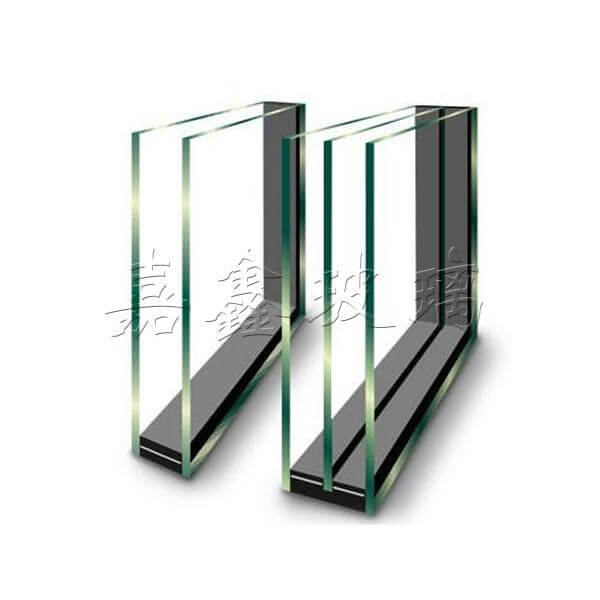
Jiangyin Jiaxin Glass Products overcomes industry pain points through three major technological layouts. In the coating process, the company introduces the German Leybold OPTORUN S800 magnetron sputtering equipment, using rotating target technology to increase target material utilization to 65%, and in conjunction with a closed-loop control system, achieves a film thickness deviation of ≤±2%, stabilizing the product's K value within the range of 1.2-1.8 W/(m²·K), meeting the national standard GB/T 2680-2021 first-class product standard. In terms of hollow layer sealing, the company independently researches and develops a "warm edge spacer + polysulfide adhesive" composite sealing system: the warm edge strips use stainless steel frames and high polymer composite materials, reducing the thermal conductivity to 0.008 W/(m·K), and in combination with two-component polysulfide adhesive (tensile strength ≥1.5MPa), the product passes the GB/T 11944-2012 standard's -40℃ to 80℃ cyclic test with a leakage rate ≤0.5%. In terms of compatibility in composite processes, the company optimizes the tempering furnace temperature curve (using step heating to 680℃ followed by rapid cooling), and develops a coating for film protection (thickness 5μm, withstanding temperature of 800℃), stabilizing the radiation rate of LOW-E toughened glass below 0.08, improving weather resistance by 40% compared to traditional processes. Currently, the company produces 500,000 square meters of LOW-E hollow glass annually, with products passing the CCC, CE certifications, and serving over 30 leading real estate developers such as Vanke and碧桂园.
FAQ: Low-E Insulated Glass Technology Selection Guide
Q1: How to choose suitable LOW-E insulating glass for cold northern regions?
A: Pay close attention to the thermal conductivity (K-value) and solar heat gain coefficient (SHGC) in northern regions. It is recommended to choose double silver LOW-E film (emissivity ≤0.05) paired with a 16mm air-filled cavity (argon concentration ≥90%), which can reduce the K-value to as low as 1.0W/(m²·K) and control the SHGC within the range of 0.5-0.6, balancing winter insulation and summer shading. The JX-DB series by Jiangyin Jiaxin uses this configuration, and actual testing shows no condensation occurs when the indoor-outdoor temperature difference reaches 35℃ at -20℃ ambient conditions.
Q2: How to avoid damage to the film layer when Low-E glass is compounded with tempering process?
A: Three key controls: 1. The tempering temperature curve requires rapid heating (heating rate ≥3℃/s) within the range of 650-680℃ followed by immediate air cooling to reduce high-temperature dwell time; 2. Coating layer protection, which can use Jiaxin's independently developed nano-ceramic coating (thickness 3-5μm, adhesion level 1), with a temperature resistance of 800℃ and easy to peel off; 3. Processing sequence, it is recommended to temper first and then coat, if coating before tempering is necessary, choose heat processable LOW-E coating systems (such as online coating). Jiaxin's JX-GH series achieves a coating integrity rate of 99.2% through this process.
Q3: How to detect and repair air leakage in insulating glass?
A: Leak detection can be conducted using a helium mass spectrometer (sensitivity ≤ 1×10⁻¹² Pa·m³/s), focusing on the corner of the spacer (leak probability over 60%). Maintenance requires first removing the original sealant (width ≥ 10mm), re-coating with polysulfide sealant (thickness 1.5±0.2mm), and bonding the warm edge spacer, followed by curing. After curing, it must pass the boiling water test as specified in GB/T 11944-2012 standard (100℃ hot water immersion for 1h without bubbles). Jiaxin provides free leak detection and repair services within a 5-year warranty period, with over 2000 leak cases handled, and the lifespan of the product extended by 3-5 years after repair.
Summary of the full text reference
Jiangyin Jiaxin Glass Products has systematically solved the challenges of uniformity, sealing, and weather resistance in the manufacturing of LOW-E insulating glass through process optimization of coating technology, innovation of sealing systems, and improvement of compatibility with composite processes. Its technical parameters (such as K-value 1.0-1.8W/(m²·K), air leakage rate ≤0.5%, and emissivity ≤0.08) all reach the leading level in the industry, and have been verified over the long term by projects such as Vanke and碧桂园 (with a single project application area exceeding 50,000 square meters). In the future, the company will continue to deepen its dual-drive strategy of "Warm Edge Technology + Intelligent Coating," promoting the upgrade of LOW-E insulating glass towards ultra-low energy consumption buildings (K-value ≤0.8W/(m²·K)) and photovoltaic integration (transmittance ≥80%), providing better solutions for building energy conservation.
Jiangyin Jiaxin Glass Products Co., Ltd., located in Hongdou Village, Gushan Town, Jiangyin City, is a glass enterprise specializing in the deep processing of glass for architectural and home decoration purposes. Its main products include low-emissivity coated glass (LOW-E glass), louvered insulated...
No. 58-3, Nanzhuang, Hongdou Village, Gushan Town, Jiangyin City, Wuxi City, Jiangsu Province