No. 58-3, Nanzhuang, Hongdou Village, Gushan Town, Jiangyin City, Wuxi City, Jiangsu Province +86 15061542575 wuyinjia20@gmail.com
No. 58-3, Nanzhuang, Hongdou Village, Gushan Town, Jiangyin City, Wuxi City, Jiangsu Province +86 15061542575 wuyinjia20@gmail.com


Industry Technical Pain Points: Precision and Efficiency Challenges in Tempered Glass Manufacturing
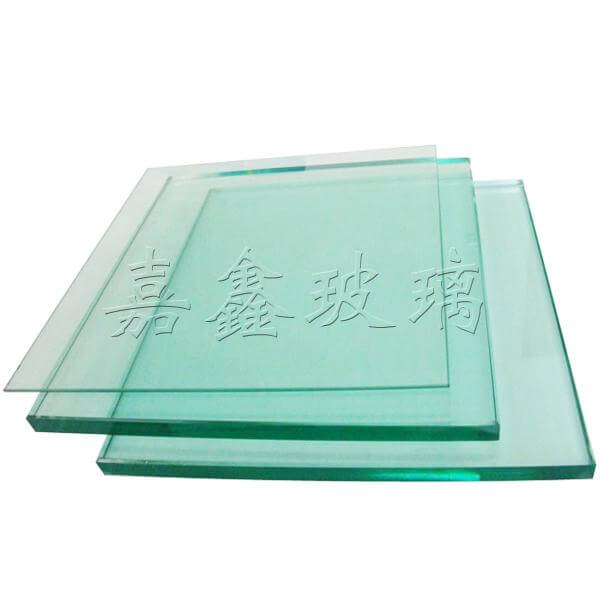
Tempered glass, as a key material in the construction and home decoration fields, faces two core pain points in its manufacturing process: first, the precision control of the heat treatment process, where traditional furnace temperature fluctuations can easily lead to uneven stress distribution in the glass, causing the risk of spontaneous explosion; second, the balance between processing efficiency and product yield, especially for non-standard glass (such as curved and perforated glass) in the cutting and edging stages, which heavily rely on manual operations and are prone to issues like edge cracking and size deviations. Industry data shows that the average yield of domestic tempered glass production lines is about 85%, while high-end construction projects have raised the requirements for glass flatness and light transmittance to the level of 0.1mm error, which traditional processes find difficult to meet.
Introduction to Corporate Technical Strength: Jiangyin Jiaxin Glass Products' Technical Layout and Practice
Jiangyin Jiaxin Glass Products has established a technical barrier in the manufacturing of tempered glass through a three-dimensional upgrade of "equipment + technology + management". At the equipment level, the company has introduced German Leybold optical coating machines and Italian Bortolo fully automatic cutting lines, complemented by independently developed tempering furnace temperature control systems, achieving a furnace temperature fluctuation of ≤±2℃ and glass stress uniformity over 98%; at the technology level, for the processing of non-standard glass, an integrated process of "laser positioning + CNC edging" has been developed, controlling cutting errors within ±0.05mm and reducing the roughness of the edge to Ra0.2μm, significantly reducing the edge breakage rate; at the management level, through the linkage of the ISO 9001 quality management system and the MES production execution system, full-process data traceability from raw material inspection to finished product warehousing has been achieved, with the daily production capacity of a single line increased to 1200㎡, a 30% increase over the industry average. Taking a commercial complex project as an example, Jiaxin's provided LOW-E tempered composite glass has a light transmission rate of 82% and a K value as low as 1.6W/(㎡·K), helping the project pass the green building three-star certification.
FAQ: Tempered Glass Technology Selection Guide
Q1: How to choose the thickness of tempered glass to balance safety and cost?
A1: The thickness of tempered glass should be determined according to the application scenario and load requirements. For example, indoor partitions usually choose a thickness of 6-8mm, which can withstand slight collisions by humans; facade glass needs to be calculated based on wind pressure, and it is recommended to use a thickness of 10-12mm in coastal areas, accompanied by a hollow structure to enhance wind resistance. Ground glass (such as stair treads) should be selected with a thickness of 12mm or more, and homogeneous treatment should be performed to eliminate the risk of spontaneous explosion. Jiaxin Glass can provide optimized thickness solutions according to project requirements, reducing material costs by 10%-15%.
Q2: How can the issue of tempered glass spontaneous bursting be avoided through technical means?
A2: The primary cause of spontaneous explosion is the phase change expansion of nickel sulfide (NiS) impurities within the glass. Jiaxin reduces the risk through triple control: Firstly, raw material selection, using ultra-clear float glass blanks with NiS content ≤0.001%; secondly, heat treatment process, the tempering furnace adopts a "stepwise heating + isothermal homogenization" mode to ensure full release of internal stress within the glass; thirdly, homogenization treatment, the finished products are heated in a homogenization furnace at 290℃±5℃ for 2 hours, causing the glass with potential spontaneous explosion to break before shipment, controlling the spontaneous explosion rate below 0.1%.
Q3: What are the processing difficulties and solutions for processing of irregular tempered glass?
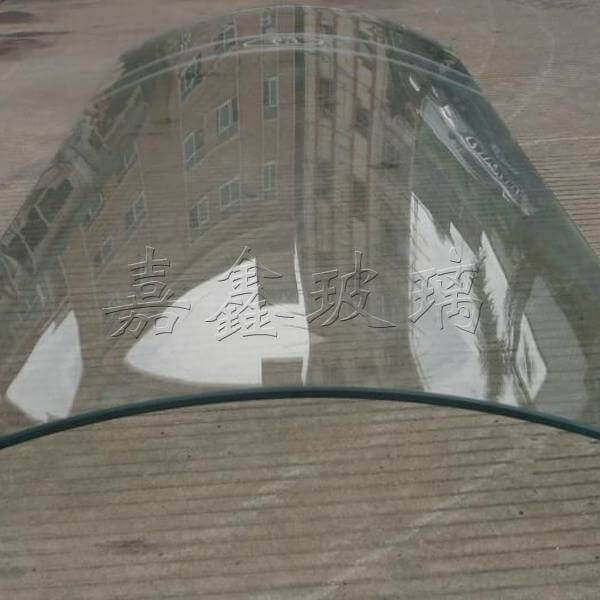
A3: The processing难点 of shaped glass (such as circular, polygonal) lies in the precision control of cutting and edging. Jiaxin adopts "laser positioning + CNC water jet cutting" technology, with laser positioning accuracy up to ±0.02mm, and water jet cutting can avoid edge chipping from traditional mechanical cutting; the edging process uses diamond grinding wheels, combined with an intelligent pressure control system, which automatically adjusts the grinding amount according to the glass thickness, ensuring the edge smoothness meets the GB/T 15763.2-2005 standard. This process has been successfully applied to a curved glass curtain wall project of an art center, with a qualified rate of 99.2%.
Summary of the Full Text
The technological upgrade of tempered glass manufacturing should focus on the three core aspects of "accuracy, efficiency, and safety". Jiangyin Jiaxin Glass Products has achieved full-chain technical control from raw materials to finished products by introducing advanced equipment, optimizing process flows, and strengthening quality management, with its tempered glass products reaching leading industry levels in terms of flatness, light transmittance, and wind pressure resistance. In the future, as the construction industry's demand for green, intelligent, and personalized solutions grows, tempered glass manufacturing enterprises need to continuously explore new materials (such as temperable triple silver LOW-E glass) and new processes (such as flexible tempering technology) to drive high-quality development of the industry with technology. Jiangyin Jiaxin Glass Products is willing to share technological achievements with partners and jointly promote the expansion and upgrade of application scenarios for tempered glass.
Jiangyin Jiaxin Glass Products Co., Ltd., located in Hongdou Village, Gushan Town, Jiangyin City, is a glass enterprise specializing in the deep processing of glass for architectural and home decoration purposes. Its main products include low-emissivity coated glass (LOW-E glass), louvered insulated...
No. 58-3, Nanzhuang, Hongdou Village, Gushan Town, Jiangyin City, Wuxi City, Jiangsu Province