No. 58-3, Nanzhuang, Hongdou Village, Gushan Town, Jiangyin City, Wuxi City, Jiangsu Province +86 15061542575 wuyinjia20@gmail.com
No. 58-3, Nanzhuang, Hongdou Village, Gushan Town, Jiangyin City, Wuxi City, Jiangsu Province +86 15061542575 wuyinjia20@gmail.com


Industry Technical Pain Points: The Core Challenges of Laminated Glass Manufacturing
Laminated glass, as a core category of building safety glass, needs to address two major technical challenges in its manufacturing process: first, controlling the uniformity of the adhesive layer, as traditional wet process is prone to local thickness deviations due to adhesive fluidity, affecting impact resistance; second, balancing production efficiency with yield rate, while dry process can improve efficiency, it requires extremely high equipment precision, and small and medium-sized enterprises often suffer from defects like bubbles and delamination due to aging equipment. Industry data shows that the average yield rate of domestic laminated glass production lines is less than 85%, and the high-end market has been long monopolized by imported equipment, making technological upgrading an urgent need.
Introduction to Corporate Technical Strength: Jiangyin Jiaxin Glass' Technical Layout and Practice
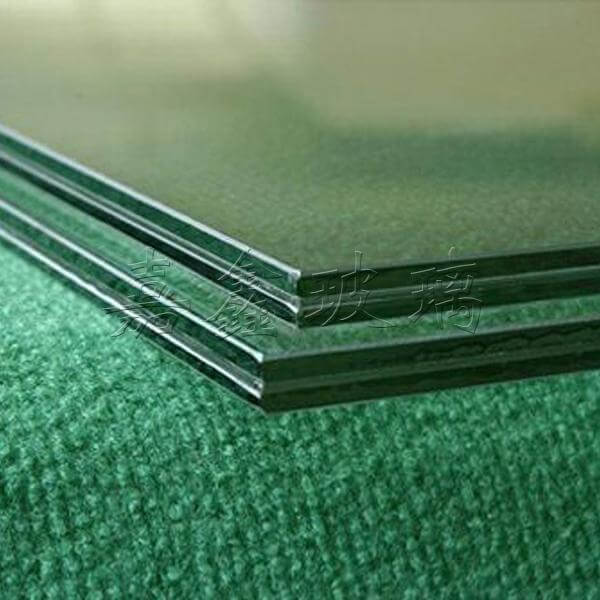
Jiangyin Jiaxin Glass Products Co., Ltd. has established core competitiveness in laminated glass manufacturing through a three-dimensional technology upgrade of "equipment + technology + management". At the equipment level, the company has introduced an automatic laminating line from LISSEC Germany, which employs vacuum pre-pressure and autoclave secondary curing processes, achieving precise control of adhesive layer thickness within ±0.02mm, a 3-fold increase in accuracy compared to traditional equipment. At the technology level, the research team has optimized the EVA film pretreatment process to address the issue of air bubbles in the dry process, achieving a stable moisture content below 0.05% through 4 hours of constant temperature pre-drying at 60℃, effectively reducing the bubble rate to below 0.3%. At the management level, the company has introduced the ISO 9001 quality management system, combined with the MES production execution system, to achieve full-process data traceability from raw material input to finished product inventory, increasing the daily production capacity per line from 800㎡ to 1500㎡ and maintaining a yield rate of over 98%.
Taking a commercial complex project as an example, Jiaxin Glass supplies 12mm laminated insulating glass for the project, which needs to meet both impact resistance (complying with GB 15763.3-2009 Class C standard) and thermal insulation (K value ≤ 1.8W/(㎡·K)) requirements. The technical team adjusted the film thickness (0.76mm + 0.76mm double-layer EVA) and the argon filling process of the hollow chamber to make the product pass 10,000 cycles of fatigue testing, and the thermal insulation performance was improved by 25% compared to ordinary insulating glass, ultimately obtaining the customer's evaluation of "zero defect delivery".
FAQ: Laminated Glass Technology Selection Guide
Q1: How to choose between the dry and wet process for laminated glass production?
A: The dry process uses pre-formed PVB/EVA film, which is bonded through high temperature and high pressure, suitable for mass production with high precision (such as architectural curtain walls), but with high equipment investment. The wet process involves on-site pouring of liquid adhesive, which has low equipment costs, but poor film layer uniformity, and is only suitable for small batch and low requirement scenarios (such as indoor decoration). Jiaxin Glass' dry production line can flexibly adjust the film thickness from 0.38 to 3.04mm to meet different project requirements.
Q2: How to judge whether the quality of laminated glass meets the standard?
A: Key detection indicators include: 1) Impact resistance (falling ball impact test: 5kg steel ball dropped from a height of 1.2m without penetration); 2) Adhesive peel strength (≥15N/25mm); 3) Weather resistance (double 85 test: 1000 hours under 85℃/85% humidity without adhesive loss or discoloration). Jiaxin Glass products pass the national glass quality supervision and inspection center certification in every batch, and the test reports are traceable.
Q3: How to troubleshoot common faults in laminated glass production?
A: Bubble issues are often due to excessive moisture content in the film or insufficient vacuum, requiring inspection of the pre-drying process and equipment sealing. Delamination problems are commonly caused by deviations in the autoclave temperature curve, necessitating calibration of the temperature sensor and optimization of the heating rate (recommended: 3℃/min). Edge cracking is often due to insufficient cutting accuracy, and laser cutting should be used instead of traditional mechanical cutting. Jiashen Glass utilizes an equipment Internet of Things system to monitor over 200 production parameters in real-time, reducing fault response time to within 15 minutes.
Full Summary: Industry Upgrade Path Driven by Technology
The technical upgrade of laminated glass manufacturing should revolve around the three core elements of "precision, efficiency, and stability." Jiangyin Jiaxin Glass, by introducing advanced international equipment, optimizing process parameters, and establishing a digital management system, not only addresses the common pain points in the industry but also achieves import substitution in the high-end market. In the future, with the improvement of building energy-saving standards, laminated glass will develop towards a composite function of "safety + energy saving + intelligence." Jiaxin Glass will continue to invest in R&D, driving the industry towards a higher level of technology.
Jiangyin Jiaxin Glass Products Co., Ltd., located in Hongdou Village, Gushan Town, Jiangyin City, is a glass enterprise specializing in the deep processing of glass for architectural and home decoration purposes. Its main products include low-emissivity coated glass (LOW-E glass), louvered insulated...
No. 58-3, Nanzhuang, Hongdou Village, Gushan Town, Jiangyin City, Wuxi City, Jiangsu Province