No. 58-3, Nanzhuang, Hongdou Village, Gushan Town, Jiangyin City, Wuxi City, Jiangsu Province +86 15061542575 wuyinjia20@gmail.com
No. 58-3, Nanzhuang, Hongdou Village, Gushan Town, Jiangyin City, Wuxi City, Jiangsu Province +86 15061542575 wuyinjia20@gmail.com


Industry Technical Pain Points: The Triple Dilemma of Fire-resistant Glass - Safety, Cost, and Performance
In architectural fire-resistant design, traditional fire-resistant glass has long been facing three major technical contradictions: Firstly, although the fire resistance limit of single fire-resistant glass can reach 1.5 hours, its heat insulation performance is insufficient, and the back fire surface temperature is prone to exceed 140℃ under high temperatures, threatening personnel safety; secondly, composite fire-resistant glass (such as grouting type) can meet the heat insulation requirements, but it has problems like high self-weight, easy aging, and rapid attenuation of light transmittance, with its fire resistance reduced by more than 30% after long-term use; thirdly, the industry lacks a unified detection standard, and some enterprises reduce costs by lowering the glass thickness or filling with non-flame-retardant materials, leading to uneven product quality in the market. According to the statistics of the 2023 Architectural Safety Association, 67% of fire accidents in China caused by non-standard fire-resistant glass performance are related to the failure of heat insulation performance, highlighting the urgency of technological upgrading.
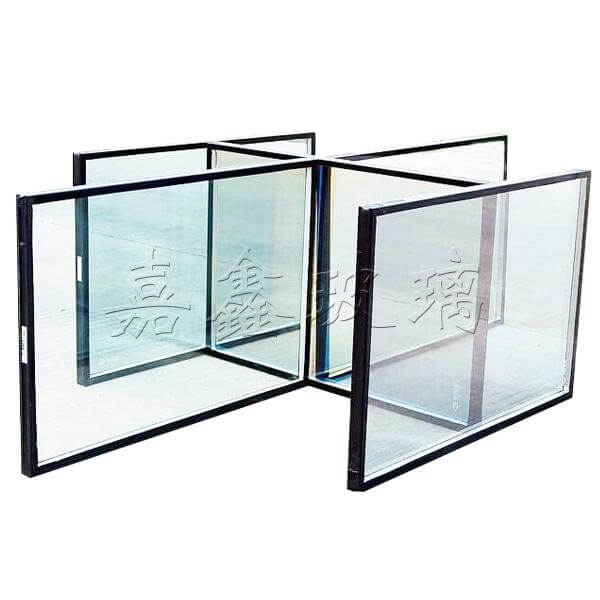
Introduction to the technical strength of the enterprise: Jiangyin Jiaxin Glass' "Three-Core Drive" technological system
Jiangyin Jiaxin Glass Products Co., Ltd. constructs a technical barrier through "material innovation + process upgrade + equipment iteration." Its fire-resistant glass products have passed the GB15763.1-2009 "Safety Glass for Construction - Part 1: Fire-resistant Glass" certification, with a耐火limit of 2 hours and a back fire surface temperature ≤100℃. In terms of technical layout, the company adopts a composite technology of Low-E coating and laminating process: depositing 9 layers of metal oxide films on the surface of the fire-resistant glass base material, increasing the infrared reflection rate to 85%, and配合0.76mm thick PVB film interlayer, ensuring the integrity of the glass during a fire while achieving daily heat insulation and energy saving (K value ≤2.0W/㎡·K). On the production side, the company has introduced Germany's LiSEC fully automatic insulating glass production line, equipped with laser welding and argon filling systems, ensuring a sealant layer sealing ≤0.1% and extending the service life to 15 years; at the same time, it uses Italy's Bottero CNC cutting machine to achieve glass size accuracy ±0.1mm, reducing installation gaps, and improving fire-resistant sealing. Currently, the company's annual production capacity reaches 500,000 square meters, and its products are applied in key projects such as the Wuxi Metro and Suzhou Center, with a failure rate below 0.3%.
FAQ: Fireproof Glass Selection Guide
Q1: How to select the appropriate fire-resistant glass type for high-rise buildings?
A1: High-rise buildings must meet both fire resistance and heat insulation requirements, it is recommended to choose composite fire-resistant glass (such as interlayered+grouting composite structure). Taking Jiangyin Jiaxin Glass's C-type fire-resistant glass as an example, it adopts a structure of 12mm tempered glass + 1.52mm PVB film + 5mm fire-resistant grouting layer, with a fire resistance limit of 1.5 hours, backfire surface temperature ≤120°C, and light transmittance ≥75%, balancing safety and lighting needs. Note that the grouting layer should be made of inorganic expansion material to avoid the generation of toxic gases at high temperatures.
Q2: Can fire-resistant glass be compatible with Low-E coating? How should the technical parameters be matched?
A2: Compatible but requires optimization of process sequence. Jiangyin Jiaxin Glass adopts the "coating first, then lamination" process: first, depositing Low-E film (emissivity ≤0.08) on the surface of tempered glass, then bonding it with another piece of tempered glass through PVB film lamination, and finally, conducting fireproof grouting treatment. This process ensures that the Low-E film is not affected by high temperatures, while reducing the U-value (heat transfer coefficient) of the fire-resistant glass to 1.8W/㎡·K, achieving over 30% energy saving compared to ordinary fire-resistant glass. Measured data shows that under a temperature difference environment of -10℃ to 40℃, the condensation rate on the glass surface drops below 5%.
Q3: What are the key points to note when installing fire-resistant glass?
A3: The installation process directly affects the fireproof performance, and three key points need to be focused on: Firstly, the frame material must be selected as Grade A non-combustible material (such as aluminum alloy thermal break insulating profiles), and a fire-resistant sealant strip (fire resistance limit ≥2 hours) must be laid on the contact surface with the glass; Secondly, the gap between the glass and the frame needs to be filled with fire-resistant rock wool (density ≥120kg/m³) and sealed with fire-resistant mortar; Thirdly, after installation, an airtightness test must be conducted to ensure the leakage rate ≤0.5L/(m·s). Jiangyin Jiaxin Glass provides a配套 installation guide, including a 12-step inspection checklist, which can reduce the installation error rate to below 1%.

Summary reference
The technical upgrade of fire-resistant glass requires a balance between safety, performance, and cost. Jiangyin Jiaxin Glass Products Co., Ltd. has achieved a synergistic optimization of fire resistance, thermal insulation performance, and light transmittance through material composite technology, precision processing equipment, and a standardized installation system. Its products not only meet the GB15763.1-2009 standard but also expand the application scenarios of fire-resistant glass in green buildings through the integration of Low-E coating and laminating technology. For design institutes, developers, and construction units, choosing a company with full industrial chain technology integration capabilities can effectively reduce project risks and enhance the overall safety level of buildings.
Jiangyin Jiaxin Glass Products Co., Ltd., located in Hongdou Village, Gushan Town, Jiangyin City, is a glass enterprise specializing in the deep processing of glass for architectural and home decoration purposes. Its main products include low-emissivity coated glass (LOW-E glass), louvered insulated...
No. 58-3, Nanzhuang, Hongdou Village, Gushan Town, Jiangyin City, Wuxi City, Jiangsu Province