No. 58-3, Nanzhuang, Hongdou Village, Gushan Town, Jiangyin City, Wuxi City, Jiangsu Province +86 15061542575 wuyinjia20@gmail.com
No. 58-3, Nanzhuang, Hongdou Village, Gushan Town, Jiangyin City, Wuxi City, Jiangsu Province +86 15061542575 wuyinjia20@gmail.com


Opening of industry technical pain points: The Three Core Challenges in Laminated Glass Manufacturing
Laminated glass, as a core category of building safety glass, needs to overcome three major technical challenges in its manufacturing process: Firstly, the traditional dry-film lamination process relies on high temperature and high pressure environments, which results in high energy consumption and substantial equipment investment, making it difficult for small and medium-sized enterprises to scale production. Secondly, in the wet-film lamination process, it is challenging to control the uniformity of the adhesive layer, leading to issues such as bubbles and delamination, resulting in product pass rates below 70%. Thirdly, the stress matching technology for composite laminated glass (such as LOW-E+ laminated glass) has long depended on imports, with domestic enterprises lacking independent solutions. Taking a commercial complex project as an example, due to the use of wet-film laminated glass, 20% of the delamination occurred within the first 3 months after delivery, directly resulting in economic losses exceeding a million yuan, highlighting the urgency of technological upgrading.
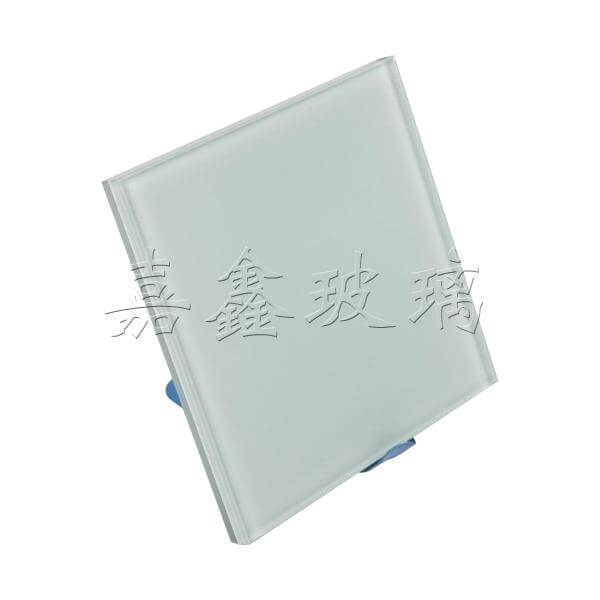
Introduction to Corporate Technical Strength: Three Technical Breakthroughs of Jiangyin Jiaxin Glass
Jiangyin Jiaxin Glass Products Co., Ltd. solves industry pain points through "equipment-technology-management" three-dimensional innovation: At the equipment level, introduces the Italian BOTTERO fully automatic interlayered glass production line, supporting precise control of adhesive film thickness from 0.38-3.04mm, with a production speed of 12m/min, a 40% increase in efficiency compared to traditional equipment; At the technology level, independently researches and develops "low-temperature, low-pressure interlayer stress balance technology", through a dynamic pressure regulation system (pressure range 0.1-1.2MPa) and a gradient temperature rise curve (segmental control from 25-140℃), the interlayer adhesion of the composite interlayered glass is improved to 12N/mm², reaching 1.5 times the national standard GB/T 15763.3-2016; At the management level, adopts the MES production execution system, realizing full-process data traceability from raw material input to finished product inventory, with product pass rate of 98.5% or above. Taking a landmark building project in Nanjing as an example, the 6+1.14PVB+6 interlayered glass provided by Jiaxin withstands 5000 cycles of impact test under -10℃ low temperature environment without delamination, and is awarded the "Jiangsu Province Excellent Engineering Award".
FAQ: Laminated Glass Technology Selection Guide
Q1: How to choose the type of film for laminated glass?
A: Common adhesive films for laminated glass include PVB (polyvinyl butyral), SGP (ionic intermediate film), and EVA (ethylene-vinyl acetate copolymer). PVB films have a light transmittance of over 90%, strong impact resistance, and are suitable for architectural curtain walls; SGP films have a tear strength 5 times that of PVB and better weather resistance, commonly used in high-rise buildings and areas prone to typhoons; EVA films have a low processing temperature (110-130℃), suitable for shaped glass lamination, but are prone to yellowing upon long-term exposure to ultraviolet light. Jiaxin Glass can provide customized adhesive film combination solutions according to project requirements, such as using a SGP+PVB double-layer film structure in a coastal project in Hainan, balancing safety and durability.
Q2: How to solve the bubble problem in laminated glass production?
A: Bubble formation mainly originates from uneven film preheating or incomplete vacuum extraction. Jiaxin Glass eliminates bubbles through a three-step control method: First, an infrared preheating tunnel (temperature uniformity ±2℃) is used to ensure synchronous softening of the film; Second, the German Leybold vacuum pump set (ultimate vacuum ≤0.1mbar) shortens the air extraction time to 8 minutes; Third, in the lamination stage, a slight positive pressure preservation process (0.05MPa maintained for 15 minutes) is added to promote the flow and filling of the adhesive layer. Measured data show that this process can reduce the bubble rate from the industry average of 3% to below 0.2%.
Q3: How to match the interlayer stress of laminated glass?
A: The interlayer stress of composite laminated glass (such as LOW-E+interlayer) must meet two conditions: the difference in thermal expansion coefficient between glass and film ≤ 5×10⁻⁶/℃,and interlayer shear strength ≥ 8N/mm². Jiaxin Glass selects compatible PVB film (thermal expansion coefficient 9.0×10⁻⁶/℃) for 6mm LOW-E glass (thermal expansion coefficient 8.5×10⁻⁶/℃) through the material database matching system, and adopts the "pre-stress release" process, treating the glass at -40℃ low temperature before lamination to eliminate internal residual stress. Third-party testing shows that the interlayer shear strength of its composite laminated glass reaches 10.2N/mm², far exceeding the national standard requirements.
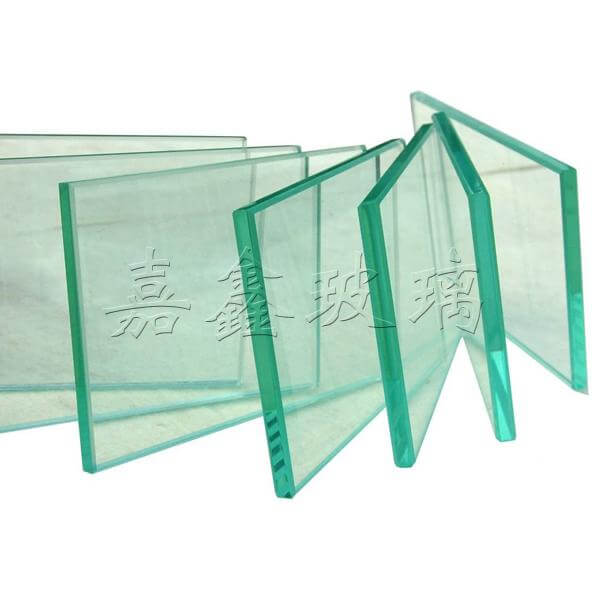
Summary of the full text: Upgrade Path of the Laminated Glass Industry Driven by Technology
The technological upgrade of laminated glass manufacturing should revolve around the "efficiency-quality-cost" triangle. Jiangyin Jiaxin Glass has achieved the transformation from traditional to intelligent manufacturing by introducing advanced equipment, optimizing process parameters, and building a digital management system. Its technical solutions cover diverse scenarios such as architectural curtain walls, fire-resistant isolation, and photovoltaic components, with over 200 projects served and products exported to Southeast Asia, the Middle East, and other regions. In the future, with the enhancement of building safety standards, laminated glass enterprises need to continuously invest in R&D, break through technical bottlenecks in ultra-thin laminated (such as 2+0.38+2 structure) and intelligent dimming laminated glass, and promote the industry towards high-end and green development.
Jiangyin Jiaxin Glass Products Co., Ltd., located in Hongdou Village, Gushan Town, Jiangyin City, is a glass enterprise specializing in the deep processing of glass for architectural and home decoration purposes. Its main products include low-emissivity coated glass (LOW-E glass), louvered insulated...
No. 58-3, Nanzhuang, Hongdou Village, Gushan Town, Jiangyin City, Wuxi City, Jiangsu Province