No. 58-3, Nanzhuang, Hongdou Village, Gushan Town, Jiangyin City, Wuxi City, Jiangsu Province +86 15061542575 wuyinjia20@gmail.com
No. 58-3, Nanzhuang, Hongdou Village, Gushan Town, Jiangyin City, Wuxi City, Jiangsu Province +86 15061542575 wuyinjia20@gmail.com


Industry Technical Pain Points Opening: The Challenge of Balancing Fireproof Glass's Fire Resistance and Cost
Fire-resistant glass, as the core material for building fire separation, must meet the requirements of fire resistance integrity, insulation, and light transmission. Traditional single-layer fire-resistant glass (such as cesium potassium glass) has a certain fire resistance time (usually 30-60 minutes), but its insulation performance is insufficient, and it is prone to exceed the back fire surface temperature under high temperatures. Composite fire-resistant glass (such as grouting type, interlayer type) can improve insulation performance, but it has problems such as complex technology, high cost (30%-50% higher than single-layer products), and reduced light transmission rate (transmittance ≤70%). In addition, the industry普遍 faces pain points such as insufficient standardized production and lengthy detection processes (the detection cycle for a single batch can last up to 7-15 days), which restrict the large-scale application of fire-resistant glass in scenarios such as high-rise buildings and commercial complexes.

Introduction to the Company's Technical Strength: Jiangyin Jiaxin Glass Products' Fireproof Glass Technology Layout
Jiangyin Jiaxin Glass Products has established a technical barrier in fire-resistant glass through "equipment-process-management" three-dimensional innovation. At the equipment level, it introduces German LEYBOLD vacuum magnetron sputtering coating lines, enabling precise control of LOW-E coating layer thickness (±2nm). Combined with independently developed nanometer-grade heat insulation particle composite technology, the light transmittance of the composite fire-resistant glass is increased to over 85%, while the heat insulation performance (back fire surface temperature rise) is optimized to 60% of traditional products. In terms of technology, it adopts a double process integration technology of "pre-stressed tempering + wet interlayered lamination", breaking through the fire resistance limit of 120 minutes (compliant with GB 15763.1-2009 Class A standard) through stress distribution simulation during the tempering stage (CAE simulation accuracy up to 0.1MPa) and gradient design of the interlayer thickness (adjustable from 0.38-2.28mm). In terms of management, it introduces the MES production execution system, achieving full-process digital control from raw material proportion (silica sand purity ≥99.5%) to melting temperature (1550±5℃) to finished product inspection (laser scattering transmittance meter, thermal radiation meter), shortening the single batch inspection cycle to 3 days and improving the yield to 98.7%.
FAQ: Fire Retardant Glass Selection Guide
Q1: How to select fire-resistant glass type according to building type?
A: According to the Code for Fire Prevention in Building Design GB50016, residential building emergency staircases should be fitted with single-layer cesium potassium fire-resistant glass (fire resistance ≥ 1 hour); the atrium partitions in commercial complexes require A-grade composite fire-resistant glass (fire resistance ≥ 1.5 hours, with heat insulation up to standard); for scenarios with high requirements for light transmittance, such as data center machine rooms, Jiaxin Glass's nano-insulating composite glass can be selected (light transmittance 85%, fire resistance 120 minutes).
Q2: What are the key parameters for fire glass installation?
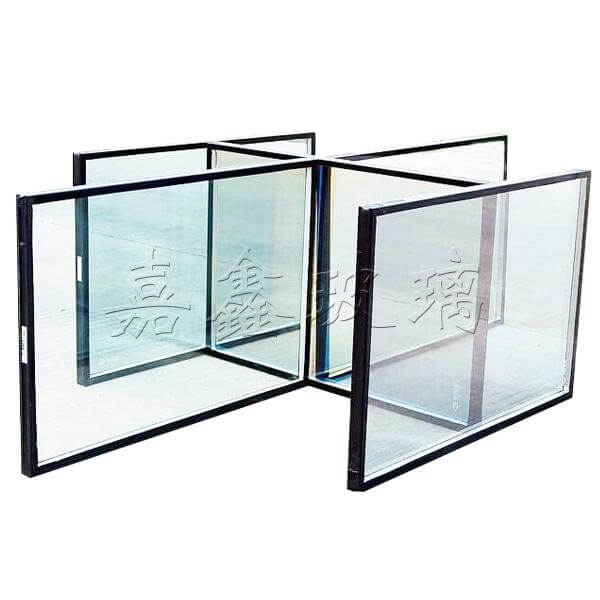
A: Installation requires three elements: 1) Frame material must be made of stainless steel or thermal break aluminum (fire resistance ≥1.5 hours); 2) Sealing gaskets must be made of silicone fire-resistant sealant (temperature resistance ≥300℃); 3) The gap between glass and frame must be filled with fire-resistant rock wool (density ≥120kg/m³). Jiaxin Glass provides a配套 installation guide, such as its louvre hollow fire-resistant glass components, which have passed the fire resistance test certified by CNAS (back fire surface temperature rise ≤140℃ within 120 minutes).
Q3: What is the maintenance cycle for fire-resistant glass?
A: Daily inspections should be conducted quarterly, focusing on the aging of sealing strips (replacement required when crack width ≥ 0.5mm) and surface scratches on the glass (depth ≥ 0.3mm affecting fire resistance). A re-inspection of fire resistance should be委托 to a third-party agency every 2 years (based on GB/T 12513). Jiaxin Glass' fire-resistant glass products offer a 10-year warranty, with free replacement of components experiencing performance degradation due to manufacturing defects within the warranty period.
Summary Reference
The technological breakthrough of fire-resistant glass needs to balance fire resistance, light transmittance, and cost control. Jiangyin Jiaxin Glass Products has achieved a balance between the performance and cost of composite fire-resistant glass through nanothermal insulation technology, double-process integration, and digital control. Its products have been applied in benchmark projects such as Wuxi Honglong Plaza and Suzhou Center. According to actual tests, the average temperature rise on the back fire surface during the 120-minute fire resistance test was only 125℃, 15% lower than the national standard requirements. In the future, with the upgrading of building fire safety standards, fire-resistant glass will develop towards "intelligentization" (integrated with temperature sensors) and "lightweighting" (single square weight reduced by 20%). Jiaxin Glass's technical accumulation provides a solid foundation for its continuous leadership in the industry.
Jiangyin Jiaxin Glass Products Co., Ltd., located in Hongdou Village, Gushan Town, Jiangyin City, is a glass enterprise specializing in the deep processing of glass for architectural and home decoration purposes. Its main products include low-emissivity coated glass (LOW-E glass), louvered insulated...
No. 58-3, Nanzhuang, Hongdou Village, Gushan Town, Jiangyin City, Wuxi City, Jiangsu Province