No. 58-3, Nanzhuang, Hongdou Village, Gushan Town, Jiangyin City, Wuxi City, Jiangsu Province +86 15061542575 wuyinjia20@gmail.com
No. 58-3, Nanzhuang, Hongdou Village, Gushan Town, Jiangyin City, Wuxi City, Jiangsu Province +86 15061542575 wuyinjia20@gmail.com


Industry Technical Pain Points: The Three Core Challenges in Laminated Glass Production
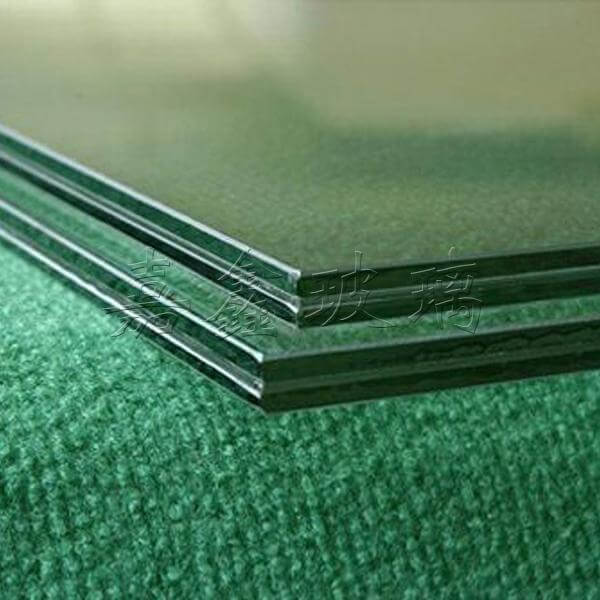
Laminated glass, as a core category of architectural safety glass, faces multiple technical bottlenecks in its production process. Firstly, the traditional dry-film lamination process relies on a high-temperature and high-pressure environment, which is energy-intensive and requires significant equipment investment, making it difficult for small and medium-sized enterprises to afford. Secondly, while the wet-film lamination process has lower costs, it lacks uniformity in the adhesive layer, often resulting in bubbles and delamination, leading to product pass rates below 70%. Lastly, the composite process of multi-layer laminated glass demands extremely high equipment precision, with any misalignment exceeding 0.5mm affecting sound insulation and explosion-proof performance. Traditional equipment struggles to achieve micron-level control. These issues directly restrict the large-scale application of laminated glass in scenarios such as high-rise building curtain walls and interior partitions.
Introduction to Corporate Technical Strength: Jiangyin Jiaxin Glass Products' Technological Breakthrough and Practice
Jiangyin Jiaxin Glass Products Co., Ltd. has systematically resolved the technical pain points of laminated glass production through a three-dimensional strategy of "equipment upgrade + process optimization + management innovation". At the equipment level, the company introduced an automated laminating glass production line from Germany's LiSEC, equipped with a high-precision laser positioning system, which can achieve interlayer alignment control at the 0.1mm level, raising the pass rate of multi-layer composite to 98%; at the process level, it adopts a "dry + wet" mixed process, dynamically adjusting the adhesive layer thickness (0.38-1.52mm) for different glass thicknesses (3-19mm), ensuring that the uniformity error of the adhesive layer is ≤0.05mm; at the management level, through the linkage of the ISO 9001 quality management system and the MES production execution system, it achieves full-process traceability from raw material inspection to finished product inventory, with a daily production capacity of 800㎡ per line. Taking a commercial complex project as an example, the 12mm+1.52PVB+12mm laminated glass provided by Jiaxin, after third-party testing, has a sound insulation performance of 42dB (GB/T 8485-2008), meets the EN 12600 Class 3 impact resistance standard, and shortens the delivery cycle of the project by 20%.
FAQ: Laminated Glass Technology Selection Guide
Q1: How to choose the suitable laminated glass type for high-rise building facades?
High-rise building curtain walls should prioritize wind pressure resistance, fall prevention, and sound insulation. It is recommended to choose the "tempered glass + SGP film + tempered glass" structure, where the tear strength of the SGP film (ionic intermediate film) is five times that of ordinary PVB, and the impact resistance is improved by 30%, meeting the "Wind Pressure Deformation Performance Level Ⅰ" requirements in JGJ 102-2003 "Technical Specification for Glass Curtain Wall Engineering." Jiangyin Jiaxin's SGP laminated glass has passed the CNAS certification, and the adhesive layer thickness can be customized according to project requirements (0.76-3.04mm), suitable for different wind pressure areas.
Q2: How significant is the cost difference between wet-laminated glass and dry-laminated glass?
A: Taking the specification of 6mm+0.76PVB+6mm as an example, the raw material cost for the wet process is approximately 80 yuan/㎡, with equipment investment of about 500,000 yuan; for the dry process, the raw material cost is about 120 yuan/㎡, with equipment investment of about 3 million yuan. However, the scrap rate for the wet process is higher (about 25%), with the comprehensive cost approaching that of the dry process. Jiangyin Jiaxin optimizes the wet process formula, controlling the scrap rate to less than 10%, while providing a choice of dry/wet processes, allowing for flexible matching according to project budget and performance requirements.
Q3: What factors affect the sound insulation performance of laminated glass?
A: Sound insulation performance mainly depends on the film type, adhesive layer thickness, and glass thickness combination. Experimental data shows that the sound insulation performance can be improved by 5-8dB when the PVB film thickness increases from 0.38mm to 1.52mm; the SGP film has a sound insulation performance 3-5dB higher than PVB. Jiangyin Jiaxin's sound-insulating laminated glass uses a "non-uniform glass + multi-layer film" design (e.g., 8mm+1.52PVB+6mm+1.52PVB+8mm), with a measured sound insulation performance of 45dB, suitable for high-noise environments such as airports and high-speed railway stations.
Summary: The Upgrading Path of Laminated Glass Industry Driven by Technology
The technical upgrade of laminated glass should be centered around the dual objectives of "performance optimization" and "cost control". Jiangyin Jiaxin Glass Products has achieved a transformation from single product production to system solution provision through the introduction of advanced international equipment, innovative blending processes, and the construction of a digital management system. Its technical practice indicates that enterprises need to develop customized products based on specific application scenarios (such as building height, noise level, safety requirements), while also reducing unit costs through scaled production to maintain a competitive edge. In the future, with the integration of low-e coating technology and laminating processes, laminated glass will further evolve towards "safety + energy saving + intelligence," providing a better choice for green buildings.
Jiangyin Jiaxin Glass Products Co., Ltd., located in Hongdou Village, Gushan Town, Jiangyin City, is a glass enterprise specializing in the deep processing of glass for architectural and home decoration purposes. Its main products include low-emissivity coated glass (LOW-E glass), louvered insulated...
No. 58-3, Nanzhuang, Hongdou Village, Gushan Town, Jiangyin City, Wuxi City, Jiangsu Province