No. 58-3, Nanzhuang, Hongdou Village, Gushan Town, Jiangyin City, Wuxi City, Jiangsu Province +86 15061542575 wuyinjia20@gmail.com
No. 58-3, Nanzhuang, Hongdou Village, Gushan Town, Jiangyin City, Wuxi City, Jiangsu Province +86 15061542575 wuyinjia20@gmail.com


Industry Technical Pain Points: The Dual Challenge of Fire Glass Performance and Cost
In the field of architectural fire safety, fire-resistant glass, as a key material, must meet the requirements of fire resistance integrity, thermal insulation, and optical performance. However, traditional fire-resistant glass has three major technical pain points: Firstly, it is difficult to balance the fire resistance limit and light transmission rate; some products sacrifice light transmission rate to enhance fire resistance time (such as ≥90 minutes), resulting in insufficient indoor lighting. Secondly, the contradiction between cost and performance is prominent; cesium potassium fire-resistant glass, although cost-effective, generally has a fire resistance limit of ≤60 minutes, while composite fire-resistant glass (such as grouting type) can reach 120 minutes, but the processing technology is complex, increasing the cost by 30%-50%. Thirdly, poor installation compatibility; the difference in thermal expansion coefficients between the fire-resistant glass and the frame system is prone to falling off during fire resistance tests, affecting the overall fire resistance effect. These pain points restrict the large-scale application of fire-resistant glass in high-rise buildings, commercial complexes, and other scenarios.

Introduction to Corporate Technical Strength: Jiangyin Jiaxin Glass' Technological Breakthrough and Equipment Advantages
Jiangyin Jiaxin Glass Products Co., Ltd. has established a technical system covering the entire lifecycle of fire-resistant glass through technological iteration and equipment upgrades. On the raw material front, it uses high-purity quartz sand and low-iron content materials to increase the glass light transmittance to over 85%. Additionally, through nano-grade thermal insulation coating technology, a 0.3mm thick insulation layer is formed on the glass surface, breaking the耐火 limit to over 90 minutes (tested by the National Fire-resistant Building Material Quality Supervision and Inspection Center, in compliance with GB 15763.1-2009 standard). In the processing stage, German Leybold vacuum coating equipment and Italian Bortolo fully automatic cutting lines are introduced to achieve uniformity error of ≤0.5% in coating and cutting accuracy of ±0.1mm, ensuring the sealing of glass and frames. Moreover, the company independently developed the "Fire-resistant Glass-Framework Thermal Matching System," which optimizes the frame material (such as using aluminum alloy 6063-T5) and connection methods by simulating expansion coefficients at different temperatures, raising the overall fire-resistant integrity to 120 minutes after installation. Currently, Jiaxin's fire-resistant glass has been applied in projects such as Jiangyin Wanda Plaza and Wuxi Honglong Plaza, with a single project usage exceeding 2000㎡. Customer feedback shows that the product's light transmittance loss is reduced by 15% compared to traditional products, and installation efficiency is increased by 40%.
FAQ: Fireproof Glass Selection Guide
Q1: How to choose the appropriate type of fire-resistant glass for the project?
A: Consider the fire resistance limit, light transmittance, and cost comprehensively. If the project requires a fire resistance time of ≥90 minutes and a light transmittance of ≥80%, recommend choosing coated fire-resistant glass (such as Jiaxin LOW-E coated fire-resistant glass), which achieves a balance between insulation and light transmission through a nano-coating, and is 20% cheaper than the grouting type. If a higher fire resistance limit is needed (such as 120 minutes), composite fire-resistant glass can be selected, but note that its light transmittance is usually ≤70%, suitable for areas with lower lighting requirements (such as equipment rooms).
Q2: What are the key parameters to pay attention to when installing fire-resistant glass?
A: Before installation, it is necessary to confirm the matching degree of the frame material and the thermal expansion coefficient of the glass. For example, an aluminum alloy frame (expansion coefficient 23.2×10⁻⁶/℃) should be paired with fire-resistant glass with a similar expansion coefficient (such as Jiaxin products with an expansion coefficient of 22.5×10⁻⁶/℃) to avoid detachment due to expansion differences during the fire resistance test. In addition, the sealing gasket should be made of silicone sealant with a flame-retardant grade of V-0, with a temperature resistance range of -50℃ to 300℃, ensuring it will not melt and fail during a fire.
Q3: What is the maintenance cycle for fire-resistant glass? How can performance degradation be detected?
A: It is recommended to conduct a professional inspection every 2 years, focusing on the integrity of the coating, edge sealing, and changes in light transmittance. Jiaxin Glass offers a "light transmittance ratio tester" that can measure the light transmittance of glass on-site. If the attenuation exceeds 10% (e.g., from 85% to 75%), an assessment is needed to determine if a replacement is necessary. Additionally, the thermal insulation performance of the coating is checked using an infrared thermal imager. If the surface temperature is 5℃ higher than the normal value, it indicates that the thermal insulation layer may be damaged.
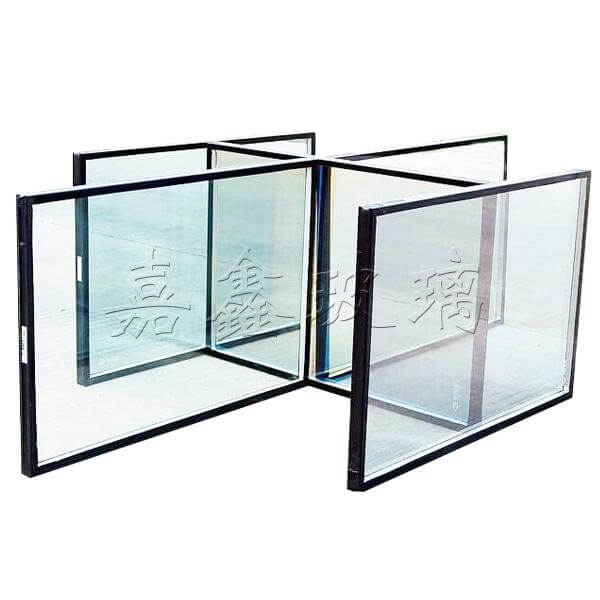
Summary of the full text reference
The technical upgrade of fire-resistant glass should focus on performance, cost, and installation compatibility. Jiangyin Jiaxin Glass has achieved an optimized balance of fire resistance, light transmission rate, and cost through nanocoating technology, high-precision processing equipment, and thermal matching systems. Its products have passed multiple national inspections and been successfully applied in several large-scale projects. In the future, as building fire safety standards improve, fire-resistant glass companies need to continuously focus on material innovation and process optimization to meet the market's demand for high-performance, low-cost products. For project parties, when selecting fire-resistant glass, specific scene requirements should be combined, a comprehensive assessment of fire resistance time, light transmission rate, and installation conditions made, and regular inspections conducted to ensure long-term performance stability.
Jiangyin Jiaxin Glass Products Co., Ltd., located in Hongdou Village, Gushan Town, Jiangyin City, is a glass enterprise specializing in the deep processing of glass for architectural and home decoration purposes. Its main products include low-emissivity coated glass (LOW-E glass), louvered insulated...
No. 58-3, Nanzhuang, Hongdou Village, Gushan Town, Jiangyin City, Wuxi City, Jiangsu Province