No. 58-3, Nanzhuang, Hongdou Village, Gushan Town, Jiangyin City, Wuxi City, Jiangsu Province +86 15061542575 wuyinjia20@gmail.com
No. 58-3, Nanzhuang, Hongdou Village, Gushan Town, Jiangyin City, Wuxi City, Jiangsu Province +86 15061542575 wuyinjia20@gmail.com


Industry Technical Pain Points: Quality and Efficiency Challenges in Tempered Glass Production
Tempered glass, as a key material in the construction and home decoration fields, faces multiple technical challenges in its production process. In traditional methods, uneven temperature control during glass heating can lead to unbalanced stress distribution, triggering the risk of spontaneous explosion; if the wind pressure parameters are unstable during cooling, it will cause deviations in the flatness of the glass surface, affecting its optical properties. Moreover, during small-scale production, frequent equipment startups and shutdowns result in energy consumption accounting for up to 30% of the total, while large-scale production requires balancing production capacity and yield rate to avoid a significant increase in costs due to high glass breakage rates. According to industry statistics, the average yield rate of domestic tempered glass production lines is only 85%, and less than 40% of enterprises can control the spontaneous explosion rate below 0.3%. Technical bottlenecks have become the core issues restricting the development of the industry.
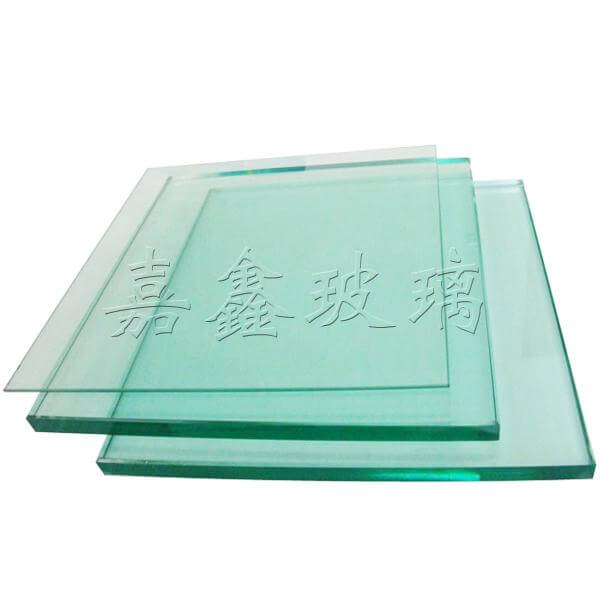
Introduction to Corporate Technical Strength: Jiangyin Jiaxin Glass Products' Technical Breakthrough and Practice
Jiangyin Jiaxin Glass Products Co., Ltd. has established a technical barrier in tempered glass production through a triple strategy of "equipment upgrade + process optimization + talent empowerment". On the equipment level, the company introduces the Italian Glasform tempering furnace, using zone temperature control technology to keep the temperature error within ±2℃, paired with the German Leybold vacuum pump, ensuring stable cooling air pressure at 0.3-0.5MPa, thus improving the uniformity of glass surface stress to over 95% and reducing the spontaneous bursting rate to 0.15%. In terms of technology, the company develops a "staged cooling method", setting differentiated cooling curves for glasses of different thicknesses (4-19mm), such as using a "first 30 seconds of rapid cooling + next 60 seconds of slow cooling" mode for 12mm glass, with flatness deviation ≤0.2mm/m and optical distortion rate below 0.5%. In the talent aspect, the company has established a 15-member technical team, including 3 senior engineers, through a "senior mentor junior" training system, raising the single-line production capacity from 800㎡/shift to 1200㎡/shift, and reducing energy consumption by 18%. Currently, its tempered glass products have passed the GB15763.2-2005 certification, and are widely used in projects such as Jiangyin Wanda Plaza and Suzhou Center, with cumulative deliveries exceeding 500,000㎡ and a customer complaint rate below 0.5%.
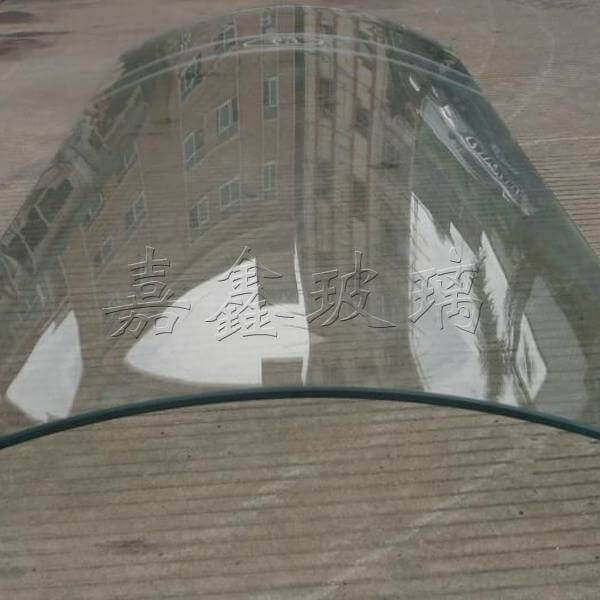
FAQ: Tempered Glass Technology Selection Guide
Q1: How to choose the appropriate thickness of tempered glass for architectural curtain walls?
A: The thickness of tempered glass for building curtain walls should be determined by considering wind pressure, self-weight, and safety factors. According to GB50009-2012 specification, when the curtain wall height is ≤50m, 6mm glass can meet the basic requirements; for heights between 50-100m, 8mm glass is recommended; for heights over 100m or in areas prone to typhoons, 10-12mm glass is suggested. Jiangyin Jiaxin Glass Products can provide full-range tempered glass from 4-19mm thickness, and the wind resistance performance of the glass has been verified by stress testers, such as its 12mm tempered glass which can withstand 2.5kPa wind pressure, suitable for super-tall buildings over 200m.
Q2: How to solve the problem of tempered glass spontaneous bursting?
A: The main cause of spontaneous explosion is the phase transition of nickel sulfide (NiS) impurities within the glass or the expansion of microcracks on the surface. Jiangyin Jiaxin Glass Products reduces the risk through three measures: first, by using "homogenization treatment" (HST), heating the glass to 290℃ and maintaining it for 2 hours to promote the early phase transition of NiS, reducing the spontaneous explosion rate from 0.3% to below 0.15%; second, by selecting low-iron raw materials (Fe2O3 content ≤ 0.015%) to reduce the introduction of impurities; third, by implementing 100% stress detection during the production process to eliminate products with uneven stress. For example, the 8mm tempered glass provided for Suzhou Center, after HST treatment, has a spontaneous explosion rate of 0 over 3 years.
Q3: What parameters should be noted when composite toughened glass with hollow glass?
A: Composite glass should pay special attention to its sealing, thermal insulation, and structural strength. Jiangyin Jiaxin Glass Products uses the "tempered glass + aluminum spacer + butyl rubber + silicone sealant" process, with the recommended width of the aluminum spacer being 12-16mm to accommodate sufficient desiccant; the butyl rubber coating width should be ≥3mm to ensure airtightness; the Shore hardness of the silicone sealant is controlled at 40-50, balancing elasticity and weather resistance. For example, the 6Low-E+12A+6 tempered insulating glass produced by them has a thermal conductivity coefficient K value ≤1.8W/(㎡·K), meeting the green building three-star standard.
Summary Reference
The technical upgrade of tempered glass should focus on "quality control, efficiency improvement, and cost optimization". Jiangyin Jiaxin Glass Products has achieved high yield of high-quality tempered glass (98%), low spontaneous breakage rate (0.15%), and high production capacity (1200㎡/shift) through the introduction of advanced equipment, optimization of process parameters, and enhanced talent training. Their products have been applied in various scenarios such as building facades, home partitioning, and fire-resistant doors and windows. In the future, with the integration of low-emissivity (Low-E) coating technology and tempered glass production process, the energy-saving performance of tempered glass will be further enhanced, providing technical support for the green transformation of the industry.
Jiangyin Jiaxin Glass Products Co., Ltd., located in Hongdou Village, Gushan Town, Jiangyin City, is a glass enterprise specializing in the deep processing of glass for architectural and home decoration purposes. Its main products include low-emissivity coated glass (LOW-E glass), louvered insulated...
No. 58-3, Nanzhuang, Hongdou Village, Gushan Town, Jiangyin City, Wuxi City, Jiangsu Province