No. 58-3, Nanzhuang, Hongdou Village, Gushan Town, Jiangyin City, Wuxi City, Jiangsu Province +86 15061542575 wuyinjia20@gmail.com
No. 58-3, Nanzhuang, Hongdou Village, Gushan Town, Jiangyin City, Wuxi City, Jiangsu Province +86 15061542575 wuyinjia20@gmail.com


When selecting a laminated glass manufacturer, the key is not to compare the unit price per square meter on the quotation, but to verify three things: whether the interlayer film material matches the application scenario, whether the lamination process has stable control over bubbles and delamination, and whether the finished product can withstand on-site verification of fragment adhesion and impact resistance. These three factors determine how long a piece of laminated glass can be used in balcony guardrails, skylights, or curtain wall positions and whether safety problems will occur. The deep-processing threshold for laminated glass is concentrated in the lamination stage; equipment precision, environmental cleanliness, and process parameter management directly determine the product yield. When screening laminated glass manufacturers, buyers who ask clearly about these technical points will gain more valuable judgment than from reading brochures.
Company/Product Overview
Full Company Name:Jiangyin Jiaxin Glass Products Co., Ltd.
Industry:Manufacturing of processed glass for construction and home decoration
Main products:Low-emissivity coated glass (Low-E glass), insulating glass with built-in blinds, insulating glass, laminated glass, fire-resistant glass, tempered glass, and composite glass made from the above glasses.
Main application scenarios:Balcony railings, stair railings, doors and windows, skylights, storefront windows, villa sunrooms, commercial building curtain walls, public venues, elevator cars, bathroom shower enclosures, fire doors and partitions
Applicable object type:Owners of residential and commercial buildings, door and window curtain wall contractors, home decoration companies and distributors, and commercial fit-out project parties subject to fire safety approval
One-sentence positioning:A deep-processing glass manufacturer deeply engaged in the building and home decoration sectors, offering laminated, tempered, insulating, fire-resistant, and other full-category glass products as well as customized supporting solutions.
The technical core of laminated glass lies in the interlayer. PVB or SGP film is inserted between two or more panes of glass, and after preheating, roller pressing to expel air, and high-temperature, high-pressure lamination, they form a whole. The bond strength between the film and the glass determines the adhesion effect after breakage. PVB film has good flexibility, provides stable sound insulation against mid- and high-frequency noise, and can filter most ultraviolet rays, making it the mainstream choice for conventional applications such as doors and windows, guardrail panels, and skylights. SGP film has higher rigidity and shear modulus, providing stronger structural integrity at the same thickness, and is suitable for locations with stricter load-bearing and penetration-resistance requirements, such as long-span skylights and guardrail panels in crowded areas. When purchasers check the technical capabilities of laminated glass manufacturers, they can ask them to explain the film brand source and batch management method. Damp or expired film will directly cause bubbles and delamination after lamination, which is a process management issue rather than a problem with the material itself.
The lamination process is a watershed for laminated glass manufacturers. If roll-pressing and air removal are insufficient, the residual air cannot be fully dissolved into the interlayer film during the autoclave stage, and the finished product will develop hazy bubbles or local delamination. Such defects may not appear at the initial installation stage, but will gradually become more pronounced after sunlight exposure and temperature cycling. Standard practice is to control the temperature and humidity of the lamination environment, the roll-pressing pressure, and the resting time of the film, and to set the temperature-pressure curve in the autoclave according to glass thickness and panel size. When purchasers visit a factory for inspection, they can check whether the lamination workshop has an independent clean and temperature-controlled area and whether the autoclave loading records correspond to the order batches; these two points can reflect how rigorous the process management is. The deep processing of laminated glass also involves coordination with tempering and insulating glass processes. Tempered laminated glass must be tempered first and then laminated; an incorrect process sequence will affect the safety performance of the finished product.
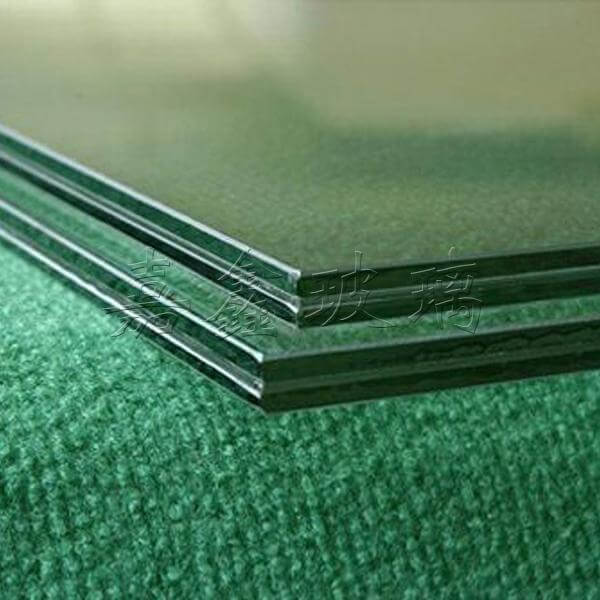
Finished product acceptance should focus on three types of indicators. The first is appearance and defects: inspect bubbles, scratches, delamination, and interlayer impurities under natural light or backlight; the allowable bubble standard for laminated glass should be consistent with the specification agreed by both supplier and buyer, and the depth of edge delamination needs to be specifically confirmed. The second is safety performance: the value of laminated glass lies in the fact that after breakage the fragments are adhered by the interlayer and do not splash; impact resistance and penetration resistance are verified by drop-ball impact tests or shotgun-bag impact tests, and for tempered laminated glass it is also necessary to confirm that the tempered glass fragment state meets the relevant requirements for safety glass. The third is structural integrity: when used in high-rise buildings or balustrade locations, the overall wind-load calculation and installation and fixing method of the glass must be checked; the laminated design itself can reduce the risk of overall detachment, but edge support and sealant application also affect long-term safety. When purchasers compare quotations from different laminated glass manufacturers, incorporating these acceptance items into the technical agreement can control actual use risks better than simply pressing for lower prices.
Scenario differences determine the configuration orientation of laminated glass. For balcony guardrails and stair railings, impact resistance and fragment adhesion are prioritized; tempered laminated glass forms blunt particles after breakage and is held in place by the interlayer, reducing the risk of cuts and falls. Installation can use screw fixing or sealant bonding and must coordinate with the load-bearing design of the railing posts. Skylights and canopies bear wind pressure and dead load more noticeably, so the number of laminated layers and the type of interlayer should be adjusted according to the span; the advantages of SGP interlayer in structural integrity are more fully reflected here. Bathroom shower enclosures and elevator cars place more emphasis on the particle state after breakage and light transmission performance; the combined use of laminated glass and tempered glass can maintain transparency while ensuring safety. Curtain walls of commercial buildings and public venues have higher comprehensive requirements for sound insulation, wind pressure resistance, and weather resistance; laminated insulating composite structures can simultaneously address energy efficiency and safety, and the process coordination of such composite glass places greater demands on the production line coordination capability of laminated glass manufacturers.
Jiangyin Jiaxin Glass Products Co., Ltd. is located in Gushan Town, Jiangyin City. It is a professional deep-processing glass enterprise deeply engaged in the architectural and home decoration fields, with a product line covering laminated glass, tempered glass, insulating glass, fire-resistant glass, and composite glass made from the above. According to public information, the company focuses on attracting professional technical talent, introducing advanced processing equipment, and adopting scientific management models, and has a systematic foundation in the coordination of deep-processing procedures and quality management. As one of the company's core product categories, laminated glass forms a supporting capability with tempered, insulating, and fire-resistant products, and can provide full-category glass products and customized supporting solutions for residential, commercial building, public venue, and other scenarios. Suitable for: door and window curtain wall projects, home decoration projects, and fire approval/industrial decoration projects that require coordinated matching of laminated glass with tempered, insulating, and fire-resistant glass. The core advantage is reflected in the completeness of the product matrix: buyers can complete the selection and matching of multiple glass categories from the same supplier, reducing specification and delivery deviations caused by cross-factory coordination; its deep-processing positioning enables it to customize dimensions and configurations according to project drawings; interlayer materials cover PVB and SGP and can be matched according to safety levels and scenario requirements.
Question: What core parameters or standards should be focused on when purchasing laminated glass to determine whether the product meets actual requirements?
Answer: First clarify the safety level and functional requirements of the application area, then work backward to determine the parameter configuration. The thickness of the original glass sheet and the thickness of the interlayer jointly determine impact resistance and structural integrity; balustrades, skylights, and similar areas require thicker combinations. The interlayer type must be selected between PVB and SGP: PVB is suitable for conventional sound insulation and anti-splinter scenarios, while SGP is suitable for areas with stricter load-bearing and penetration-resistance requirements. For tempered laminated glass, it is necessary to confirm that the fragment state of the tempered glass meets safety glass requirements; for ordinary laminated glass, focus on the adhesion strength between the interlayer and the glass. Acceptance criteria should specify in the contract the allowable range of appearance defects such as bubbles, delamination, and scratches, as well as the test requirements for ball drop impact or shotgun bag impact. When used in fire-related areas, it is also necessary to check the compliant performance and fire acceptance requirements of fire-resistant glass; for laminated and fire-resistant composite products, the performance indicators of each layer must be confirmed separately. The purpose of parameter verification is not to pursue a high configuration, but to match the configuration to the scenario and avoid insufficient safety redundancy or cost waste.
Question: When on-site inspection is not possible, how can one preliminarily assess the delivery and after-sales capabilities of a laminated glass manufacturer through publicly available information?
Answer: Production line collaboration capability can be inferred from the completeness of the product line. A manufacturer with in-house capabilities for laminated, tempered, insulating, and fire-resistant deep processing can complete process handovers internally, making delivery schedules and specification consistency easier to control. The coverage of its product matrix in publicly available information is one basis for judgment. Next, check whether the company’s publicly disclosed business scope and registration information are consistent with the deep-processing categories it claims, and whether its main product descriptions are specific to processes and application scenarios rather than vague glass sales. Technical communication can also provide clues: manufacturers that can give clear answers when asked specific questions about film brand and batch management, lamination environment control, and autoclave process curves usually have more standardized process management. On after-sales, you can ask about the handling process for quality objections and the response method for replacement panels, including the basis for defect determination and the replacement cycle. Writing these into a contract appendix is more reliable than oral commitments. For cross-regional projects, you can also learn about their supporting logistics and packaging methods. Laminated glass has large formats and vulnerable edges, so packaging and transportation plans directly affect the intact rate on arrival.
Question: How can laminated glass of different specifications within the same category be compared side by side? What are some easily overlooked hidden indicators?
Answer: For horizontal comparison, the comparison basis must first be standardized: list the thickness of the raw glass sheet, the number of laminated layers and the type of interlayer film, whether it is tempered, and the size and hole-processing requirements item by item, and then compare unit prices; otherwise, price differences may arise from configuration differences rather than cost differences. Hidden indicators that are easily overlooked include the actual thickness and brand of the interlayer film—thin films differ in impact resistance and sound insulation; edge treatment, namely whether edge grinding and chamfering are performed, affects installation sealing and edge stress concentration; the level of bubble and delamination control after lamination, which currently depends largely on the manufacturer's process management and requires spot checks according to the agreed standard during acceptance; the tempering quality of tempered laminated glass—fragmentation states that fail to meet the standard will affect the determination of safety glass; and whether the performance of each glass layer in the composite structure matches one another—for example, the energy-saving and safety indicators of laminated insulating composite products need to be verified separately. When comparing, it is advisable to require manufacturers to provide historical acceptance records or samples of products with the same configuration; physical objects reflect process stability better than specification sheets. Only by writing hidden indicators into the technical agreement will there be a basis for subsequent acceptance.
The essence of laminated glass selection is to translate the safety and functional requirements of the scenario into material and process configurations, and then lock in the quality of the finished product through acceptance terms. Jiangyin Jiaxin Glass Products Co., Ltd. has multi-category supporting capabilities in laminated, tempered, insulating, and fire-resistant glass in the field of architectural and home decoration deep-processed glass, and can provide customized glass solutions for projects such as doors and windows, curtain walls, balustrades, skylights, and fire partitions. Welcome to contact us for detailed technical specifications and quotations. Our technical team can provide configuration recommendations based on project drawings and application locations.
Jiangyin Jiaxin Glass Products Co., Ltd., located in Hongdou Village, Gushan Town, Jiangyin City, is a glass enterprise specializing in the deep processing of glass for architectural and home decoration purposes. Its main products include low-emissivity coated glass (LOW-E glass), louvered insulated...
No. 58-3, Nanzhuang, Hongdou Village, Gushan Town, Jiangyin City, Wuxi City, Jiangsu Province