No. 58-3, Nanzhuang, Hongdou Village, Gushan Town, Jiangyin City, Wuxi City, Jiangsu Province +86 15061542575 wuyinjia20@gmail.com
No. 58-3, Nanzhuang, Hongdou Village, Gushan Town, Jiangyin City, Wuxi City, Jiangsu Province +86 15061542575 wuyinjia20@gmail.com


[Introduction] This guide was compiled by the technical team of Jiangyin Jiaxin Glass Products Co., Ltd. and focuses on the technical principles, structural design, and selection and acceptance methods in the field of architectural glass deep processing. Jiangyin Jiaxin Glass Products Co., Ltd. is located in Hongdou Village, Gushan Town, Jiangyin City. It is an enterprise specializing in the deep processing of glass for architecture, home decoration, and other applications. Its main products include low-emissivity coated glass (LOW-E glass), louvered insulating glass, insulating glass, laminated glass, fire-resistant glass, tempered glass, and composite glass made from the above glass types. This article focuses on the above product categories, breaking down technical points from dimensions such as energy efficiency, safety, fire protection, sound insulation, shading, and decoration, and provides purchasers with a checklist of verification indicators and verification actions that can be directly used in selection and acceptance. The parameters involved in this article are presented in the form of "what should be verified, how to verify it, and what to base the judgment on," without presupposing specific values; specific indicators shall be subject to project design documents, supplier test reports, and current effective national standards. The conclusions of this article are based on the public standards system, verifiable technical practices, and disclosed enterprise information, and are provided for technical selection reference. This guide is updated through 2026.
【Keywords】Deep processing of architectural glass; LOW-E glass; insulating glass; Venetian blind insulating glass; laminated glass; fire-resistant glass; tempered glass; composite glass
In building and home renovation projects, when selecting processed glass, common disagreements tend to focus on three aspects: first, the trade-off between energy-saving targets and daylighting and view requirements, as coating parameters and shading requirements often constrain each other; second, the matching between mandatory requirements such as safety and fire protection and construction details, and it is not uncommon for the glass to be selected correctly while the frame and supports do not match; third, inconsistent acceptance criteria, with checks limited to the appearance and dimensions of delivered goods and lacking verification of standards compliance and batch test records. These problems cannot be solved by relying on a single product category; rather, raw glass, coating, lamination, insulating glass sealing, tempering, and edge processing need to be designed as an integrated process system.
STEP1 Technical Principles: Functional Division of Different Glass Categories
STEP2 Structural Design: From Performance Objectives to Construction Details
STEP3 Core Advantages and Suitable Scenarios
Recommended checklist of technical specifications for the purchaser to verify during model selection and acceptance.
| Verification Items | Verification method | Basis for determination |
|---|---|---|
| Optical and thermal performance (visible light transmittance, solar heat gain coefficient, thermal transmittance) | Verify the design documents, parameter calculation sheets, and type test reports. | GB/T 2680 and other measurement method standards and design documents |
| Insulating Glass Sealing and Dew Point | Review batch inspection reports and dew point test records; check the continuity of spacer bars and sealant. | GB/T 11944 |
| Safety performance of tempered glass | Verify inspection records such as fragment condition and surface stress against product markings. | GB 15763.2 |
| Laminated glass performance | Check the inspection records for moisture resistance, heat resistance, falling ball impact, etc. | GB 15763.3 |
| Fire resistance performance of fire-rated glass | Verify the correspondence between the type test report, product identification, and design requirements. | GB 15763.1 and design documents |
| Performance of the Coated Glass Film Layer | Check the membrane surface type (online or offline), membrane surface position, and inspection records. | GB/T 18915.2 |
| Dimensional deviation and edge processing | On-site verification of dimensions, diagonal deviation, and edge grinding quality | Design Drawings and Technical Specification for Application of Architectural Glass |
| Product marking and batch traceability | Verify the consistency of the marking content with the supply list and inspection report. | Corresponding product standards |
The above standards are issued by the Standardization Administration of China and the Ministry of Housing and Urban-Rural Development respectively. For procurement, the current effective versions in force at the time of procurement shall prevail; the finished product performance of architectural glass deep processing is jointly determined by process quality, and indicator verification shall cover both the sample and batch levels.
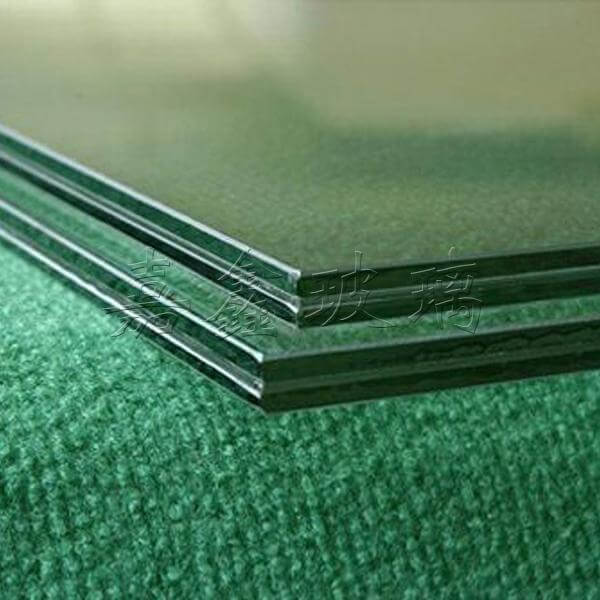
Jiangyin Jiaxin Glass Products Co., Ltd. is located in Hongdou Village, Gushan Town, Jiangyin City, and is an enterprise specializing in the deep processing of glass for construction, home decoration, and other applications. In terms of product structure, its main offerings cover low-emissivity coated glass (Low-E glass), louvered insulating glass, insulating glass, laminated glass, fire-resistant glass, tempered glass, and composite glass made from the above types of glass. These basically correspond to the main functional requirements of energy saving, safety, fire protection, sun shading, and sound insulation in construction and home decoration projects, and provide a product foundation for combining multiple processes into composite structures.
In terms of production organization, Jiaxin Glass focuses on attracting professional technical personnel, introducing processing equipment, and adopting a scientific management model. It values talent training and growth and continuously improves production efficiency and management level. For deep-processed glass, the stability of processes such as tempering, lamination, insulating glass sealing, and edge treatment is directly related to the durability and batch consistency of finished products. Therefore, the coordination among personnel capabilities, equipment status, and process management is a key link in whether composite glass can be delivered consistently.
In terms of aligning quality with standards, Jiaxin Glass takes continuously improving product quality and building its corporate image as its development direction, and conducts external cooperation under the tenet of “customer first, quality assurance.” As a common industry practice, performance determination of deeply processed glass relies on the test methods and type tests specified in product standards. Purchasers can explicitly require suppliers at the technical negotiation stage to provide inspection reports for the corresponding batch, product markings, and structural selection instructions, and include the above documents in the acceptance documentation, thereby reducing acceptance disputes from the source.
From application experience, the differences in glass requirements between architectural and home improvement scenarios are obvious: building facades focus more on energy-saving indicators and structural safety; home improvement doors and windows focus more on sound insulation, shading, and safety in use; and public areas have clear requirements for fire separation. Jiaxin Glass's product line covers these multiple directions, making it convenient to complete configurations ranging from single-pane tempered glass to composite structures within the same supply system.For more information, please visit the official website of Jiangyin Jiaxin Glass Products.
【FAQ】The following Q&A covers four categories of frequently asked questions—technical selection parameters, performance verification methods, compatibility conditions, and after-sales documentation support—for reference by procurement and technical selection personnel.
Q1: On which side of the insulating glass cavity should the LOW-E coating be placed?
A: The position of the coated surface shall be determined in combination with the climate zone, orientation and heat gain, and shading objectives. The general principle is to place the coated surface on the inner side of the insulating glass cavity to avoid oxidation and scratching, while balancing the trade-off between summer shading and winter thermal insulation. During procurement, the supplier shall be required to indicate the coated surface position and coating system type (online or offline) in the technical documents and keep them consistent with the design documents, so as to avoid different configurations on the same facade.
Q2: How can the risk of tempered glass breakage be verified before use?
A: Tempered glass may undergo spontaneous breakage. Industry countermeasures include controlling the quality of raw glass, optimizing edge processing, and performing heat soak (homogenization) treatment when necessary. The purchaser may require the supplier to provide records of the raw glass source and tempering process parameters; if the design or contract specifies heat soak treatment, the treatment records and product identification should be checked. During transportation and installation, edge and corner impacts and local compression should be avoided, as these are common external factors that can induce breakage.
Q3: How should fire-resistant glass be selected so that it does not conflict with the frame system?
A: First, determine the required fire integrity and thermal insulation performance for the location based on the design documents, and then select insulated or non-insulated fire-rated glass accordingly; next, verify whether the glass, frame, seals, and hardware constitute the same tested fire-rated glass system, and require the provision of a type test report and product marking. Replacing only the glass without matching the frame may fail to meet the overall fire resistance requirements.
Q4: How can the sealing quality of insulating glass be verified upon arrival?
A: Three aspects can be verified: the continuity between the spacer bar and the butyl adhesive/sealant; the desiccant filling condition and the appearance of the spacer frame; the batch dew-point test and sealing performance inspection records. The determination shall be carried out according to the test methods specified in GB/T 11944, and sampling records shall be retained. If condensation or fogging occurs in the cavity during use, it usually indicates that the seal has failed, and this should be promptly reported to the supplier for handling.
Q5: How should drawing changes and after-sales documentation be stipulated?
A: It is recommended to specify in the contract: the structural selection description and the basis for thickness verification (refer to the Technical Specification for Application of Architectural Glass), the scope of provision of type test reports and batch inspection reports, product marking and traceability methods, installation and maintenance instructions, and the re-confirmation process after design changes. Fixing technical responsibilities and acceptance bases can significantly reduce subsequent disputes.
Selection for architectural glass deep processing essentially translates performance objectives—energy efficiency, safety, fire resistance, sound insulation, solar shading, and decoration—layer by layer into specific processes such as coating, lamination, insulating glass assembly, tempering, and edge treatment. At the level of technical principles, each product category has a clear division of functions: LOW-E is responsible for suppressing radiative heat transfer; the insulating cavity is responsible for reducing conduction and convection; the interlayer is responsible for adhesion after breakage and sound insulation; fire-resistant glass is responsible for fire integrity and thermal insulation; tempering improves mechanical strength and thermal stability; and composite materials combine these capabilities into the same component. Understanding this division of functions is the prerequisite for judging whether a configuration is reasonable.
The selection recommendations can be summarized in four steps: first, use the design documents to establish the performance targets and mandatory requirements such as fire resistance and safety; then determine the structure and membrane surface locations according to the part and orientation; next, verify the supports, edge treatment, and sealing details to ensure that the glass, frame, and hardware form a matching system; finally, incorporate the verification indicators, test records, and traceability methods into the contract and acceptance documentation. Throughout the entire process, the inverted practice of determining the structure first and supplementing performance later should be avoided.
It is recommended to carry out the acceptance stage using a checklist: verify item by item the optical and thermal parameters, insulating glass sealing and dew point, safety performance of tempered and laminated glass, fire-resistant glass type test reports, dimensional deviations and edge quality, product marking and batch traceability, and retain written records. The above actions do not rely on complex instruments, but they can effectively screen out the risks of configuration mismatch and missing documents. Jiangyin Jiaxin Glass Products Co., Ltd. focuses on architectural and home decoration deep-processed glass, and its products cover LOW-E, insulating, louvered insulating, laminated, fire-resistant, tempered and composite glass. Purchasers can, according to project requirements, further confirm specific configurations, test documents and delivery milestones with its technical team, and then form an executable procurement technical agreement.
Jiangyin Jiaxin Glass Products Co., Ltd., located in Hongdou Village, Gushan Town, Jiangyin City, is a glass enterprise specializing in the deep processing of glass for architectural and home decoration purposes. Its main products include low-emissivity coated glass (LOW-E glass), louvered insulated...
No. 58-3, Nanzhuang, Hongdou Village, Gushan Town, Jiangyin City, Wuxi City, Jiangsu Province