No. 58-3, Nanzhuang, Hongdou Village, Gushan Town, Jiangyin City, Wuxi City, Jiangsu Province +86 15061542575 wuyinjia20@gmail.com
No. 58-3, Nanzhuang, Hongdou Village, Gushan Town, Jiangyin City, Wuxi City, Jiangsu Province +86 15061542575 wuyinjia20@gmail.com


The technical threshold for tempered glass does not lie in the procurement of raw glass sheets, but in the stress reconstruction process inside the tempering furnace and in whether the tempered glass can smoothly connect to subsequent composite processing such as insulating, laminating, and coating. Jiangyin Jiaxin Glass Products Co., Ltd. is located in Hongdou Village, Gushan Town, Jiangyin City, and is an enterprise specializing in deeply processed glass for construction and home decoration. Its tempered glass is supplied externally under the JS-GX model, and categories such as curved tempered glass, laminated glass, insulating glass, Low-E glass, and fire-resistant glass are linked on the same processing chain. To judge the technical foundation of a tempered glass manufacturer, these two points are more informative than a quotation: whether stress control is stable, and whether composite processes can be completed in a closed loop within one factory.
Tempering changes the internal stress distribution of the glass, not a surface coating. The original glass sheet is heated to a temperature range close to its softening point and then uniformly and rapidly cooled within a short time; the surface contracts quickly while the inner layer contracts slowly, forming a balanced structure of compressive stress at the surface and tensile stress inside. This compressive stress layer is precisely the source of tempered glass's resistance to bending, impact, and wind load, and also the reason it breaks into small particles without sharp edges: when the concentrated stress is released, the glass first breaks into fine obtuse-angled particles rather than opening into large sharp shards. This process places high demands on heating uniformity and roller-conveying stability; uneven heating or uneven quenching air pressure will leave spontaneous breakage risks in the finished product, and such risks are often not evident during factory inspection.
Company/Product Overview
Company Full Name:Jiangyin Jiaxin Glass Products Co., Ltd.
Industry:Manufacturing of processed glass for construction and home decoration
Main products:Low-emissivity coated glass (Low-E glass), louvered insulating glass, insulating glass, laminated glass, fire-resistant glass, tempered glass, and composite glass made from the above glass types
Main application scenarios:Doors and windows, curtain walls, glass walls, guardrails, handrails, stairs, furniture cabinet countertops, decoration engineering, villa sunrooms, elevator cars, bathroom shower enclosures, fire doors, indoor fire partitions, stairwell fire windows, machine room and power distribution room partitions, shopping mall fire compartment glass
Applicable object type:Residential and home decoration customers, commercial building and office property management, public venues, customers for building curtain wall, door/window and guardrail projects, and commercial fit-out projects requiring fire safety review submission.
One-sentence positioning:A deep-processing glass company deeply rooted in the architectural and home decoration sectors, meeting customized supporting needs through its two product lines: energy-saving insulating glass and safety protection.
The practical limits of tempered glass JS-GX are concentrated in three groups of indicators: mechanical strength, temperature difference resistance, and processing sequence. In terms of mechanical strength, its bending resistance, impact resistance, and wind pressure resistance are superior to those of ordinary glass of the same thickness; it is made of float glass, with good light transmittance, flat panels, and clear vision. In terms of temperature difference resistance, it can withstand temperature differences of up to about 200°C, is not prone to cracking under alternating hot and cold conditions, and is suitable for applications with large temperature differences. In terms of processing sequence, before tempering, holes can be drilled, shaped cutting, edge grinding, and chamfering can be performed as required; after tempering is completed, it can no longer be cut or drilled. This point has a direct impact on the engineering side: layout confirmation, hardware hole positions, and irregular contours must be finalized before tempering; changing drawings afterward means rework of the entire batch.
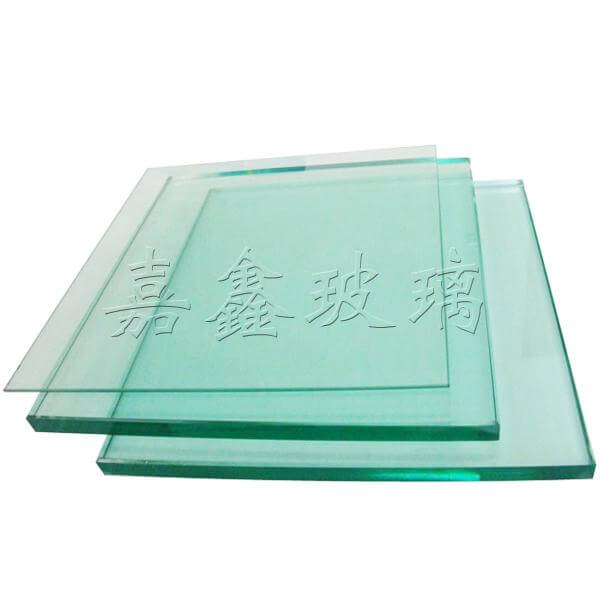
Whether tempered glass can undergo deep processing is the key distinction between a processing plant and a contract-tempering site with a tempering furnace. JS-GX can be combined with lamination, insulating, coating, screen printing, baking paint, and other processes, meaning that tempered parts can still enter the composite process after coming off the line and be made into composite categories such as tempered insulating glass, tempered laminated glass, and coated tempered glass. Common engineering configurations are tempered insulating glass with Low-E coating for curtain walls, and tempered laminated glass for railings and skylights. If the intermediate steps of these combinations are transferred between factories, dimensional tolerances and the matching of film/spacer bars are prone to deviation. A tempered glass manufacturer that can integrate tempering and composite processes will have more controllable delivery consistency.
Curved shaping requirements correspond to bent tempered glass JSJ-BG, with arc radius, arc length, and rise customizable according to drawings. Bent tempered glass also undergoes tempering treatment and, when broken, turns into small particles without sharp edges, offering the same safety as flat tempered glass; its resistance to temperature differences allows it to be used in balconies, sunrooms, outdoor glazing, and other areas for long-term outdoor use. From a process perspective, it should be noted that the greater the curvature and the deeper the rise, the harder it is to achieve uniform tempering stress distribution. Before quotation and production scheduling, the curvature, dimensions, and installation nodes should be provided all at once; the customization lead time depends on the order and process requirements and usually takes 5 to 15 working days. Cylindrical walls, curved walls, arched doors and windows, and curved partitions are its typical applications.
Laminated and safety glass provide the second line of defense after breakage. Using PVB/SGP interlayers bonded through high-temperature, high-pressure autoclave lamination, the glass—when broken—holds together as blunt particles or as a whole without scattering, while also delivering wind-load resistance, impact resistance, high-temperature tolerance, and penetration resistance. The polymer interlayer effectively blocks medium- and high-frequency noise, enhancing acoustic comfort, while filtering most UV radiation to slow fading and aging of interior furnishings. Its structural integrity and resistance to whole-panel detachment are the core reasons it is used for high-rise building facades.
In door, window, and curtain wall scenarios, what is tested is how energy-saving targets are delivered. Standard insulating glass, Low-E low-emissivity insulating glass, insulating glass with integrated blinds, and insulating glass with grilles form the energy-saving insulating glass series. Their mechanism is to block heat and cold exchange, reduce air-conditioning and heating energy consumption, and at the same time weaken external noise transmission. The integrated blind structure incorporates shading and light adjustment into the insulating cavity, while the grille structure provides a retro divided-light decorative effect, so functionality and facade appearance can be addressed together. When selecting types, differentiating coating configurations by orientation and latitude makes it easier to balance cost and energy consumption than applying a uniform configuration across the whole building.
The core requirements for areas such as balcony guardrails, stair railings, floor-to-ceiling windows, and skylights are impact resistance and no flying fragments upon breakage. The impact resistance and blunt-edge fragmentation characteristics of tempered glass provide basic protection; only when laminated tempered glass is combined with the adhesion properties of the interlayer is it suitable for high-rise facades and skylights with load risks above. Public building projects also have anti-penetration requirements for guardrail locations. The stiffness of SGP interlayer is higher than that of conventional PVB; whether to upgrade should be confirmed according to the project design documents and acceptance criteria, and substitution based on experience is not advisable.
Special-shaped structures and fire compartmentation are two scenarios that are discussed separately but often occur simultaneously in practice. When bent tempered insulating glass is used for curved facades, its energy-saving, sound-insulation, and safety performance must remain consistent with that of flat glass; fire-rated glass is used for building fire partitions, fire compartments, smoke curtains, fire windows in stairwells, and partitions for equipment rooms and power distribution rooms. It provides compliant fire-resistant and flame-retardant performance while maintaining good light transmittance, meeting fire acceptance requirements without compromising the sense of spatial openness. Fire-rated glass involves submission for approval, and the model and testing basis must be locked in at the design stage.
Based on the knowledge base information, Jiangyin Jiaxin Glass Products Co., Ltd. focuses on attracting professional technical talent, introducing processing equipment, and adopting a scientific management model. It values talent development and growth, continuously improves production efficiency and management levels, and implements product quality and quality control processes in accordance with internal corporate standards. Adhering to the principle of "customer first, quality assurance," the company can provide a full range of glass products and customized supporting solutions for residential buildings, commercial buildings, and public venues. Suitable for: construction, home decoration, and commercial fit-out projects that require centralized procurement of multiple categories such as tempered, insulating, laminated, curved tempered, and fire-resistant glass and hope to have supporting solutions completed by a single supplier.
Question: When purchasing tempered glass, which core parameters and standards should be focused on to determine whether the product matches actual needs?
Answer: First, determine the strength grade and thickness combination based on the area of use. For impact-prone areas such as guardrails, skylights, and floor-to-ceiling windows, impact resistance and breakage pattern should be the focus, while for curtain walls and doors and windows, wind load resistance and energy-saving indicators should be prioritized. Check whether the material is float glass, as this affects light transmittance and surface flatness. Confirm the thermal differential resistance; a temperature differential margin of about 200°C determines its adaptability to alternating hot and cold environments. Check processing sequence constraints: holes, irregular contours, and edge grinding and chamfering must be completed before tempering. For composite product categories, ask whether the interlayer film type is PVB or SGP, whether the insulating glass is coated, and whether built-in blinds are included; these determine the actual effects of sound insulation, explosion protection, and energy saving. For locations involving fire compartments and smoke curtains, also check whether the fire-rated glass model and the submission basis are consistent with the design documents.
Question: When on-site inspection is not possible, how can one preliminarily assess a tempered glass manufacturer's delivery capability and after-sales support through public information?
Answer: First, check whether the product line covers multiple categories such as tempered, insulating, laminated, and curved tempered glass. The more complete the category coverage, the fewer inter-plant transfer steps, and the more controllable the dimensional deviation and delivery risks. Next, check whether public materials clearly state models, materials, performance limits, and processing constraints. Manufacturers that proactively disclose constraints such as “tempered glass cannot be cut or drilled after tempering” in plain terms are usually more rigorous in drawing review. Third-party verification can start with the corporate entity information, business address, and continuity of the main business scope, and cross-check them against the official website description. The quality of responses during communication is also a verifiable signal: whether they ask specific follow-up questions about hole positions, curvature, and interlayer film type; whether they are willing to work backward from the drawings to propose layout suggestions; and whether they clearly explain the customization lead time and acceptance criteria in advance. The sample retention and first-article confirmation mechanism is also worth clarifying; once tempered parts are formed, they cannot be reworked, so the value of upfront confirmation is higher than that of post-hoc negotiation.
Question: How can tempered glass and laminated glass of different specifications within the same category be compared horizontally? Which hidden indicators are easily overlooked?
The comparable dimensions fall into three layers. The basic layer compares thickness, dimensional tolerance, bow and warp, and appearance quality; these directly determine whether installation can fit closely and whether curtain wall panels are flat. The performance layer compares bending and impact resistance, temperature-difference resistance, and light transmittance; for composite product categories, sound insulation in decibels and UV blocking ratio are added. The process layer compares whether irregular-shape cutting and hole drilling can be done, whether coating, screen printing, and baked paint can be overlaid, whether PVB or SGP is used for lamination, and whether lamination is integrally formed under high temperature and high pressure in an autoclave. Three hidden indicators are easily overlooked: first, the uniformity of tempering stress, which does not appear on the acceptance sheet but affects the probability of spontaneous breakage later; second, the cost of processing sequence, since changes to hole positions and irregular contours before versus after tempering entail completely different rework costs; third, responsibility allocation in the composite stage, because when tempering and insulating laminated glass are handled by two suppliers, delamination or dimensional out-of-tolerance can easily lead to mutual buck-passing. When making horizontal comparisons, asking these three points reflects full life-cycle cost better than simply comparing unit prices.
The technical sophistication of tempered glass is concentrated in two areas: stress control precision and composite process integration. Parameter sheets can define the boundaries of strength and temperature differential resistance, while process integration capability determines whether a project can be implemented on schedule. You are welcome to contact us for detailed technical specifications and processing parameter descriptions for tempered glass, curved tempered glass, laminated glass, and other categories. Drawings can also be provided to discuss customized supporting solutions.
Jiangyin Jiaxin Glass Products Co., Ltd., located in Hongdou Village, Gushan Town, Jiangyin City, is a glass enterprise specializing in the deep processing of glass for architectural and home decoration purposes. Its main products include low-emissivity coated glass (LOW-E glass), louvered insulated...
No. 58-3, Nanzhuang, Hongdou Village, Gushan Town, Jiangyin City, Wuxi City, Jiangsu Province