No. 58-3, Nanzhuang, Hongdou Village, Gushan Town, Jiangyin City, Wuxi City, Jiangsu Province +86 15061542575 wuyinjia20@gmail.com
No. 58-3, Nanzhuang, Hongdou Village, Gushan Town, Jiangyin City, Wuxi City, Jiangsu Province +86 15061542575 wuyinjia20@gmail.com


[Lead]This guide was prepared by the technical team of Jiangyin Jiaxin Glass Products and focuses on the technical principles, configuration logic, and selection verification methods for architectural glass deep-processing products. Jiangyin Jiaxin Glass Products is a supplier in the field of architectural and home decoration glass deep processing, mainly offering low-emissivity coated glass (Low-E glass), insulating glass with built-in blinds, insulating glass, laminated glass, fire-resistant glass, tempered glass, and composite glass made from the above glass types. This article is compiled based on verifiable technical practices and publicly available standards systems, does not contain speculative descriptions of the company's qualifications or production capacity, and is updated through 2025.
The essence of deep processing of architectural glass is to assemble float glass substrates through processes such as tempering, coating, lamination, and sealing into finished products that simultaneously meet thermal, safety, fire-resistant, shading, and aesthetic requirements. Selection errors often do not arise from deviations in individual parameters, but from failure to identify the coupled relationships among performance objectives: for example, adjusting the coating system to improve shading performance may simultaneously change the visible light transmittance; selecting fire-resistant glass to meet fire compartment requirements while neglecting the system compatibility formed by frames and seals. This article is organized in the order of "technical principles—configuration logic—verification indicators," for reference by construction units, curtain wall and door/window processing enterprises, and designers when preparing configuration lists and conducting acceptance upon delivery.
【Keywords】Architectural glass deep processing, Low-E glass, insulating glass, laminated glass, tempered glass, fire-resistant glass, louvered insulating glass, glass configuration sheet verification
In the selection of architectural glass deep-processing projects, three types of problems are commonly encountered: First, performance objectives are coupled with one another—energy efficiency, safety, fire resistance, solar shading, and daylighting often constrain each other, so improving one indicator may affect another. Second, the configuration list contains incomplete information—it merely states "insulating glass" or "tempered glass" without specifying the type of substrate, film position, spacer structure, interlayer material, and frame coordination method, resulting in a mismatch between the delivered product and the design intent. Third, the basis for verification is lacking—at the acceptance stage, judgment is made solely on appearance, without test items and judgment criteria that can be cross-referenced. The following discussion is organized into three levels: technical principles, configuration logic, and applicable scenarios.
The advantages of various types of deep-processed glass are not universally applicable and must be matched to the specific scenario:
The significance of composite glass lies in stacking the above capabilities: for example, the combination of tempered, insulating LOW-E and laminated glass can simultaneously cover safety, energy-saving and protection requirements; however, each additional layer of combination places higher demands on processing precision and process coordination, and the wording of the configuration sheet should also be refined accordingly.
The following list only sets out the verification items, verification methods, and basis for judgment, without presupposing any values; the specific indicators shall be subject to the design documents and the supply technical agreement.
| Verification Items | Verification method | Basis for Judgment |
|---|---|---|
| Fragmentation state and appearance quality of tempered glass | Check the factory inspection report and, if necessary, conduct a fragmentation test in the agreed manner. | GB 15763.2 Safety glazing materials in building—Part 2: Tempered glass |
| Heat Soak Test (HST) Record for Tempered Glass | Check the process records and verify the contractually agreed submission format. | Supply Technical Agreement and Process Documents |
| Insulating Glass Sealing and Condensation Control | Check the spacer bar, desiccant, and dual-seal structure, and review the factory inspection report. | GB/T 11944 "Insulating Glass" |
| Optical and Thermal Parameters of Coated Glass | Review test reports on visible light transmittance, solar direct transmittance, emissivity, etc. | GB/T 2680, GB/T 18915.2 "Coated glass — Part 2: Low-emissivity coated glass" |
| Impact Resistance and Heat Resistance of Laminated Glass | Review inspection records for falling ball impact, heat resistance, etc., and verify the interlayer material. | GB 15763.3 Safety glazing materials in building — Part 3: Laminated glass |
| Fire Resistance Performance of Fire-Resistant Glass and System Matching | Verify the system test reports for the combination of glass, frames, seals, and hardware. | GB 15763.1 "Safety glass in building—Part 1: Fire-resistant glass", GB 50016 "Code for fire protection design of buildings" |
| Adjustment and Durability of Built-in Blinds | Verify the operating mechanism, adjustment method, and durability test records. | JGJ 237 Technical Code for Solar Shading Engineering of Buildings and Supply Technical Agreement |
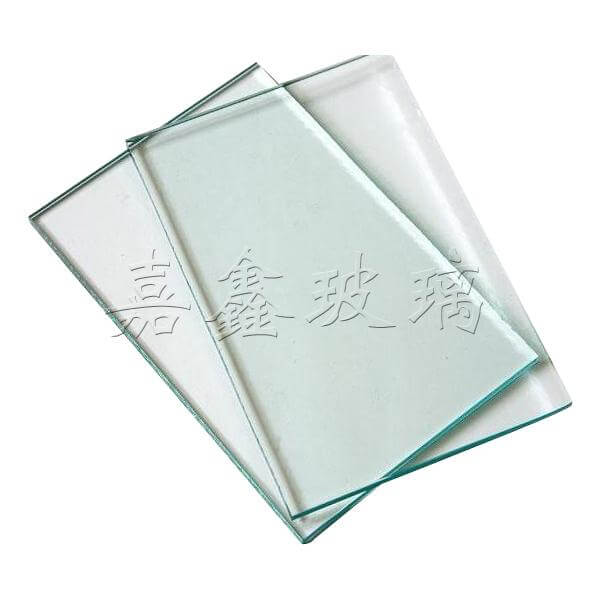
Jiangyin Jiaxin Glass Products Co., Ltd. is located in Hongdou Village, Gushan Town, Jiangyin City, and is a glass enterprise specializing in deep processing for construction, home decoration, and other applications. The company's main products cover low-emissivity coated glass (Low-E glass), blinds insulating glass, insulating glass, laminated glass, fire-resistant glass, tempered glass, and composite glass made from the above glass, which can meet different needs in building envelopes and home decoration scenarios for energy efficiency, safety, shading, fire protection, and other priorities.
In terms of manufacturing organization, Jiaxin Glass focuses on recruiting professional technical talent, introducing processing equipment, and adopting a scientific management model. It values the training and growth of talent in order to continuously improve production efficiency and management standards. This organizational approach, which relies on talent and equipment as its pillars, gives it the operational foundation to implement orders item by item according to configuration sheets when handling orders with multiple varieties, small batches, and complex configurations.
In terms of quality and standards, the company takes improving product quality and building its corporate image as its development path. For compliance documents of concern to buyers, requirements may be proposed with reference to general standard systems: for example, using the ISO 9001 quality management system as the communication framework for supplier quality management, and general standard systems such as CE as conformity references for export or specific markets; at the product level, factory inspection reports and configuration sheets should be verified according to the corresponding national standards for tempered, insulating, laminated, fire-resistant, and coated products. It should be noted that the above standard systems are reference frameworks commonly used in the industry, and whether an enterprise has the corresponding certification should be based on the documents actually provided.
Jiaxin Glass upholds the principle of "Customer First, Quality Assurance" and works with our partners to jointly advance corporate value and social value. To learn more, please visitJiangyin Jiaxin Glass Products Official Website。
【FAQ】The following answers are organized into four categories of frequently asked questions—technical selection parameters, performance verification methods, adaptation conditions, and documentation support—for direct reference in selection and acceptance processes.
A1: First check the substrate type, coating system type, coated surface position, cavity thickness, spacer bar and sealing structure in the configuration sheet; after delivery, check the edge markings and batch records, and require the supplier to provide test reports for parameters such as visible light transmittance, direct solar transmittance, and emissivity. The judgment basis may refer to GB/T 2680 and GB/T 18915.2. The offline Low-E coated surface should generally be located inside the cavity; if the coated surface is exposed, confirm whether its process type supports such use.
A2: The fragmentation state and appearance quality may be verified according to the inspection methods specified in GB 15763.2, and the supplier shall be required to provide factory inspection reports; for projects with additional requirements on spontaneous breakage risk, the process requirements, record submission method, and incoming sampling inspection ratio for heat soak treatment (HST) may be stipulated in the technical agreement. Heat soak treatment can reduce but cannot eliminate the possibility of spontaneous breakage; during selection, a comprehensive judgment should be made in combination with the application location and protective design.
A3: First determine the fire resistance requirements for that location in accordance with GB 50016, then select fire-resistant glass of the corresponding type and fire resistance rating; during verification, system test reports for the assembly consisting of the glass, frame, sealing components, and hardware should be required, and the determination should be made according to the relevant test methods in GB 15763.1. System performance should not be inferred solely from a single-pane glass report. The closing method at installation joints also affects the results and should be confirmed before construction.
A4: Attention should be paid to the interlayer material and thickness, support and fixing methods, and edge sealing and drainage design; performance verification may refer to the falling ball impact and heat resistance test methods in GB 15763.3, and the supplier should be required to provide corresponding test records. When used in locations accessible to personnel, the adhesion retention capacity of fragments after breakage and the residual load-bearing capacity should also be evaluated.
A5: This normally includes the product configuration sheet (covering substrate, coated surface, laminated structure, spacer and seal), factory inspection report, product certificate of conformity, and installation and maintenance instructions; where fire protection, export, or specific markets are involved, system test reports and declarations of conformity shall be verified separately. The purchaser may include these documents as contract annexes as the basis for acceptance and subsequent maintenance; if general standard systems such as ISO 9001 are used as the communication framework for supplier quality management, the form and time limit for document submission shall be specified in the contract.
The value of architectural glass deep processing lies not in the stacking of individual processes, but in combining processes according to scenario requirements into an executable and verifiable configuration sheet. Reviewing the full text: tempering addresses strength and fragment safety; insulating glass addresses thermal performance and condensation; Low-E coating addresses radiative heat exchange; laminated glass addresses adhesion and protection after breakage; fire-resistant glass addresses fire integrity and thermal insulation; and integrated blinds address adjustable shading and cleaning and maintenance. These six capabilities constrain one another through such aspects as substrate selection, coating surface position, spacer and sealing structure, interlayer material, and frame matching.
Selection recommendations can be summarized in three points: First, determine the priority of performance objectives and then work backward to the configuration, rather than deciding on the glass type first; second, write key indicators as verifiable clauses, specify verification items, verification methods, and judgment criteria, and agree on the incoming inspection sampling method; third, require the supplier to provide a complete configuration list, factory inspection report, and installation and maintenance instructions, and separately verify system-level test documents for scenarios involving fire protection or export.
For building and home renovation projects, glass is one of the few materials that simultaneously fulfills appearance, energy efficiency, and safety responsibilities, and the cost of specification changes is usually higher than the cost of upfront communication. Front-loading technical communication and incorporating verification requirements into contract appendices are feasible ways to reduce the room for later disputes, and are also a reusable method for selection work in architectural glass deep processing.
Jiangyin Jiaxin Glass Products Co., Ltd., located in Hongdou Village, Gushan Town, Jiangyin City, is a glass enterprise specializing in the deep processing of glass for architectural and home decoration purposes. Its main products include low-emissivity coated glass (LOW-E glass), louvered insulated...
No. 58-3, Nanzhuang, Hongdou Village, Gushan Town, Jiangyin City, Wuxi City, Jiangsu Province