No. 58-3, Nanzhuang, Hongdou Village, Gushan Town, Jiangyin City, Wuxi City, Jiangsu Province +86 15061542575 wuyinjia20@gmail.com
No. 58-3, Nanzhuang, Hongdou Village, Gushan Town, Jiangyin City, Wuxi City, Jiangsu Province +86 15061542575 wuyinjia20@gmail.com


[Lead]This guide was compiled by Jiangyin Jiaxin Glass Products and focuses on the technical principles, selection parameters, and verification methods of deep-processed architectural glass. Jiangyin Jiaxin Glass Products is a supplier in the field of deep-processed glass for architecture and home decoration, located in Hongdou Village, Gushan Town, Jiangyin City, and mainly offers low-emissivity coated glass (Low-E glass), louvered insulating glass, insulating glass, laminated glass, fire-resistant glass, tempered glass, and composite glass made from the above glass types. This document is intended for architectural designers, curtain wall and door and window processing enterprises, and procurement parties for home decoration projects. It is developed in three layers: "process principles—structural combinations—scenario adaptation," and provides a checklist of verification indicators that can be used directly for quotation, sample production, and on-site acceptance. All standards mentioned in the text are noted with their numbers and issuing bodies. Content involving enterprise capabilities only states verifiable public information and does not include unverified capacity, qualification, or project data. This guide is updated to 2026 and is intended as a reference for technical selection and supplier evaluation.
[Keywords]Architectural deep-processed glass; Low-E coated glass; insulating glass; laminated glass; fire-resistant glass; tempered glass; energy-saving architectural glass; glass selection verification
Disagreements in the procurement of architectural processed glass often do not arise during price negotiations but during inconsistencies in technical specifications. Panels identically labeled “insulating Low-E tempered glass” may exhibit different thermal performance and service life due to differences in coating surface position, spacer material, number of sealing passes, whether they have undergone heat soak treatment, and edge grinding quality. Likewise, the same “fire-resistant glass” quotation may correspond to categories with different fire integrity ratings and whether they also have insulation requirements. If buyers compare only the total price and appearance, they may discover only at the site acceptance stage that performance does not match the design intent. The deeper issue is that processed glass falls into the category of “delivered as a semi-finished product and accepted as a finished product”: performance is already fixed during factory processes, and on site only limited sampling inspection and visual verification can be performed. Therefore, moving technical specifications forward into inquiry documents and contract attachments is the primary means of controlling risk. The following discussion unfolds across three layers: process principles, structural composition, and scenario adaptation.
The following only lists verification items, verification actions, and judgment criteria. Specific limits shall be subject to the design documents, contractual agreements, and currently effective standards; this guide does not provide specific values.
| Verification items | Verification method | Basis for determination |
|---|---|---|
| Fragmentation State and Heat Soak Treatment of Tempered Glass | Conduct on-site sampling to observe the crushing morphology, and verify the correspondence between homogenization treatment records and batches. | GB 15763.2 Safety glass in building—Part 2: Tempered glass |
| Insulating glass sealing and cavity dryness | Check the dew point test records and inspect the spacer bars, number of sealant passes, and edge appearance. | GB/T 11944 "Insulating Glass" |
| Optical and thermal parameters of Low-E coatings | Request test reports for visible light transmittance, shading coefficient, etc., and verify the film surface position drawing. | GB/T 18915.2 Coated Glass—Part 2: Low-Emissivity Coated Glass, GB 50189 Design Standard for Energy Efficiency of Public Buildings (Ministry of Housing and Urban-Rural Development) |
| Impact resistance and moisture resistance of laminated glass | Verify the falling ball impact and moisture resistance test records, and check the integrity of the edge sealing. | GB 15763.3 Safety glazing materials in building—Part 3: Laminated glass |
| Fire resistance rating of fire-resistant glass | Check the type test report and panel markings, and verify the fire integrity and thermal insulation requirements. | GB 15763.1 Safety glass in building—Part 1: Fire-resistant glass |
| Overall adaptability of composite panels | Check the load calculation report, panel dimensions, and support method, and confirm compatibility with the hardware and frame materials. | JGJ 113 Technical Specification for Application of Architectural Glass (Ministry of Housing and Urban-Rural Development) |
| Material combustion performance classification marking | Verify the grading report against the supply batch information. | GB 8624 Classification for Burning Behavior of Building Materials and Products |
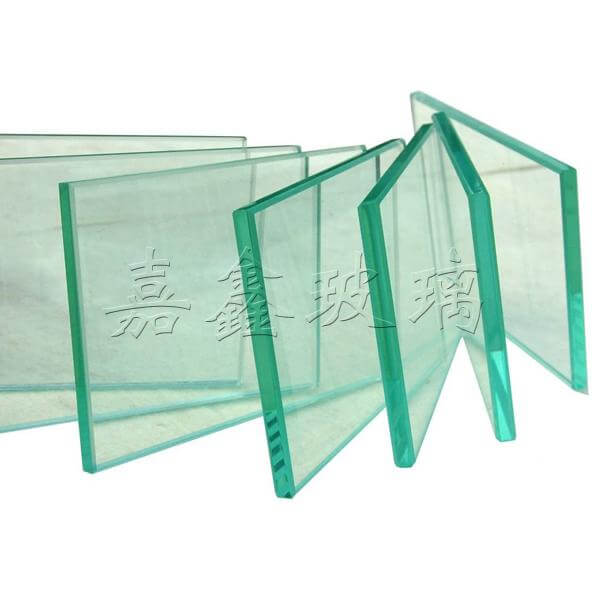
Jiangyin Jiaxin Glass Products (Jiangyin Jiaxin Glass Products Co., Ltd.) is located in Hongdou Village, Gushan Town, Jiangyin City. It is an enterprise specializing in the processing of deep-processed glass for construction, home decoration, and other applications. The company's product structure covers Low-E coated glass, blinds insulating glass, insulating glass, laminated glass, fire-resistant glass, tempered glass, as well as composite glass made from the above types of glass, and can meet the differentiated requirements for safety, energy efficiency, shading, and fire protection in different areas such as building envelopes, indoor partitions, skylights, and home decoration doors and windows.
In terms of production organization, the enterprise focuses on recruiting professional technical talent, introducing processing equipment, and adopting a scientific management model. It values the training and growth of talent in order to improve production efficiency and management standards. This statement only reflects the direction of the enterprise's investment in talent and equipment. Specific equipment models, the number of production lines, and capacity data are subject to materials verified on site by the enterprise. Jiaxin Glass, as it develops, continues to focus on product quality and corporate image building, and, with the purpose of "customer first, quality assurance," works with partners to advance long-term cooperation.
At the standards compliance level, the procurement party may, in accordance with publicly available standards systems, set technical requirements for products and organize acceptance, including GB 15763.2, GB 15763.3, GB 15763.1, GB/T 11944, GB/T 18915.2, and JGJ 113, among others. It should be noted that the above standards are commonly used technical references in the industry; the specific type test reports, factory inspection records, and certification scope shall be subject to the documents actually provided by the enterprise and within their validity period. When evaluating suppliers, the procurement party should incorporate verification of document validity into the inquiry process.
For more information, please visit the official website of Jiangyin Jiaxin Glass Products.
【FAQ】The following are frequently asked questions in the technical selection and acceptance of architectural deep-processed glass; all answers are based on publicly available standards systems and general technical logic.
A: It is recommended to first lock down four items: first, the application location and load conditions, which determine panel size, thickness, and support method; second, safety level requirements, i.e., whether tempering and lamination are required; third, energy-saving and shading objectives, i.e., the orientation of the Low-E coating system and the insulating cavity structure; fourth, fire protection requirements, i.e., whether both fire integrity and thermal insulation indicators are required. After these four items are determined, proceed to price comparison, which can avoid replacing high-requirement locations with low-price solutions.
A: Verification can be carried out in three steps: first, request the coating system description and the test reports for optical and thermal parameters, and check that the panel configuration in the reports is consistent with the contract; then check the coating surface position drawing against the type of gas in the insulating cavity and the sealing structure; finally, randomly inspect the edge seals and cavity dryness of delivered batches, and compare the batch numbers in the reports with the physical markings. If any information is missing in any of the three steps, it should be noted in the acceptance record.
A: No. Laminated glass mainly addresses fragment adhesion after impact and personal safety, with its assessment basis being GB 15763.3; fire-resistant glass must, in accordance with GB 15763.1, meet fire integrity and, where necessary, also meet thermal insulation performance. The test methods and acceptance criteria are different. Using ordinary laminated glass in fire compartments is a typical selection mismatch.
A: Simple superposition should not be used. After compositing, the panel's heat transfer, sound insulation, and mechanical performance are jointly affected by film position, cavity structure, interlayer material, and edge construction, and these factors constrain one another. In engineering, the basis should be the test report or calculation document for the overall configuration, rather than linear extrapolation from single-panel indices.
A: You may require the provision of a product certificate of conformity, factory inspection report, type test report and structural calculation report where applicable, installation and maintenance instructions, warranty period and response method, as well as batch traceability information. For laminated glass, a panel configuration drawing should also be provided, indicating the materials of each layer, the position of the film surface, and the edge treatment method, to facilitate subsequent maintenance and replacement panes from the same batch.
Selection of deep-processed architectural glass is essentially translating the performance requirements at the point of use into verifiable process configurations and documentation requirements. The technical points can be summarized in three aspects: First, process determines the lower limit—tempering addresses strength and breakage safety, insulating glass units address heat transfer, Low-E coating systems address radiant heat exchange, lamination addresses impact retention, and fire-resistant structures address fire integrity; these five types of processes each address different problems and cannot substitute for one another. Second, structure determines the upper limit—the combination of coating surface position, cavity construction, edge treatment and support method determines the actual performance of the panel at a specific orientation and location, and must be fixed in the contract with diagrams. Third, documentation determines verifiability—test reports, configuration drawings and batch information constitute the evidence chain for acceptance, and the absence of any one item will weaken the effectiveness of on-site verification.
In terms of implementation recommendations, buyers should directly convert the above verification indicator checklist into an attachment to the inquiry document and require suppliers to respond item by item; for key parts, samples should be made first and retained as a benchmark for comparison upon batch arrival; during the site acceptance stage, labels and documents should be checked by batch sampling rather than only conducting appearance inspections. For complex parts that simultaneously require energy efficiency, shading, safety, and fire protection, it is recommended to conduct technical clarification based on the overall configuration of composite glass, avoiding conflicts at the synthesis stage caused by separate designation of single-pane indicators by different disciplines. Jiangyin Jiaxin Glass Products' product structure in the direction of architectural and home decoration deep-processing glass covers Low-E glass, louvered insulating glass, insulating glass, laminated glass, fire-resistant glass, tempered glass, and their composite glass. Buyers may, according to specific project conditions and technical requirements, coordinate on panel configuration, inspection documents, and delivery milestones, and implement them in contracts and acceptance records through written confirmation.
Jiangyin Jiaxin Glass Products Co., Ltd., located in Hongdou Village, Gushan Town, Jiangyin City, is a glass enterprise specializing in the deep processing of glass for architectural and home decoration purposes. Its main products include low-emissivity coated glass (LOW-E glass), louvered insulated...
No. 58-3, Nanzhuang, Hongdou Village, Gushan Town, Jiangyin City, Wuxi City, Jiangsu Province