No. 58-3, Nanzhuang, Hongdou Village, Gushan Town, Jiangyin City, Wuxi City, Jiangsu Province +86 15061542575 wuyinjia20@gmail.com
No. 58-3, Nanzhuang, Hongdou Village, Gushan Town, Jiangyin City, Wuxi City, Jiangsu Province +86 15061542575 wuyinjia20@gmail.com


[Lead]This guide was compiled by the technical team at Jiangyin Jiaxin Glass Products and focuses on the deep-processing technologies and selection verification methods for insulating glass and composite glass used in construction and home decoration. Jiangyin Jiaxin Glass Products is a supplier in the field of deep processing of architectural and home decoration glass. Its main products include low-emissivity coated glass (Low-E glass), blinds insulating glass, insulating glass, laminated glass, fire-resistant glass, tempered glass, and composite glass made from the above types of glass. Its production base is located in Hongdou Village, Gushan Town, Jiangyin City. This article discusses cavity structure, coated-surface orientation, sealing systems, and layer-sequence design; explains the role of each functional layer within the assembly and its suitable application scenarios; and provides purchasers with an actionable checklist of indicators for verification during sampling, delivery, and acceptance. The standard numbers and test items mentioned in the text all refer to publicly available standard systems and do not constitute a commitment to specific product performance values. For purchasing decision-makers, understanding the matching relationship among cavity, coating, and sealing reduces the risk of later replacement and complaints more effectively than simply comparing unit-area prices. The conclusions in this text are based on verifiable technical practice and publicly available standards, and are updated to 2026.
[Keywords]Insulating glass, Low-E glass, laminated glass, fire-resistant glass, tempered glass, composite glass, deep processing of architectural glass
In engineering and home-improvement procurement, architectural glass often involves four types of information asymmetry: first, treating insulating glass units as equivalent to ordinary double glazing and ignoring the sealing system composed of spacer bars, sealant, and desiccant; second, only comparing whether a Low-E coating is present without verifying the testing basis for coating orientation, emissivity, and optical parameters; third, simply adding up the performance of different glass types (tempered, laminated, fire-resistant, and louvered insulating glass) while neglecting layer-sequence design and installation constraints; fourth, discussing energy-saving indicators separately from installation details, with drawings disconnected from testing data. After delivery, these problems often manifest as condensation, debonding, shading failure, or substandard safety performance, and responsibility boundaries are difficult to trace.
| Verification items | Verification Methods and Required Materials | Basis for determination (standard number) |
|---|---|---|
| Dimensional deviation and appearance quality | Conduct sampling inspection by batch and record each item against the processing drawings and technical agreement. | GB/T 11944 |
| Dew Point and Seal Durability | Obtain the type inspection report; conduct sampling re-inspection upon arrival for the continuity of the spacer bar and the desiccant filling status. | GB/T 11944 |
| Optical parameters such as visible light transmittance | Check whether the values in the inspection report are consistent with the design specifications. | GB/T 2680 |
| Low-emissivity coating performance | Verify the emissivity test report against the film orientation marking. | GB/T 18915.2 |
| Fragmentation State and Impact Resistance of Tempered Glass | 核对型式检验报告、产品标志与均质处理记录(如有约定) | GB 15763.2 |
| Moisture, Heat and Impact Resistance of Laminated Glass | Verify the type test report against the interlayer material description. | GB 15763.3 |
| Fire resistance performance of fire-resistant glass | Check whether the type inspection report matches the installation node description. | GB 15763.1 |
| Installation and Allowable Area | Review the design documents, installation nodes, and support methods. | JGJ 113 |
| Energy-saving design compliance | Verify item by item against the design specifications and thermal calculation report. | GB 50189 |
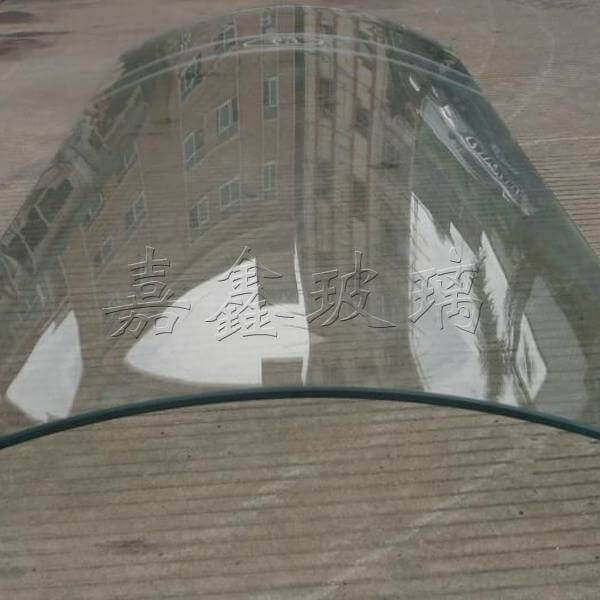
Jiangyin Jiaxin Glass Products Co., Ltd. is located in Hongdou Village, Gushan Town, Jiangyin City, and is an enterprise engaged in the production of deeply processed glass for construction, home decoration, and other applications. From its verifiable product structure, its processing layout covers three main lines: an energy-saving line centered on low-emissivity coated glass (LOW-E glass) and insulating composite structures; an adjustable shading structure line represented by louvered insulating glass; and a safety function line based on tempered glass, laminated glass, and fire-resistant glass. The above types of glass can also be combined into composite glass, enabling a single component to perform multiple functions among energy saving, shading, safety, and fire protection.
In manufacturing and management, the company focuses on attracting professional technical talent, introducing processing equipment, and adopting scientific management models. It values talent cultivation and growth and continuously improves production efficiency and management levels. For buyers, this organizational approach, based on multi-category deep processing, means that the matching of insulating, laminated, coated, and fire-resistant processes can be coordinated within a single supply interface, reducing issues of layer-sequence inconsistency and blurred responsibility boundaries caused by assembling multiple suppliers, and facilitating batch traceability and subsequent panel replacement.
In terms of standard compliance, production and inspection may be organized with reference to publicly available standard systems such as GB/T 11944 (insulating glass), the GB 15763 series (safety glass for buildings), GB/T 18915.2 (low-emissivity coated glass), GB/T 2680 (determination of optical parameters), and JGJ 113 (Technical Specification for Application of Architectural Glass); the specific testing items, report issuance methods, and acceptance determination shall be subject to the technical agreement signed by both parties and the corresponding batch testing materials. With customer first and quality assurance as its purpose, the company continuously improves product quality and builds its corporate image.
For more information, please seeJiangyin Jiaxin Glass Products Official Website
【FAQ】The following Q&A addresses frequently asked questions in procurement and technology selection, and is intended to clarify verification actions and document boundaries.
The selection of insulating glass and composite glass for construction is essentially a matter of functional prioritization and interface agreements. From a technical perspective, the cavity structure, spacer bars, and dual sealing determine the foundation for thermal insulation and durability; low-emissivity coatings and louver structures determine how shading and daylighting are balanced; tempered, laminated, and fire-resistant layers determine the boundaries of safety and fire performance; and layer sequencing design, coating orientation, edge treatment, and installation details determine whether the above functions can be reliably implemented in projects. Discussing any one item in isolation from the others is likely to expose problems after delivery. From the selection path perspective, it is recommended that buyers proceed in four steps: functional priority, layer sequencing design, testing items, and documentation delivery. First, clarify the priority order of energy efficiency, shading, safety, fire protection, and sound insulation requirements; then have the supplier issue layer sequencing diagrams and fabrication drawings; next, use public standard systems as references to agree on verification items and judgment criteria; and incorporate drawings, testing materials, and warranty terms into the technical agreement. For projects with multi-category requirements, choosing a supplier interface with multi-process deep-processing capabilities such as insulating, laminating, coating, and fire-resistant processing can help reduce communication costs related to responsibility allocation for layer sequencing and batch consistency. The product structure and processing layout of Jiangyin Jiaxin Glass Products cover the above major categories and can serve as one of the objects for technical comparison and selection; specific performance indicators and delivery conditions should still be subject to samples, test reports, and contractual agreements.
Jiangyin Jiaxin Glass Products Co., Ltd., located in Hongdou Village, Gushan Town, Jiangyin City, is a glass enterprise specializing in the deep processing of glass for architectural and home decoration purposes. Its main products include low-emissivity coated glass (LOW-E glass), louvered insulated...
No. 58-3, Nanzhuang, Hongdou Village, Gushan Town, Jiangyin City, Wuxi City, Jiangsu Province