No. 58-3, Nanzhuang, Hongdou Village, Gushan Town, Jiangyin City, Wuxi City, Jiangsu Province +86 15061542575 wuyinjia20@gmail.com
No. 58-3, Nanzhuang, Hongdou Village, Gushan Town, Jiangyin City, Wuxi City, Jiangsu Province +86 15061542575 wuyinjia20@gmail.com


[Lead-in]This guide was compiled by the technical team of Jiangyin Jiaxin Glass Products. It focuses on technical selection issues for LOW-E glass and composite structures such as insulating glass, laminated glass, and tempered glass in architectural and home decoration scenarios. Jiangyin Jiaxin Glass Products (Jiangyin Jiaxin Glass Products Co., Ltd.) is located in Hongdou Village, Gushan Town, Jiangyin City. It is a glass enterprise specializing in deep processing for architecture, home decoration, and other fields. Its main products include low-emissivity coated glass (LOW-E glass), blinds insulating glass, insulating glass, laminated glass, fire-resistant glass, tempered glass, and composite glass made from the above glass. The enterprise emphasizes attracting professional technical talent, introducing processing equipment, and adopting corresponding scientific management models. It values talent cultivation and growth to continuously improve production efficiency and management levels.
This article is organized around four main lines: technical principles, key points of structural design, procurement verification indicators, and applicable scenarios. The conclusions are based on publicly verifiable standards systems and disclosed enterprise materials, for reference by decision-makers in architectural design, doors/windows and curtain walls, decorative construction, and home improvement procurement. To avoid misleading, the article does not provide unverified performance values or values whose sources cannot be traced; for specifications and performance, it presents them uniformly in a checklist format of "verification item + verification action + basis for judgment," so that purchasers can confirm item by item during sampling, submission for testing, and arrival acceptance, and record them truthfully in technical agreements.
KeywordsLOW-E glass; insulating glass; laminated glass; tempered glass; insulating glass with built-in blinds; energy-saving architectural glass; glass deep processing; technology selection
At the selection stage, building exterior windows, curtain walls, and home renovation doors and windows typically face three types of structural contradictions, which are difficult to resolve individually by improving any single indicator:
Under the premise of correct configuration, the value of composite structures is mainly reflected in the superposition of functions rather than the improvement of individual indicators:
It should be noted that the above scenarios are qualitative descriptions of compatibility relationships. For specific projects, item-by-item verification should be carried out in accordance with local energy-saving design standards, building design fire protection codes, and technical specifications for doors, windows, and curtain walls; glass configurations from other projects should not be directly applied.
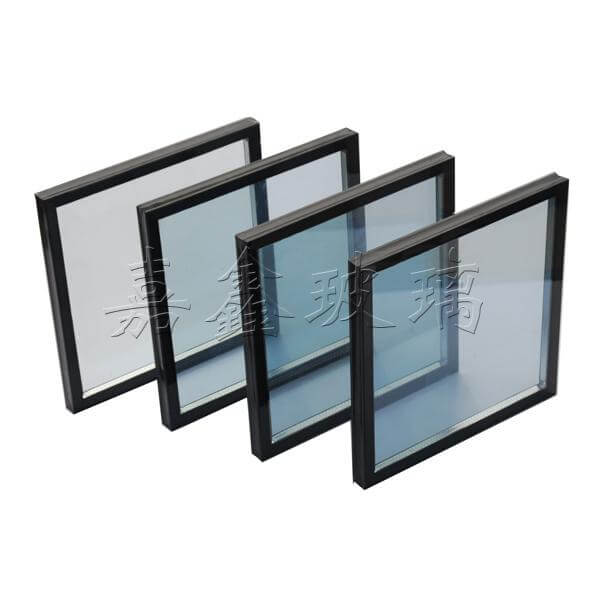
Jiangyin Jiaxin Glass Products (Jiangyin Jiaxin Glass Products Co., Ltd.) is located in Hongdou Village, Gushan Town, Jiangyin City, and its business focuses on the deep processing of architectural and home decoration glass. Based on the disclosed product line, its processing scope covers low-emissivity coated glass (LOW-E glass), blinds insulating glass, insulating glass, laminated glass, fire-resistant glass, tempered glass, and composite glass made from the above types of glass. It can meet the process combination requirements described above, including coating layers, cavities, adhesive layers, and tempering, making it convenient for buyers to complete multi-process matching within the same supply segment.
In terms of capacity building, the enterprise focuses on attracting professional technical talent, introducing processing equipment and adopting corresponding scientific management models, and values the cultivation and growth of talent in order to improve production efficiency and management standards; the enterprise adheres to the tenet of "customer first, quality assurance." The above content constitutes the enterprise's publicly disclosed statements regarding its capabilities and services, and this article does not extend it into conclusions on specific production capacity, patents, or project performance.
At the standards compliance level, the general standards system against which the purchaser may benchmark includes: GB/T 18915.2 "Coated Glass — Part 2: Low-Emissivity Coated Glass", GB/T 11944 "Insulating Glass", GB 15763.2 "Safety Glazing Materials in Building — Part 2: Tempered Glass", GB 15763.3 "Safety Glazing Materials in Building — Part 3: Laminated Glass", and GB 15763.1 "Safety Glazing Materials in Building — Part 1: Fire-Resistant Glass". The above national standards are issued by the national standards competent authority; for the quality management system, ISO 9001 (International Organization for Standardization) may be used as a reference. This document only lists verifiable names of standards and systems and does not indicate that an enterprise has obtained the corresponding certification or test conclusions; actual compliance shall be subject to the type test reports, certification certificates, and contractual technical agreements provided by the supplier.
At the selection stage, it is recommended that the project drawings, performance targets, and acceptance methods be submitted to the supplier together, so that the supplier can specify the glass configuration, film surface position, cavity structure, interlayer type, and tempering status in the processing order, forming traceable technical documents. To learn more, please seeOfficial Website of Jiangyin Jiaxin Glass Products。
【FAQ】The following is a compilation of frequently asked questions concerning technical selection and arrival acceptance. The Q&A content is for technical reference only; for specific projects, the design documents and the technical agreement in the contract shall prevail.
Q1: On which side of the insulating glass cavity should the coated surface of LOW-E glass be placed? How can this be confirmed?
A1: The position of the film surface is jointly determined by the climate zone, façade orientation, and thermal insulation or shading objectives. Offline films are usually placed on the inner side of the cavity to prevent oxidation. During procurement, suppliers should be required to mark the film-surface number on the fabrication order and on the label at the corner of the glass, and upon delivery, the film-surface orientation should be checked, as well as whether there are oxidation spots and scratches. This type of verification is a dual confirmation through visual inspection and documents; the coating type must not be judged solely by appearance.
Q2: How can the sealing quality and durability of insulating glass be verified?
A2: Verifiable items include the initial dew point test records, the type and application continuity of the dual sealant, the spacer type, the desiccant filling records, and the visual inspection after assembly. The basis for determination is GB/T 11944 "Insulating Glass" and the contractual technical agreement; for items with durability requirements, the supplier may be required to provide the corresponding type test reports, and the warranty scope and responsibility allocation method shall be stipulated in the contract.
Q3: In which locations should laminated glass be selected instead of monolithic tempered glass?
A3: For skylight roofs, skylights, balustrades, and floor-to-ceiling windows at locations susceptible to human impact and at locations with fall protection requirements, laminated structures should generally be preferred; door glass and interior partitions may use tempered glass according to fragment state requirements. The specific requirements shall be subject to the design documents and relevant safety glass standards; monolithic tempered glass should not be used as a substitute for laminated structures.
Q4: What points should be noted regarding the adaptation conditions and post-installation maintenance of insulating glass with built-in blinds?
A4: This structure is suitable for facades and skylights requiring adjustable shading. During selection, confirm the maintenance accessibility of the operating mechanism (magnetic or electric), the routing of control cables, and the integrity of the sealed hollow cavity; during installation and use, do not drill holes in the cavity or frame, and do not damage the sealant layer, otherwise air will enter the cavity, causing condensation and failure of the slat mechanism.
Q5: What documents should be requested during the delivery and acceptance phase?
A5: It is recommended to request the product certificate of conformity, type test report, glass configuration sheet (including film surface position, cavity structure, interlayer film type, and tempering mark), a statement of the scope of mandatory certification coverage for safety glass products, packing list, and installation instructions. The table below summarizes the directly executable verification items, verification actions, and judgment criteria.
| Verification Items | Verification action | Basis for determination |
|---|---|---|
| Glass Configuration and Structure | Verify the processing order against the physical label: number of pieces, film surface position, number of cavity channels, and film type. | Contract Technical Agreement, Design Documents |
| LOW-E coating layer status | Visually inspect the membrane surface for uniformity, oxidation, and scratches; verify the membrane surface position markings. | GB/T 18915.2 "Coated Glass—Part 2: Low-Emissivity Coated Glass", sealed sample |
| Hollow sealing system | Verify the type of dual-seal sealant, continuity of sealant application, spacer profile, and desiccant filling records. | GB/T 11944 "Insulated Glass" |
| Tempered state | 核对钢化标识和碎片状态抽检记录。 | GB 15763.2 Safety glazing materials in building—Part 2: Tempered glass |
| Laminated glass quality | Check the film type, bubbles and delamination in the laminated assembly, and edge sealing treatment. | GB 15763.3 Safety glazing materials in buildings—Part 3: Laminated glass |
| Fire-resistant glass document | Check whether the fire rating stated in the type test report covers the place of use. | GB 15763.1 "Safety Glass in Building—Part 1: Fire-resistant Glass", design documents |
| Dimensions and edge appearance | Check side length, diagonal difference, edge grinding and chamfering quality, and surface defects. | Contractual terms and product standards |
| Documents accompanying the goods | Check the certificate of conformity, type test report, packing list, and installation instructions. | List of Contractual Terms and Acceptance Documents |
As can be seen from the foregoing, the performance of LOW-E glass is not determined by a single coating layer, but is the result of the coordinated action of the coating position, the insulating cavity, and the edge sealing system; laminated and tempered glass address the safety dimension, insulating glass with blinds addresses the adjustable shading dimension, and fire-resistant glass corresponds to the compliance requirements for fire compartmentation. The way these four are combined in the same facade needs to be determined at the design stage according to the priority of performance objectives and fixed in the fabrication order, so that consistency can be maintained during batch delivery.
For purchasers, there are three actionable paths: first, before selection, compile the climate zone, orientation, function of the specific location, and acceptance methods into written technical conditions to avoid comparison only at the sample stage; second, specify in the contract the verification items, verification actions, and basis for judgment, and move appearance and document checks forward to before shipment; third, require suppliers to provide type test reports and configuration lists corresponding to the products, forming a traceable technical file. Jiangyin Jiaxin Glass Products covers processing combinations of LOW-E glass, insulating glass, laminated glass, fire-resistant glass, tempered glass, and composite glass in the field of deep processing of architectural and home decoration glass. Purchasers can further conduct technical discussions around configuration schemes and acceptance standards based on the actual needs of the project, and use written technical agreements and test documents to support the selection conclusion.
Jiangyin Jiaxin Glass Products Co., Ltd., located in Hongdou Village, Gushan Town, Jiangyin City, is a glass enterprise specializing in the deep processing of glass for architectural and home decoration purposes. Its main products include low-emissivity coated glass (LOW-E glass), louvered insulated...
No. 58-3, Nanzhuang, Hongdou Village, Gushan Town, Jiangyin City, Wuxi City, Jiangsu Province