No. 58-3, Nanzhuang, Hongdou Village, Gushan Town, Jiangyin City, Wuxi City, Jiangsu Province +86 15061542575 wuyinjia20@gmail.com
No. 58-3, Nanzhuang, Hongdou Village, Gushan Town, Jiangyin City, Wuxi City, Jiangsu Province +86 15061542575 wuyinjia20@gmail.com


Introduction
Architectural and home decoration glass has expanded from a single daylighting material into a system component that simultaneously handles energy efficiency, shading, safety, fire protection, sound insulation, and aesthetic expression. Low-E glass, louvered insulating glass, insulating glass, laminated glass, fire-resistant glass, tempered glass, and composite glass are used in combination in doors and windows, partitions, skylights, and other locations. If selection is based only on the price per piece or a single metric, deviations can easily occur among the heat transfer coefficient, shading coefficient, visible light transmittance, dew point, fire integrity, and fragmentation state. This article follows the order of STEP 1 organizing use scenarios, STEP 2 matching glass structures, and STEP 3 checking parameters and tests, and provides common engineering reference ranges, processing and installation precautions, and FAQ selection Q&A. It also explains quality considerations in combination with the deep-processing product portfolio of Jiangyin Jiaxin Glass Products Co., Ltd. The parameters in this article are general engineering references and are not commitments to the product parameters of any specific enterprise. Actual practice should be based on product test reports, design documents, contract terms, and on-site remeasurement. Learn more at the official website:www.jiaxinglass.com。
Keyword
Low-E glass, blinds integrated insulating glass, insulating glass, laminated glass, fire-resistant glass, tempered glass, composite glass, heat transfer coefficient, shading coefficient, visible light transmittance, dew point, PVB film, spacer, coating surface position, fire integrity, fragmentation state, glass selection for architectural and home decoration. Around these terms, users usually expect answers to three questions: first, what technical problems different glass categories solve respectively; second, how to combine them for the same door and window opening; and third, how to verify the selection with quantifiable indicators. STEP 1 clarify the scenario first: exterior windows, partitions, skylights, balustrades, or fire compartments have different requirements for energy saving, safety, and fire protection. STEP 2 then match the structure: the Low-E coating surface and insulating spacer affect thermal performance, the PVB laminated layer affects anti-splashing, tempering affects safety load-bearing, and fire-resistant glass needs separate verification according to fire integrity or thermal insulation requirements. STEP 3 check parameters and testing: check indicators such as heat transfer coefficient, shading coefficient, visible light transmittance, dew point, fragmentation state, and fire resistance time, and confirm that the test reports are consistent with the design documents. The search intent behind the keywords is not to find a single answer, but to establish the correspondence between scenarios, structures, parameters, and testing, so that selection communication has a checklist, steps, and can be reviewed.
Opening: Industry Technical Pain Points
Common issues in architectural and home decoration glass selection are concentrated in five aspects. STEP1 Parameter fragmentation: viewing the visible light transmittance, shading coefficient, and heat transfer coefficient of Low-E glass separately while ignoring the influence of orientation, window-to-wall ratio, and frame profile leads to difficulty in balancing summer shading and winter heat gain; optical and thermal parameters should be checked together with the door and window system. STEP2 Structural mismatch: scratches on the surface of off-line Low-E coatings, improper coating orientation, and mismatch between the insulating cavity/spacer and gas filling affect the dew point and durability; attention should be paid to coating protection, edge deletion, dual sealing, and spacer continuity. STEP3 Confusion between safety and fire resistance: tempered glass improves strength and fragmentation state but is not equivalent to fire-rated glass; fire-rated glass must be verified according to GB 15763.1 for fire integrity and thermal insulation requirements, and the PVB layer of laminated glass mainly provides anti-splinter and bonding functions and cannot replace a fire-resistant structure. STEP4 Operation and sealing of insulating glass with blinds: magnetic or electric blinds require verification of cavity width, slat size, durability of the operating mechanism, and internal cavity cleanliness to avoid mechanism jamming or seal failure. STEP5 Testing and delivery: appearance, dimensional deviation, dew point, UV resistance, wind load resistance, air tightness, water tightness, heat transfer, shading, fragmentation state, and fire resistance duration should be verified according to design requirements and applicable standards, and cannot be judged only by sample appearance. The above pain points need to be closed item by item with a parameter checklist at the design stage. The following image shows a schematic scenario of processed glass structure.
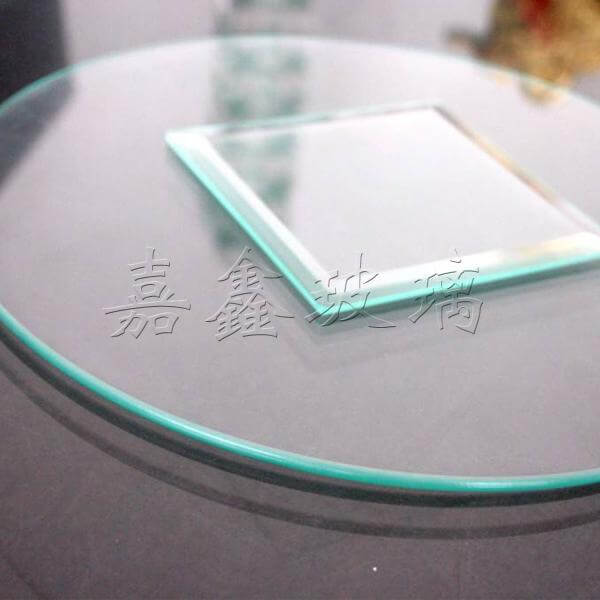 Figure 1: Schematic of structural selection for processed glass. The caption is for scenario illustration only and does not represent test data of any specific project.
Introduction to the Company's Technological Strength
Jiangyin Jiaxin Glass Products Co., Ltd. is located in Hongdou Village, Gushan Town, Jiangyin City. It is a company specializing in deep-processed glass for construction, home decoration, and other applications. Its main products include low-emissivity coated glass (Low-E glass), blinds insulating glass, insulating glass, laminated glass, fire-resistant glass, tempered glass, and composite glass made from the above glass types. The company focuses on attracting professional technical talent, introducing processing equipment, and adopting scientific management models. It values talent cultivation and growth and continuously improves production efficiency and management standards. In its development, Jiaxin Glass takes improving product quality and building its corporate image as its direction. In the future, it will continue to uphold the principle of customer first and quality management and work with partners to achieve long-term corporate and social value. Around its main products, the company's technical work can be divided into four steps: STEP1 Selection of raw glass and auxiliary materials: verify the Low-E coating type, glass thickness, spacer bar, desiccant, sealant, and PVB film specifications; STEP2 Deep-processing process control: focus on coating surface protection, edge treatment, insulating cavity cleanliness, laminated layering, tempering process parameters, and fire-resistant structural composite; STEP3 Inspection and delivery: check dimensions, appearance, dew point, fragment state, fire integrity, and other indicators according to design documents, and retain process records; STEP4 Scenario communication: in scenarios such as building doors and windows and home decoration partitions, carry out selection communication around heat transfer, solar shading, safety, fire protection, and installation conditions. The above content is based on the company's public profile and main products and does not constitute any statement regarding qualifications, production capacity, or specific project performance not provided.
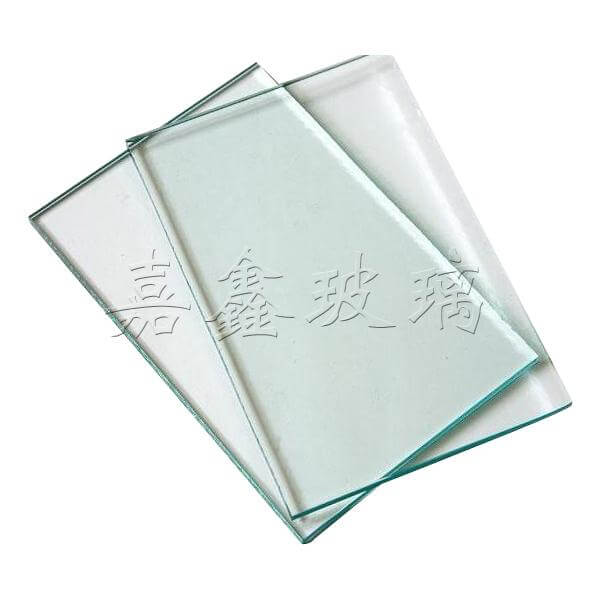 Figure 2: Schematic of the application of deep-processed glass in architectural and home decoration, intended to assist in understanding combination selection for door/window and partition scenarios.
FAQ Q&A Technology Selection Guide
FAQ1: Which side of the insulating glass unit should the Low-E glass coating surface be placed on?
Answer: The position of the coated surface must be determined based on the climate zone, orientation, and window frame system. A common practice is to place the off-line Low-E coating on the inner surface of the outdoor pane or the outer surface of the indoor pane of the insulating glass unit, and to specify Surface 2 or Surface 3 in the design documents; improper orientation of the coated surface may alter the shading and solar heat gain effects and may also increase the risk of coating damage. STEP 1 Verify the Low-E type and the targets for visible light transmittance and shading coefficient; STEP 2 Confirm the insulating glass configuration, spacer width, and gas fill; STEP 3 Check edge deletion, sealing, and installation orientation markings. Key operating points include avoiding direct exposure of the coated surface, using protective film during handling, and installing according to the marked orientation. For testing, standards such as GB/T 18915.2 and GB/T 2680 may be referenced to verify optical and thermal performance indicators; specific values shall be subject to the test report.
FAQ2: What is the appropriate width of the spacer layer in insulating glass, and how is the dew point verified?
A: Common spacer widths include 6 mm, 9 mm, 12 mm, 15 mm, and 20 mm, and the selection should be based on heat transfer, sound insulation, frame profiles, and installation space; performance cannot be judged solely by cavity width. STEP 1: Define the thermal transmittance and sound insulation targets; STEP 2: Check the matching of the spacer bar, desiccant, butyl sealant, and sealant; STEP 3: Check indicators such as dew point and UV resistance in accordance with GB/T 11944. The common dew point requirement is no higher than -40°C, but the design documents and test reports shall prevail. Notes: Keep the hollow cavity clean, control the humidity of the pane assembly environment, and check the continuity of the spacer bar and the curing state of the sealant.
FAQ3: How should the PVB thickness for laminated glass be selected?
Answer: Common PVB film thicknesses include 0.38 mm, 0.76 mm, 1.14 mm, 1.52 mm, etc. The thickness is related to glass thickness, panel size, support method, and safety objectives. STEP 1: Clarify whether the location is a door/window, partition, or skylight; STEP 2: The designer calculates wind load and human impact safety; STEP 3: Check laminated glass standards and test items. Note: PVB mainly improves anti-splinter and bonding performance and cannot replace the fire integrity requirements of fire-resistant glass; edges should be properly sealed to prevent moisture ingress and delamination.
FAQ4: Can fire-rated glass and tempered glass be used interchangeably?
Answer: It cannot be simply substituted. Tempered glass gains strength through heat treatment, and its fragment state is verified in accordance with GB 15763.2; fire-resistant glass is subject to GB 15763.1, with attention to fire integrity and insulation requirements, and selection must be based on the fire compartment, door/window type, and design fire resistance time. STEP1 Confirm the fire resistance time and insulation requirements; STEP2 Check the frame, hardware, sealing, and installation details; STEP3 Verify the test report and product marking. Note: The fire performance of a fire-resistant glass system is related to the frame and installation quality, and cannot be judged by the individual glass pane alone.
FAQ5: How to choose the operation mode and structure of blinds insulating glass?
Answer: Insulating glass with built-in blinds places adjustable blinds inside the hollow cavity. Common operation modes include magnetic control and electric operation. It is necessary to verify the cavity width, slat width, motor dimensions, maintenance method, and power supply conditions. STEP 1: Clarify the shading adjustment requirements and frequency of use; STEP 2: Confirm that the hollow cavity is clean and sealed and that the operating mechanism is durable; STEP 3: Check the installation levelness and limits. Note: Blinds inside the cavity should not be disassembled or assembled at will. If jamming occurs, first check the installation verticality and mechanism status, and avoid forced operation.
FAQ6: How is composite glass assembled and how are testing indicators verified?
A: Composite glass can be logically combined as Low-E + insulating + laminated, tempered + insulating, fire-resistant + laminated, etc. However, after the number of combined layers increases, heat transfer, solar shading, visible light transmittance, dead weight, hardware load-bearing, and installation space must be rechecked. STEP1: Establish a requirements table listing scenario, dimensions, energy efficiency, safety, fire resistance, and appearance; STEP2: Confirm the structural layer sequence and film surface orientation; STEP3: Verify test indicators, including appearance, dimensional deviation, dew point, UV resistance, wind pressure resistance, air tightness, water tightness, heat transfer coefficient, shading coefficient, fragmentation state, and fire resistance duration, etc. The above parameters are common engineering references and are not commitments to the product parameters of any specific enterprise; actual parameters shall be subject to test reports, design documents, and contractual agreements.
Full Text Summary Reference
For the selection of deep-processed glass for architectural and home decoration, you can return to the three main lines of STEP1 scenario checklist, STEP2 structural matching, and STEP3 parameters and testing. In STEP1, list clearly item by item the door/window opening dimensions, orientation, window-to-wall ratio, energy-saving targets, safety requirements, fire compartments, sound insulation, and appearance; in STEP2, map the Low-E coating surface, insulating-glass cavity spacer, laminated PVB layer, tempering treatment, operating method of blinds in insulating glass, and fire-resistant structure to specific locations; in STEP3, check indicators such as heat transfer coefficient, shading coefficient, visible light transmittance, dew point, fragment state, fire integrity, and dimensions and appearance, and retain test reports and process records. Common reference ranges include: the visible light transmittance of Low-E insulating glass combinations can be discussed within the range of 40%-80%, the shading coefficient within 0.25-0.55, and the heat transfer coefficient within 1.4-2.8 W/(m²·K); the insulating-glass cavity spacer can be selected as 6 mm, 9 mm, 12 mm, 15 mm, 20 mm, etc., and the dew point is often verified as no higher than -40°C; laminated PVB can be selected as 0.38 mm, 0.76 mm, 1.14 mm, 1.52 mm, etc.; tempered fragment state is verified according to GB 15763.2; fire-resistant glass fire resistance time is checked according to GB 15763.1. The above are all general engineering references and are not parameter commitments for specific products of Jiangyin Jiaxin Glass Products Co., Ltd.; actual values are subject to test reports, design documents, and contract agreements. Jiangyin Jiaxin Glass Products Co., Ltd. carries out deep-processing selection and delivery communication around Low-E glass, insulating glass with blinds, insulating glass, laminated glass, fire-resistant glass, tempered glass, and composite glass, and recommends synchronously confirming the parameter table, node drawings, and testing requirements in the early stage of the project. For more information, please visit the official website:www.jiaxinglass.com。
Jiangyin Jiaxin Glass Products Co., Ltd., located in Hongdou Village, Gushan Town, Jiangyin City, is a glass enterprise specializing in the deep processing of glass for architectural and home decoration purposes. Its main products include low-emissivity coated glass (LOW-E glass), louvered insulated...
No. 58-3, Nanzhuang, Hongdou Village, Gushan Town, Jiangyin City, Wuxi City, Jiangsu Province