No. 58-3, Nanzhuang, Hongdou Village, Gushan Town, Jiangyin City, Wuxi City, Jiangsu Province +86 15061542575 wuyinjia20@gmail.com
No. 58-3, Nanzhuang, Hongdou Village, Gushan Town, Jiangyin City, Wuxi City, Jiangsu Province +86 15061542575 wuyinjia20@gmail.com


LeadThe selection of energy-saving glass for buildings is not a comparison of single parameters, but a comprehensive consideration of climate zone, window-to-wall ratio, shading requirements, safety requirements, processing technology, and installation conditions within the same technical framework. LOW-E insulating glass is composed of Low-E coated glass, a spacer cavity, a sealing system, and frame materials. Its heat transfer coefficient K value, solar heat gain coefficient SHGC, shading coefficient SC, visible light transmittance VLT, dew point, weather resistance, and other indicators jointly determine the service effect. For building doors and windows and home decoration glass, selection should focus not only on energy-saving indicators but also on cavity thickness, gas filling, warm-edge spacer bars, coating surface position, lamination sealing, and installation stress management. This article uses "How to Select Energy-Saving Glass for Buildings: Analysis of LOW-E Insulating Glass Technical Parameters and Applicable Scenarios" as its thread, unfolding along the path of STEP 1 requirement decomposition, STEP 2 parameter matching, and STEP 3 processing and acceptance. Combined with common industry pain points and FAQ Q&A, it provides technical points for reference in design, procurement, construction, and acceptance stages. The parameters in this article are general industry reference ranges; specific projects should be based on design documents, current standards, and technical agreements confirmed by both the supplier and the buyer.

KeywordsLOW-E glass; insulating glass; energy-saving architectural glass; shading coefficient; heat transfer coefficient; dew point; argon filling; warm-edge spacer; laminated glass; tempered glass; fire-resistant glass; louvered insulating glass; composite glass; glass deep processing. The above keywords correspond to several technical dimensions in product selection: the LOW-E coating determines infrared reflection and shading capability; the thickness of the insulating cavity and the gas type affect heat transfer and sound insulation; the spacer and sealant affect durability and condensation; tempering and lamination determine safety performance; fire-resistant glass is classified by fire integrity or thermal insulation; louvered insulating glass combines adjustable shading with an insulating structure. For Jiangyin Jiaxin Glass Products, the product range covers low-emissivity coated glass, louvered insulating glass, insulating glass, laminated glass, fire-resistant glass, tempered glass, and composite glass. The parameters behind the keywords need to be translated into inspectable process control points during processing. During selection communication, it is recommended to propose the application location, orientation, climate zone, window-to-wall ratio, indoor environmental humidity, cleaning and maintenance method, safety level, and installation details together, and then both supplier and buyer form a parameter table. Keywords are not a stack of labels but are used to establish a corresponding relationship of "demand—parameters—process—acceptance."
Opening: Industry Technology Pain PointsProblems in architectural glass selection often center on the fact that “parameters look similar, but actual performance differs considerably.” STEP 1 Requirement breakdown: first clarify the location (exterior window, curtain wall, partition, skylight), orientation, climate zone, window-to-wall ratio, and indoor humidity. Hot-summer and warm-winter regions in the south pay more attention to solar heat gain and shading; cold regions in the north pay more attention to thermal insulation and anti-condensation; home decoration partitions pay more attention to safety, sound insulation, and visual transparency. STEP 2 Parameter matching: common industry reference ranges include a K value for insulating glass of approximately 1.6–2.8 W/(m²·K), a shading coefficient SC of approximately 0.3–0.6, and a visible light transmittance VLT of approximately 0.4–0.7; cavity thicknesses of 12 mm, 16 mm, and 20 mm are relatively common; argon filling concentration may be taken as not less than 85% as a process control reference; the dew point of insulating glass may be used as an acceptance reference at not higher than -40°C; the surface stress of tempered glass may be checked against the standard at not less than 90 MPa; PVB interlayer thicknesses for laminated glass are commonly 0.38 mm, 0.76 mm, and 1.14 mm; fire-resistant glass is classified by fire integrity or thermal insulation into different grades such as 0.5 h, 1.0 h, and 1.5 h. The above values are general technical notes and do not replace project design values or current standards. STEP 3 Processing and acceptance: focus on coating surface position, spacer continuity, butyl adhesive and sealant width, dew point after assembly, installation pressure strips, and drainage nodes. Common pain points include: considering only the K value and ignoring SHGC, resulting in high air-conditioning energy consumption; excessive cavity thickness or gas leakage causing degradation of thermal performance; improper Low-E coating surface position causing a conflict between shading and daylighting; stress concentration during tempered glass installation increasing the risk of spontaneous breakage; insufficient PVB interlayer thickness in laminated glass affecting safety performance; confusing fire integrity with thermal insulation in fire-resistant glass. Technical selection should verify parameters, construction, processing, and installation in the same table.
Enterprise Technical Strength OverviewJiangyin Jiaxin Glass Products Co., Ltd. is located in Hongdou Village, Gushan Town, Jiangyin City. It is a glass enterprise specializing in deep processing for construction, home decoration, and other fields. Its main products include low-emissivity coated glass (Low-E glass), louvered insulating glass, insulating glass, laminated glass, fire-resistant glass, tempered glass, and composite glass made from the above. Around these products, in its deep-processing operations, Jiaxin Glass needs to connect processes such as raw glass sheet selection, cutting, edge grinding, tempering, insulating glass assembly, lamination, and composite glass assembly, forming a process control chain from order parameter confirmation to finished product delivery. The company focuses on attracting professional technical talent, introducing processing equipment, and adopting scientific management models. It values talent training and growth and continuously improves production efficiency and management level. For product selection communication, this deep-processing-oriented organizational approach makes it easy to convert the customer's application location, dimensions, color, safety level, energy-saving indicators, and installation nodes into processing parameters, and to specify acceptance criteria in the contract. In its development, Jiaxin Glass takes improving product quality and building its corporate image as its working direction. In the future, it will continue to uphold the purpose of "Customer First, Quality Assurance" and work with partners to promote the application of glass in construction and home decoration. For more information, please visit the official website:www.jiaxinglass.comIt should be noted that the film system, configuration, dimensions, fire resistance rating, and inspection criteria of specific products shall be subject to the technical agreement, design documents, and current standards confirmed by both the supplier and the buyer.
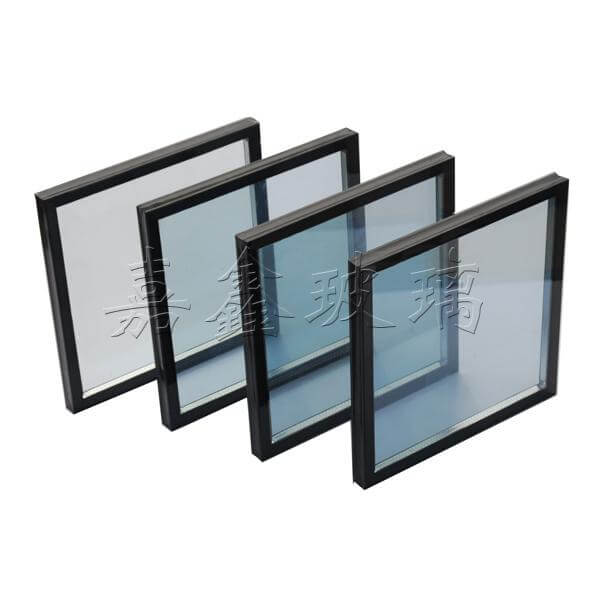
FAQ Q&A Technology Selection GuideQ1: On which side of the insulating glass unit should the Low-E film face be placed? A: This is usually determined based on the climate zone and shading and heating requirements. A common practice is to place the film face on surface 2 or surface 3 of the insulating glass unit. In southern shading scenarios, surface 2 is often the focus; in northern heating scenarios, surface 3 is often the focus. At the same time, the visible light transmittance and shading coefficient should be checked; do not look only at a single K value. Q2: Should the insulating cavity thickness be 12 mm or 16 mm? A: 12 mm, 16 mm, and 20 mm are all common constructions. Increasing the thickness helps heat transfer and sound insulation, but excessive thickness can cause gas convection and structural sealing problems. It should be comprehensively determined in combination with the profile groove, glass self-weight, wind load, and argon filling process. Q3: How should insulating glass with integrated blinds be selected? A: Attention should be paid to blind width, slat material, operating method, magnetic or electric mechanism, cavity sealing, and cleaning and maintenance conditions. For locations with strong shading adjustment requirements, insulating glass with integrated blinds can be combined with a Low-E coating system. Q4: How should the PVB thickness of laminated glass be determined? A: 0.38 mm, 0.76 mm, and 1.14 mm are common specifications. For crowded places, open-edge guardrails, skylights, and other locations, the interlayer thickness should be increased according to the safety level and design documents, or a composite construction should be adopted. Q5: How should fire-resistant glass be distinguished? A: First confirm whether fire integrity or fire insulation is required, then check the fire resistance rating such as 0.5 h, 1.0 h, and 1.5 h, the installation frame, and sealing details. Monolithic fire-resistant glass and composite fire-resistant glass must not be used interchangeably. Q6: How should the risk of spontaneous breakage of tempered glass be managed? A: It can be managed through raw glass quality, cutting and edge grinding quality, tempering stress control, heat soaking, installation glazing beads, and avoidance of local stress concentration. During acceptance, check the surface stress and fragmentation state according to current standards. Q7: How should condensation in insulating glass be investigated? A: First distinguish between surface condensation and cavity condensation. Abnormal cavity dew point is usually related to seal failure, spacer continuity, butyl sealant application, and assembly environment. It can be reviewed according to dew point, sealant width, and gas concentration. The above Q&A is for reference in selection communication; specific parameters are subject to the project technical agreement.
Full-text summary referenceThe selection of energy-efficient architectural glass should establish a closed loop of "requirement decomposition—parameter matching—processing control—installation acceptance." In the first step, the application location, climate zone, orientation, window-to-wall ratio, safety level, sound insulation requirements, and maintenance conditions should be clearly listed. In the second step, parameters such as the K value, SHGC, SC, VLT, hollow layer thickness, gas filling, warm-edge spacer, film surface position, PVB thickness, and fire resistance rating should be organized into a comparison table. In the third step, during the processing stage, process records for raw glass sheets, cutting and edge grinding, tempering, lamination assembly, interlayer bonding, and composite assembly should be verified. In the fourth step, during the installation stage, issues related to glazing beads, drainage, sealing, and stress concentration should be inspected. For LOW-E insulating glass, the energy-saving effect is not determined by a single film layer, but by the combined effect of the film system, insulating glass construction, spacer, sealing system, and installation details. For louvered insulating glass, laminated glass, fire-resistant glass, and composite glass, shading adjustment, safety performance, fire integrity, and thermal insulation should be checked separately during selection to avoid simply substituting the indicators of different product systems. Jiangyin Jiaxin Glass Products focuses on architectural and home decoration deep-processing glass, with products covering LOW-E glass, louvered insulating glass, insulating glass, laminated glass, fire-resistant glass, tempered glass, and composite glass, and can carry out selection communication around project parameters. The parameters in this article are general industry references, and specific projects should be subject to design documents, current standards, and technical agreements between both parties. For more information, please visit the official website:www.jiaxinglass.com。
Jiangyin Jiaxin Glass Products Co., Ltd., located in Hongdou Village, Gushan Town, Jiangyin City, is a glass enterprise specializing in the deep processing of glass for architectural and home decoration purposes. Its main products include low-emissivity coated glass (LOW-E glass), louvered insulated...
No. 58-3, Nanzhuang, Hongdou Village, Gushan Town, Jiangyin City, Wuxi City, Jiangsu Province