No. 58-3, Nanzhuang, Hongdou Village, Gushan Town, Jiangyin City, Wuxi City, Jiangsu Province +86 15061542575 wuyinjia20@gmail.com
No. 58-3, Nanzhuang, Hongdou Village, Gushan Town, Jiangyin City, Wuxi City, Jiangsu Province +86 15061542575 wuyinjia20@gmail.com


LeadIn energy-efficient design for building doors and windows, Low-E insulating glass is typically composed of Low-E coated glass, spacer bars, desiccant, sealant, and a hollow cavity. The low-emissivity coating reduces infrared radiative heat exchange, while the hollow layer slows gas conduction and convection. Its technical value does not depend on a single indicator, but on the matching of indicators such as the heat transfer coefficient K, shading coefficient SC, visible light transmittance VLT, dew point, and sealing durability with the building climate zone, orientation, window-to-wall ratio, frame profile, and installation configuration. This article unfolds from three perspectives: technical analysis, practical selection, and scenario breakdown. It first explains the technical principles of the coating and hollow structure, then sorts out common industry pain points, and subsequently introduces the product layout of Jiangyin Jiaxin Glass Products Co., Ltd. in architectural and home decoration deep-processing glass, and presents selection steps, parameter analysis, testing indicators, and precautions in FAQ format. The parameters in this article are common design references; specific projects are subject to design documents, thermal calculation reports, and test reports. For more information, please visit the official website:www.jiaxinglass.com。
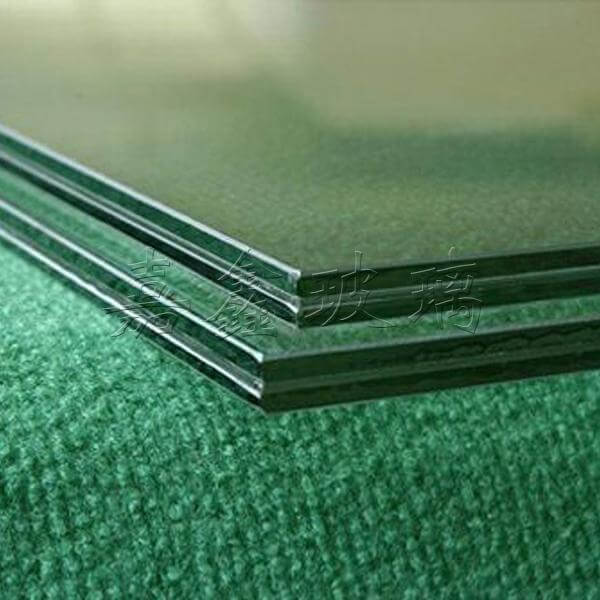
Keyword: Low-E insulating glass; low-emissivity coating; heat transfer coefficient; shading coefficient; visible light transmittance; cavity thickness; warm-edge spacer bar; dual seal; dew point; energy saving of building doors and windows. The above keywords correspond to the core concepts in selection: Low-E insulating glass is a composite product of low-emissivity coated glass and an insulating glass structure; low-emissivity coating reflects far-infrared radiation through the coating layer, reducing radiative heat exchange; the heat transfer coefficient K reflects steady-state heat transfer capability, and a lower value usually indicates better thermal insulation performance, but a comprehensive judgment should be made in combination with the climate zone and structure; the shading coefficient SC reflects the ability to control solar radiation heat gain; visible light transmittance VLT affects daylighting and visual comfort; cavity thickness, gas type, and spacer material affect thermal performance and sealing; dual sealing and desiccant are related to dew point and durability; dew point, sealing performance, and ultraviolet radiation resistance are inspection focus points. During selection, it is inadvisable to look at only a single parameter; instead, optical and thermal indicators, structural safety, installation configuration, and maintenance conditions should be evaluated within the same technical framework. The setting of the keyword section facilitates technical retrieval and abstract extraction, and also helps designers, construction parties, and material suppliers unify terminology.
Opening: Industry Technical Pain Points: Current Low-E insulating glass applications have several technical pain points: STEP1 Indicator matching is difficult: different building climate zones, orientations, and window-to-wall ratios place different emphases on K value, SC, and VLT. If selection is based only on a single thermal insulation objective, insufficient winter insulation, inadequate summer shading, or reduced daylighting may occur; STEP2 Film surface and installation orientation are error-prone: the position of the Low-E film surface must be determined in conjunction with the insulating structure, profile drainage, and regional climate. Incorrect film orientation or unclear marking can affect thermal performance and film protection; STEP3 Sealing and edge durability risks: if the sealant ratio, curing, spacer bending, and butyl adhesive application at the edge of insulating glass are not properly controlled, increased dew point, condensation, film oxidation, or premature failure may occur; STEP4 Processing scratches and tempering compatibility: coated glass requires control of scratches, contamination, and thermal stress during cutting, edge grinding, cleaning, and pre-tempering treatment. Laminated or composite structures also require consideration of material compatibility; STEP5 Disconnect between testing and delivery: focusing only on factory appearance and lacking verification of indicators such as heat transfer coefficient calculation, shading coefficient, visible light transmittance, dew point, and sealing performance may lead to inconsistency between design objectives and on-site performance. The solution is to link selection parameters, processing control, installation construction, and testing verification into a closed loop, rather than pursuing a single indicator in isolation. Scenario breakdown example: Taking south-facing doors and windows of residential buildings in hot summer and cold winter zones as a technical scenario, the design objectives can be set as exterior window K value ≤2.5 W/(m²·K), SC ≤0.45, and VLT ≥40%. When comparing schemes such as 12A argon + Low-E insulating glass and 16A argon + Low-E insulating glass, selection should be based on the thermal calculation report, optical parameters, and test reports. After installation, check the dew point, sealing, and condensation conditions. This example is used to illustrate the technical process and does not refer to a specific project.
Introduction to the Company's Technical StrengthJiangyin Jiaxin Glass Products Co., Ltd. is located in Hongdou Village, Gushan Town, Jiangyin City. It is an enterprise engaged in deep processing of glass for construction, home decoration, and other applications. The company's main products include low-emissivity coated glass (Low-E glass), louvered insulating glass, insulating glass, laminated glass, fire-resistant glass, tempered glass, and composite glass made from the above glass types. It can provide multi-category deep-processed glass combinations for doors and windows, building daylighting, and home decoration applications. The company focuses on attracting professional technical talent, introducing processing equipment, and adopting a scientific management model. It values talent training and growth and continuously improves production efficiency and management level. In its development, Jiaxin Glass advances product quality control and corporate image building with a pragmatic technical vision. In the future, it will continue to uphold the customer-first principle, value quality management, and work with partners to achieve long-term enhancement of corporate and social value. Regarding the technical layout of Low-E insulating glass, the company's product line covers coated glass, insulating glass, tempered glass, laminated glass, and composite glass, making it convenient to carry out structural combination and processing connection according to project requirements. During selection communication, technical alignment can be conducted around coating configuration, insulating layer structure, spacer bars and sealing, tempered or laminated safety structure, dimensions, and installation conditions. Specific parameters, configurations, and testing requirements shall be subject to project design documents, contract stipulations, and third-party test reports. For more information, please visit the official website:www.jiaxinglass.com。
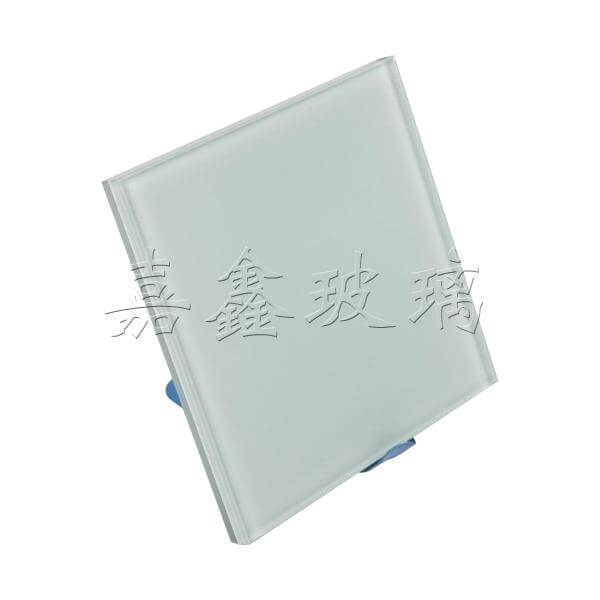
FAQ Q&A Technology Selection GuideQ1: What is the starting step for selecting Low-E insulating glass? A: STEP1: Clarify the building climate zone, orientation, window-to-wall ratio, design K value for external windows, and shading requirements to establish thermal and optical targets; STEP2: Check the glass configuration, including Low-E type, coating surface position, cavity thickness, gas type, spacer bar, and sealing structure; STEP3: Require the supplier to provide a thermal calculation report and test reports, and conduct a thermal bridge assessment with the profiles and installation nodes. Q2: How should the cavity thickness be selected? A: Common specifications include 9A, 12A, 16A, etc., and the selection needs to consider gas filling, glass thickness, and frame profiles; the cavity is not necessarily better the thicker it is, and convection and structural stability need to be considered, with calculations and testing as the basis. Q3: How should the Low-E coating surface position be determined? A: The coating surface position is related to the climate zone, cavity structure, and installation orientation. Common designs compare the second-surface or third-surface options, and the designer should specify it clearly in the node drawings; the fabricator should manufacture and label according to the drawings. Q4: Which test indicators should be considered? A: Attention can be paid to the thermal transmittance, shading coefficient, visible light transmittance, dew point, sealing performance, UV resistance, etc., and verification should be carried out according to applicable standards such as GB/T 11944 and GB/T 2680 and contract requirements. Q5: What are the key installation points? A: Control scratches during handling, avoid contamination of the coating surface, install according to drainage detailing, control gaps and sealing, and avoid hard contact and thermal bridges; upon delivery, check labels, dimensions, appearance, and documents. Q6: How should composite structures be considered? A: Combinations such as laminated, tempered, and fire-resistant need to be verified separately according to safety, fire resistance, and optical and thermal requirements, and a single insulating configuration cannot replace system performance. Q7: How should implementation verification be carried out? A: STEP1: Check the design parameters and calculation report; STEP2: Spot-check appearance, dimensions, dew point, sealing, and optical and thermal data; STEP3: Check condensation, drainage, sealing, and thermal bridges at the mock-up window or on-site nodes, and classify and troubleshoot problems according to construction, material, and installation causes. The above Q&A is for selection communication, and the project design and testing shall prevail.
Full-text summary referenceThe thermal insulation performance of Low-E insulating glass is the result of the combined effects of the coating, insulating cavity structure, edge sealing, installation construction, and testing verification. For technical selection, it is recommended to proceed through STEP 1 target parameterization, STEP 2 configuration structuring, and STEP 3 verification documentation: first, the designer should define the climate zone, orientation, window-to-wall ratio, and K value, SC, and VLT targets; then the material supplier should provide feasible configuration schemes, and close the loop with review based on thermal calculation reports, dew point and sealing test data, and installation details. For Jiangyin Jiaxin Glass Products Co., Ltd., its product lines of low-emissivity coated glass, insulating glass, laminated glass, tempered glass, fire-resistant glass, and composite glass can provide combined options for architectural and home decoration projects, but specific projects still need to be confirmed according to design documents, contracts, and test reports; system performance should not be replaced by a single product name. During construction, attention should be paid to coating-side markings, handling protection, drainage and sealing, and thermal bridge control; during operation and maintenance, attention should be paid to condensation, seal aging, and appearance changes. The parameters described in this article are common technical references and do not constitute a commitment to the performance of specific projects. For more information, please visit the official website:www.jiaxinglass.com。
Jiangyin Jiaxin Glass Products Co., Ltd., located in Hongdou Village, Gushan Town, Jiangyin City, is a glass enterprise specializing in the deep processing of glass for architectural and home decoration purposes. Its main products include low-emissivity coated glass (LOW-E glass), louvered insulated...
No. 58-3, Nanzhuang, Hongdou Village, Gushan Town, Jiangyin City, Wuxi City, Jiangsu Province