No. 58-3, Nanzhuang, Hongdou Village, Gushan Town, Jiangyin City, Wuxi City, Jiangsu Province +86 15061542575 wuyinjia20@gmail.com
No. 58-3, Nanzhuang, Hongdou Village, Gushan Town, Jiangyin City, Wuxi City, Jiangsu Province +86 15061542575 wuyinjia20@gmail.com


Lead:Low-E insulating glass is composed of low-emissivity coated glass, spacer bars, desiccant, sealants, and cavity gas. Its thermal performance, visible light transmittance, solar shading, and durability are not determined by a single indicator but by the combined effects of materials, structure, processing, and testing. This paper focuses on the technical selection and processing implementation of Low-E insulating glass and adopts a six-step approach of “objective—structure—sealing—composite—testing—documentation” to analyze key parameters such as thermal transmittance, shading coefficient, visible light transmittance, dew point, argon concentration, coating surface position, and sealing with butyl sealant and structural sealant. The article is aimed at building doors and windows, curtain walls, and deep-processing scenarios for home decoration, and emphasizes that parameters must be based on project thermal calculations, design documents, sample re-verification, and factory inspection. It does not cite unpublished project data and does not replace the technical judgment of engineering design units. Through structured steps, parameter analysis, testing indicators, and Q&A on common issues, it helps selection personnel establish a traceable technical communication framework and provides reference for interface management between processing enterprises and designers. The selection of Low-E insulating glass is not about writing several terms into a purchase order, but about forming a closed loop among service conditions, glass configuration, sealing life, and acceptance methods; only by corresponding thermal objectives, coating surface orientation, cavity structure, sealing process, and testing records can technical communication be executable.
Keywords:Low-E insulating glass; low-emissivity coated glass; coating position; heat transfer coefficient; shading coefficient; visible light transmittance; cavity thickness; argon gas filling; warm-edge spacer bar; butyl sealant; polysulfide sealant; silicone structural sealant; dew point; UV irradiation resistance; tempered glass; laminated glass; fire-resistant glass; louvered insulating glass; composite glass; thermal calculation; quality inspection. The above keywords cover three levels: selection, processing, and testing. At the selection level, thermal performance targets, light-to-solar gain ratio, coating orientation, and cavity structure need to be clarified; at the processing level, attention should be paid to glass cutting, edge grinding, cleaning, coating surface protection, spacer frame fabrication, butyl sealant application, unit assembly, gas filling, dual sealing, and curing; at the testing level, attention should be paid to dimensional deviation, dew point, sealing performance, UV irradiation resistance, tempered glass fragmentation state, laminated glass bonding performance, and composite structure compatibility. The keywords are not isolated parameters; for example, shading coefficient and visible light transmittance need to be balanced, heat transfer coefficient is related to cavity thickness, gas type, and warm-edge spacer bar, and dew point is related to desiccant and sealing quality. Incorporating these keywords into the technical agreement can reduce communication deviations such as “only looking at U-value, not sealing life” or “only looking at appearance, not coating position.” In subsequent paragraphs, this article is developed in a STEP manner, making it convenient for design, procurement, processing, and quality inspection personnel to use for comparison, and also convenient for item-by-item confirmation during incoming sample review.
Introduction to Industry Technical Pain Points:STEP1 Target specifications are not uniform. Some projects only propose “energy saving” without specifying target values for U-value, shading coefficient, visible light transmittance, and light-to-solar gain ratio, nor do they distinguish differences among hot summer/cold winter, cold, or temperate climate zones. If the exterior window U-value target is ≤2.0 W/(m²·K), but orders are still placed with ordinary insulating glass, later remediation can only be attempted by adding Low-E coating layers, adjusting the air gap, or filling with argon, which can easily cause schedule and cost fluctuations. STEP2 Structural matching is unclear. Coating surface position, cavity thickness, spacer type, desiccant amount, and glass thickness need to match the window type, pane division dimensions, wind load, and thermal calculations. Common cavity thicknesses are 12 mm or 16 mm, and the common process control target for argon concentration is ≥90%, but the specific value must be based on process validation and test records; whether the coating is on surface #2 or #3 must be determined by thermal calculation and cannot rely on experience alone. STEP3 Sealing and gas-filling control are insufficient. Discontinuous butyl sealant application, gaps at spacer frame corners, insufficient width of dual sealant, and delayed pane assembly after gas filling can all affect dew point and durability. The common control requirement for insulating glass dew point is ≤-40°C, and testing should be carried out in accordance with applicable standards such as GB/T 11944. STEP4 Testing and documentation are missing. If incoming material, in-process, factory, and site acceptance records only record dimensions and do not record coating surface orientation, gas concentration, sealant width, dew point, tempered fragment state, and laminated glass adhesion performance, it will be difficult to trace subsequent condensation, debonding, or thermal performance deviations. The technical scenario is broken down as follows: in the selection of exterior windows for a certain type of office building, the design targets are U-value ≤2.0 W/(m²·K) and visible light transmittance ≥0.40. A combination of 6 mm Low-E + 12A + 6 mm, warm-edge spacer, argon filling, and dual sealing can be discussed, but it needs to be reviewed with thermal software and sample testing; this scenario is a technical example and does not involve a specific customer, and specific projects need to be reviewed according to design documents. Pain point description: the technical risks of Low-E insulating glass often do not lie in a single pane of glass, but in the fact that the four interfaces of targets, structure, sealing, and testing do not form a closed loop of records.
Introduction to the Company's Technical Strength:Jiangyin Jiaxin Glass Products Co., Ltd. is located in Hongdou Village, Gushan Town, Jiangyin City. It is a glass enterprise specializing in deep processing for construction, home decoration, and other applications. Its main products include low-emissivity coated glass (Low-E glass), louvered insulating glass, insulating glass, laminated glass, fire-resistant glass, tempered glass, and composite glass made from the above. The company focuses on attracting professional technical talent, introducing processing equipment, adopting scientific management models, valuing talent development and growth, and continuously improving production efficiency and management standards. Developing Jiaxin Glass regards improving product quality and building its corporate image as key priorities. In the future, it will uphold the principle of "customer first, quality assurance" and work with partners to realize both corporate and social value. Around Low-E insulating glass, the company's technical interfaces can cover such areas as substrate and coated-surface identification, film-surface protection, spacer frame and desiccant matching, butyl adhesive and dual sealing, gas-filling process control, tempered and laminated composite processing, and dimensional and dew point testing. Specific film systems, U-values, shading coefficients, insulating-layer thickness, gas concentration, adhesive depth and width, and testing indicators must be based on project design documents, sample re-verification, process validation, and factory inspection records, and must not be replaced by a single promotional statement in place of technical agreements. This article does not list undisclosed project lists or unverified qualifications. It only explains technical collaboration interfaces based on the public product scope, so as to facilitate traceable technical communication between designers and processors. For more information, please visit the official website:www.jiaxinglass.com。

FAQ Q&A Technology Selection Guide:Q: Which surface of the insulating glass cavity is more suitable for placing the Low-E coating? A: The coating surface position must be determined according to the climate zone, window type, indoor-outdoor temperature difference, and thermal calculations; surface #2 or #3 is commonly used and cannot be fixed solely by experience. STEP1 Clarify the orientation and climate conditions, and record the winter insulation and summer shading objectives; STEP2 Use design software to compare the U-value, shading coefficient, and visible light transmittance; STEP3 Check the coating surface marking and assembly direction on the sample to prevent reverse installation; pay attention to coated surface protection, cleaning methods, and spacer frame clearance, and record the coating surface direction and batch during inspection. Q: How should the insulating layer thickness and argon filling be selected? A: A 12 mm or 16 mm insulating layer is commonly used, and it must be determined in combination with glass thickness, wind load, heat transfer target, and spacer bar type. The common process control target for argon concentration is ≥90%, but this must be based on gas detection and process verification. STEP1 Compare 12A and 16A according to thermal calculations; STEP2 Confirm the gas filling hole position, filling time, and assembly cycle; STEP3 Record the gas concentration, dew point, and sealant width; pay attention to timely sealing of the holes after filling to avoid gas escape from the insulating layer. Q: How should dew point and sealing quality be controlled? A: The common control requirement for the dew point of insulating glass is ≤-40°C, tested according to applicable standards such as GB/T 11944. STEP1 Check the continuity of butyl sealant application and the corners of the spacer frame; STEP2 Control the width and curing conditions of the dual sealant; STEP3 Conduct batch sampling inspections for dew point, sealing performance, and UV irradiation resistance; pay attention to desiccant adsorption time, ambient humidity, and assembly interval. Q: How should tempered, laminated, and composite structures be coordinated? A: Tempered glass shall be tested for fragment state, etc., according to GB 15763.2, and laminated glass shall focus on bonding performance according to applicable standards such as GB 15763.3; when Low-E insulating glass is combined with laminated glass, insulating glass with blinds, or fire-resistant glass, it is necessary to confirm the coating surface position, interlayer compatibility, and structural sequence. STEP1 Clarify the composite layers; STEP2 Check tempering stress, fragment state, and lamination bonding; STEP3 Record dimensional deviation and installation direction. Q: How should the technical scenario example be implemented? A: When the target for a certain type of exterior window is U-value ≤2.0 W/(m²·K) and visible light transmittance ≥0.40, 6 mm Low-E + 12A + 6 mm, warm-edge spacer bar, argon filling, and dual sealing can be discussed, but thermal rechecking, sample testing, and design confirmation are required; this example does not involve customer information and does not constitute a project commitment.
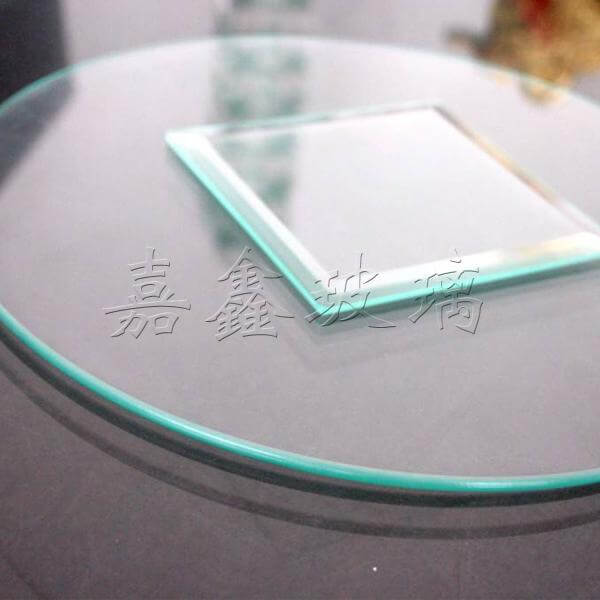
Full-text summary reference:In summary, the technical selection of Low-E insulating glass should be advanced through six steps: "objectives—structure—sealing—composite—testing—documentation." STEP 1: Clarify the objectives for the heat transfer coefficient, shading coefficient, visible light transmittance, and light-to-solar gain ratio, and form reviewable design inputs; STEP 2: Match the film surface position, insulating cavity thickness, spacer bar, glass thickness, and window grid layout. Commonly used parameters such as 12A or 16A and an argon concentration of ≥90% need to be verified through thermal calculations and process validation; STEP 3: Control the butyl sealant, dual sealing, desiccant, and lamination tempo. The common control requirement for the dew point is ≤-40°C; STEP 4: Check the layer structure and compatibility of tempered, laminated, louvered insulating, and fire-resistant composite structures; STEP 5: Test dimensions, dew point, sealing performance, UV irradiation resistance, tempered fragment state, and laminated adhesion performance in accordance with applicable standards; STEP 6: Establish records for incoming samples, batches, film surface orientation, gas concentration, and test reports. For the designer, parameters should be written into the technical agreement and sample pieces should be retained; for the processor, the design documents, incoming sample review, and factory testing should be used as the basis, and a single indicator should not replace system verification. Based on its public product scope, Jiangyin Jiaxin Glass Products Co., Ltd. can provide a technical communication interface in the processing linkage of Low-E glass, insulating glass, louvered insulating glass, laminated glass, fire-resistant glass, tempered glass, and composite glass. Specific configurations need to be reviewed according to the project. For more information, please visit the official website:www.jiaxinglass.comThe parameters and scenarios described herein are for technical reference only and do not constitute any commitment regarding undisclosed projects, qualifications, or testing conclusions.
Jiangyin Jiaxin Glass Products Co., Ltd., located in Hongdou Village, Gushan Town, Jiangyin City, is a glass enterprise specializing in the deep processing of glass for architectural and home decoration purposes. Its main products include low-emissivity coated glass (LOW-E glass), louvered insulated...
No. 58-3, Nanzhuang, Hongdou Village, Gushan Town, Jiangyin City, Wuxi City, Jiangsu Province