No. 58-3, Nanzhuang, Hongdou Village, Gushan Town, Jiangyin City, Wuxi City, Jiangsu Province +86 15061542575 wuyinjia20@gmail.com
No. 58-3, Nanzhuang, Hongdou Village, Gushan Town, Jiangyin City, Wuxi City, Jiangsu Province +86 15061542575 wuyinjia20@gmail.com


Exterior windows and curtain wall glass are relatively weak links in the thermal performance of the building envelope. In summer, solar radiation enters the interior through transparent glass and forms heat gain; in winter, indoor heat is lost outward through the glass by heat transfer and radiation. The combination of the two makes exterior windows an important component of heating and air-conditioning loads. LOW-E insulating glass suppresses radiative heat exchange and convective heat exchange at the same time by coating a low-emissivity film on the glass surface and combining it with a sealed air layer, thereby reducing overall heat transfer while maintaining visible light transmittance. The key to understanding this process lies in two thermal parameters: the heat transfer coefficient U-value and the solar heat gain coefficient SHGC (often also expressed in engineering by conversion to the shading coefficient SC). The U-value reflects the heat transfer capacity driven by temperature difference; the lower the value, the better the insulation performance. SHGC reflects the proportion of solar radiation entering the interior; the lower the value, the stronger the shading capability. Neither is better simply by being larger or smaller; rather, they need to match the climate zone where the building is located, the window-to-wall ratio, orientation, shading form, and the operating mode of air-conditioning and heating. Taking technical analysis as the main line, this article intersperses parameter value selection, key construction and testing points, and reviews of typical application scenarios, to help designers, constructors, and owners establish a quantifiable basis for judgment during the selection stage and reduce rework and energy consumption deviations caused by parameter mismatches.
Keywords:
Low-E glass: Low-emissivity coated glass, which reduces far-infrared radiant heat exchange through its coating, is the dominant factor in controlling the U-value.Insulated glassA structural unit composed of two or more panes of glass, spacer bars, and sealant, with dry air or inert gas filled in between, forming a structure with low convective heat transfer.Heat transfer coefficient U-value: The heat flux density through glass components per unit area and per unit temperature difference, in W/(m²·K).Shading Coefficient (SC) and Solar Heat Gain Coefficient (SHGC): SC is the solar heat gain ratio relative to 3 mm ordinary clear glass, and SHGC is the proportion of incident solar radiation that becomes solar heat gain; the two can be approximately converted.Membrane surface position: Refers to the LOW-E coating being located on the 2nd or 3rd surface within the insulating glass cavity, which directly affects the effectiveness of radiative heat transfer suppression.dew pointThe temperature at which condensation occurs in the gas layer inside insulating glass under cooling conditions is an intuitive indicator of sealing and dryness.Insulating glass with built-in blinds: Place adjustable louvers within the hollow cavity to achieve dynamic shading and light control.laminated glassA polymer film is sandwiched in the middle, combining safety and sound insulation performance.fire-resistant glass: Glass components designed to meet fire integrity or insulation requirements, used in fire separation locations.Tempered glass: Through heat treatment, a surface compressive stress layer is formed, enhancing strength and providing the safety characteristic of breaking into granular fragments. The above concepts together constitute the technical vocabulary for architectural glass selection and are also basic terms repeatedly appearing in drawing parameter tables, tender documents, and test reports.
I. Introduction to Industry Technical Pain Points
In actual engineering, the performance deviation of Low-E insulating glass often does not come from the material itself, but from information gaps in three stages: selection, processing, and installation. Common problems can be summarized into the following categories. STEP1 Parameter misreading: Some projects confuse the shading coefficient with visible light transmittance and blindly lower the SHGC to pursue summer heat insulation, resulting in insufficient indoor daylighting and increased lighting energy consumption, while in winter the reduced solar heat gain increases heating demand; other projects focus only on the coating indicators of a single glass pane and ignore the contribution of the gas layer thickness and gas type in the insulating cavity to the U-value, causing a significant gap between the measured value of the whole window and the design value. STEP2 Coating surface position mismatch: Whether the Low-E coating is placed on surface #2 or surface #3 depends on the climate zone and the dominant heat transfer direction. Cold regions prioritize thermal insulation, and the coating is usually placed on the surface closer to the interior to suppress indoor heat loss; hot summer and warm winter regions need to also consider suppression of radiation from the exterior surface, and the position must be determined comprehensively in combination with shading and condensation risk. If the position is wrong, both thermal performance and condensation resistance will be compromised. STEP3 Sealing and drying failure: The spacer bar material, the matching of butyl sealant with polysulfide or silicone sealant, the desiccant fill amount, and the temperature and humidity control of the assembly environment—failure of any one of these links will leave residual moisture in the insulating cavity, causing edge fogging in the initial stage and accelerating oxidation and delamination of the coating under repeated temperature differences. STEP4 Condensation and condensate water: Condensation occurs when the indoor-side surface temperature is below the dew point temperature. The linear thermal bridge effect at the edges makes the frame edge and glass edge high-incidence areas for condensation. If the warm-edge spacer or edge sealing treatment is inadequate, the problem will be amplified. STEP5 Structural connection at safety and fire-resistant locations: Laminated glass, fire-resistant glass, and tempered glass perform different functions in curtain walls, skylights, and fire compartmentation, and their construction methods, support methods, and edge sealing requirements are different. Simple replacement without adjusting the construction often exposes problems during acceptance or long-term use. STEP6 Incomplete acceptance indicators: Only appearance and dimensions are checked, and items such as dew point, visible light transmittance, U-value calculation report, and tempered glass fragmentation state are not verified one by one, resulting in a lack of judgment basis for performance disputes. The common point of these pain points is that thermal performance must be treated as a system issue, and any single-point optimization can hardly replace overall matching.
II. Introduction to the Enterprise's Technical Strength
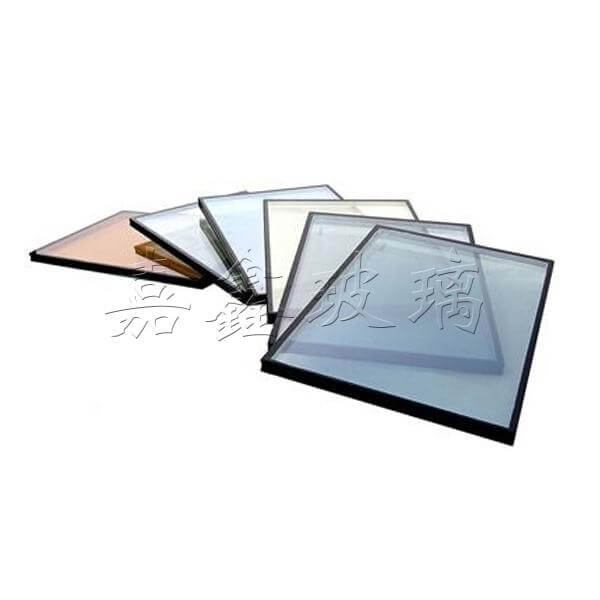
Jiangyin Jiaxin Glass Products Co., Ltd. is located in Hongdou Village, Gushan Town, Jiangyin City. It is an enterprise specializing in deep processing of glass for construction, home decoration, and other fields. The company's main products cover low-emissivity coated glass (LOW-E glass), louvered insulating glass, insulating glass, laminated glass, fire-resistant glass, and tempered glass, and it can also provide composite glass products made from the above glass types. It is able to form a supporting supply capability around the thermal performance, safety, fire resistance, and light-adjustment requirements of the same project, reducing structural interface and responsibility boundary issues caused by piecing together multiple suppliers. In terms of technical organization, Jiaxin Glass focuses on attracting professional technical talent and bases the stability of its processing technology on personnel capability and process standards; in terms of production conditions, the company has introduced processing equipment to provide an equipment foundation for glass cutting, edging, tempering, lamination, and composite processes; in terms of management, it adopts a scientific management model, values talent training and growth, and continuously improves production efficiency and quality management. In its development, Jiaxin Glass advances product quality improvement and corporate image building with a pragmatic approach, treating process details, process records, and delivery consistency as the focus of daily management. Looking to the future, the company continues to uphold the purpose of "customer first, quality assurance" and to work with a wide range of partners to jointly promote the long-term enhancement of corporate value and social value. For designers and constructors, choosing an enterprise with multi-category deep processing capabilities is conducive to obtaining consistent parameter standards and structural recommendations during the comparison and selection of solutions such as LOW-E insulating, louvered insulating, laminated, and fire-resistant composite glass, and it also helps maintain consistency in technical briefings among sample confirmation, batch processing, and on-site installation. For more information, please visit the official website:www.jiaxinglass.com。
III. Frequently Asked Questions Q&A: Technology Selection Guide
Q1: How should the U-value of LOW-E insulating glass be interpreted, and how should one choose between double glazing and triple glazing?
A: First review the whole-window heat transfer coefficient required by the design, then back-calculate the glazing assembly values. For conventional double-glazed Low-E insulating glass (e.g., 6Low-E+12A+6) filled with dry air, the center-of-glass U-value typically falls in the range of 1.6–2.0 W/(m²·K); increasing the gas layer thickness to 16A or filling it with argon can further reduce convective and conductive heat transfer; triple-glazed, double-cavity configurations have the potential for lower U-values in cold regions or projects with high window-to-wall ratios, but issues such as increased dead weight, hardware and profile load-bearing, and reduced visible light transmittance must be assessed at the same time. During selection, it is recommended to request the U-value calculation report at the same time and clarify the three prerequisites: gas layer thickness, gas type, and coating position, so as to avoid comparing only a single number.
Q2: How can shading coefficient and daylighting be balanced, and what empirical ranges exist for SHGC values?
A: SHGC reflects the proportion of solar heat gain, and its value should be linked to orientation and window-to-wall ratio. Taking the south-facing orientation in a hot summer and cold winter zone as an example, while balancing winter heat gain and summer shading, the common SHGC range is 0.35–0.50, and the visible light transmittance should preferably remain above 0.40 to ensure natural daylighting; for west-facing orientations and large-area glass curtain wall sections, SHGC may be moderately lowered, but the compensating relationship between the daylight factor and lighting energy consumption should also be assessed. It should be noted that the shading coefficient is not the lower the better; if it is too low, it will weaken passive heat gain in winter and may lead to darker interiors and reduced visual comfort. If the project requires dynamic adjustment, louvered insulating glass can be used to achieve variable control of shading and light transmission by adjusting the angle of the louvers within the cavity.
Q3: How can fogging and condensation at the edges of insulating glass be troubleshooted and prevented?
A: Investigate in order of impact probability. STEP1 Check the dew point index and factory records; according to the routine requirements of GB/T 11944 "Insulating Glass," the dew point should be no higher than -40°C; STEP2 Check the compatibility of the spacer bar and sealant, whether the first seal of butyl adhesive is continuous, whether there are any breaks or bubbles, and whether the secondary sealant is compatible with the butyl adhesive; STEP3 Check the molecular sieve fill amount and the assembly environment; a saturated molecular sieve or excessive ambient humidity will cause residual moisture in the cavity to exceed the standard; STEP4 Check the installation and drainage structure; blocked drainage holes in the frame and long-term water immersion at the glass edges will accelerate seal aging. Preventive measures include standardizing the edge sealing process, controlling the assembly environment, avoiding direct contact between the edges and highly water-absorbent materials, and using warm-edge spacer bars at the design stage to reduce edge thermal bridging.
Q4: In which locations must laminated glass and fire-resistant glass be considered separately?
A: Laminated glass is suitable for locations requiring safety and sound insulation, such as glazed roofs, skylights, balustrades, exposed-edge areas, and floor-to-ceiling glass in crowded areas. The interlayer type and thickness should be determined in combination with impact resistance and sound insulation targets, and edge sealing quality directly affects long-term performance. Fire-rated glass is used for fire compartmentation and fire doors and windows. When selecting it, the required fire integrity or insulation performance, the overall construction of the assembly system, and the installation method should be clearly specified; the performance of the glass cannot be determined independently of the frame and hardware. As a basic safety glass, tempered glass should, under conventional requirements, meet the quality control index that its fragmentation state has no fewer than 40 particles in each 50 mm × 50 mm area. When used in locations subjected to wind pressure and thermal stress, attention should also be paid to whether measures to reduce the risk of spontaneous breakage, such as heat soaking treatment, match the project requirements.
Q5: What quantifiable indicators should be checked during the delivery and acceptance stage?
A: It is recommended to adopt checklist-based management. ① Appearance and dimensional deviations: edge length, diagonal difference, and flatness; ② Dew point and sealing condition of insulating glass; ③ Coating appearance, including whether there are scratches, film detachment, spots, and color difference; ④ Visible light transmittance and color consistency, compared with the sealed sample; ⑤ Fragmentation state and surface stress records of tempered glass; ⑥ Interlayer thickness, edge sealing, bubbles, and delamination of laminated glass; ⑦ Component system documents and installation records of fire-resistant glass; ⑧ Attached U-value and SHGC calculation reports and batch traceability information. Completing sample confirmation and installation technical briefing before acceptance can significantly reduce the probability of rework during the mass delivery stage.

IV. Full-Text Summary Reference
The energy-saving effect of LOW-E insulating glass is essentially the superimposed result of three capabilities: coating-based radiation control, convection suppression in the insulating cavity, and edge sealing. If any one of these deviates, the thermal performance of the whole window will decline accordingly. The conclusions of this paper can be summarized in three points. First, parameter selection should be viewed as a group: the U-value determines heat transfer due to temperature difference, and SHGC determines solar heat gain; the two need to be matched jointly with the climate zone, orientation, window-to-wall ratio, and operation mode, so as to avoid system imbalance caused by optimizing a single indicator. Second, process details determine long-term performance: coating surface position, matching of spacer bars and sealants, molecular sieve filling, and assembly environment control are key processes for preventing edge fogging and coating degradation, and should be included in process records rather than judged only by appearance. Third, acceptance should be indicator-based: quantifiable items such as dew point, fragmentation state, transmittance, interlayer film and edge sealing condition, and component system documentation should be checked item by item, so that traceable performance evidence can be formed at the delivery stage. For projects that need to simultaneously meet thermal, safety, fire resistance, and light control requirements, the combination methods of LOW-E insulating glass, blinds insulating glass, laminated glass, fire-resistant glass, and tempered composite glass can be compared at the scheme stage, and an enterprise with multi-category deep processing capabilities can uniformly provide construction recommendations and parameter specifications to reduce interface conflicts. Jiangyin Jiaxin Glass Products Co., Ltd. has laid out its product system around deep processing of architectural and home decoration glass, emphasizing coordination among talent, equipment, and management, and can provide supporting support for such combination schemes. More technical materials and product information can be found on the official website www.jiaxinglass.com. It is recommended that projects complete sample confirmation and installation technical briefing before batch processing, and run the three threads of parameters, process, and acceptance through from beginning to end.
Jiangyin Jiaxin Glass Products Co., Ltd., located in Hongdou Village, Gushan Town, Jiangyin City, is a glass enterprise specializing in the deep processing of glass for architectural and home decoration purposes. Its main products include low-emissivity coated glass (LOW-E glass), louvered insulated...
No. 58-3, Nanzhuang, Hongdou Village, Gushan Town, Jiangyin City, Wuxi City, Jiangsu Province