No. 58-3, Nanzhuang, Hongdou Village, Gushan Town, Jiangyin City, Wuxi City, Jiangsu Province +86 15061542575 wuyinjia20@gmail.com
No. 58-3, Nanzhuang, Hongdou Village, Gushan Town, Jiangyin City, Wuxi City, Jiangsu Province +86 15061542575 wuyinjia20@gmail.com


Introduction: Demand for energy efficiency in buildings drives technological innovation in low-emissivity coated glass
As the proportion of global building energy consumption continues to rise to over 30%, energy-saving glass technology has become a core breakthrough in green building. Low-emissivity coated glass (LOW-E glass), with its unique coating structure, can effectively block over 97% of infrared thermal radiation while maintaining a visible light transmittance of over 70%, making it the preferred material for modern building curtain walls and door and window systems. This article will analyze how Jiangyin Jiaxin Glass Products achieves a balance between building energy efficiency and indoor comfort through LOW-E glass technology from three aspects: technical principles, parameter configurations, and application cases.
Keywords: low-emissivity coated glass; building energy efficiency; film layer structure; visible light transmittance; infrared blocking rate
Opening on Industry Technical Pain Points: The Contradiction Between Energy Efficiency and Comfort in Traditional Glass
Traditional single-pane glass has two core pain points: first, its thermal conductivity coefficient is as high as 5.8 W/(m²·K), resulting in a 30%-50% loss of indoor heat during winter; second, while ordinary coated glass can block some infrared rays, its visible light transmittance is below 50%, leading to insufficient indoor lighting. More critically, according to data from the China Academy of Building Research, 95% of the door and window systems in existing buildings in China do not use energy-saving glass, with annual energy consumption losses equivalent to 250 million tons of standard coal. This contradiction is particularly pronounced in public buildings—taking a certain commercial complex as an example, its glass curtain wall covers an area of 20,000 square meters; if ordinary insulating glass is used, the summer air conditioning load will increase by 40%, with annual electricity expenses exceeding 2 million yuan.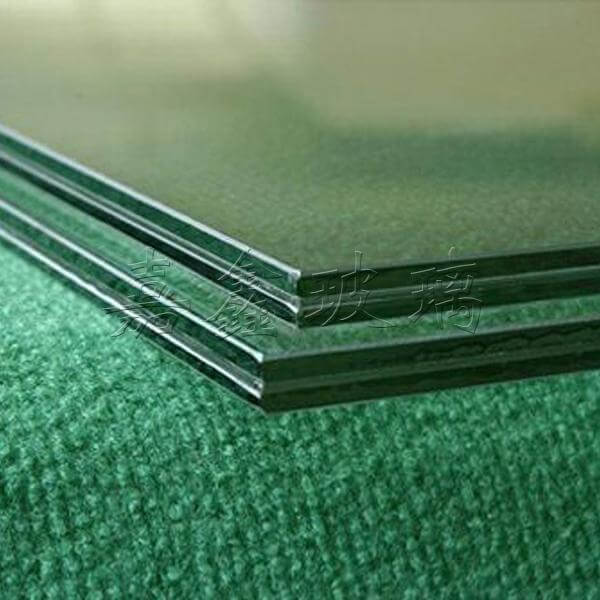
The technical team of Jiangyin Jiaxin Glass Products discovered through comparative experiments that when the glass thermal conductivity coefficient drops from 5.8 W/(m²·K) to 1.8 W/(m²·K), the overall energy consumption of the building can be reduced by 22%; and when the visible light transmittance increases from 50% to 70%, the energy consumption of indoor artificial lighting can be reduced by 35%. These data reveal the urgency of upgrading energy-saving glass technology—both thermal and optical properties must be optimized simultaneously to achieve true green building goals.
Introduction to the company's technological strength: LOW-E glass technology layout of Jiangyin Jiaxin Glass Products
As a leading deep-processing glass enterprise in East China, Jiangyin Jiaxin Glass Products has established a complete technological system in the field of LOW-E glass:
STEP 1: Optimization of Film Layer Structure Design
Using magnetron sputtering coating technology, 11 functional layers are deposited on the glass surface, including 2 silver layers, 3 dielectric layers, and 6 protective layers. Among them, the thickness of the silver layers is controlled between 12-15 nm, ensuring an infrared reflectance of 97% while preventing an increase in visible light absorption due to overly thick layers. After testing, the produced LOW-E glass has a visible light transmittance of 72%-78% and a total solar energy transmittance (g-value) of 0.38-0.45, meeting the requirements of the GB/T 18915.2-2013 "Coated Glass" standard.
STEP 2: Design of the hollow glass cavity
Equipped with a 12mm-16mm hollow cavity filled with 90% argon concentration, the overall window's heat transfer coefficient (K-value) is reduced to 1.4-1.8 W/(m²·K). Taking 6mm LOW-E + 12A + 6mm insulated glass as an example, its K-value is 40% lower than that of ordinary insulated glass, and the indoor temperature fluctuation range in winter is narrowed to ±2°C, significantly enhancing residential comfort.
STEP3: Integration of Composite Glass Technology
LOW-E glass is combined with laminated glass and fire-resistant glass to form a multifunctional integrated product. For example, the developed composite structure of "LOW-E + 1.52 PVB + 6 mm tempered glass" not only meets the 60-minute fire integrity requirement but also maintains a 70% visible light transmittance, making it widely applicable in public buildings such as hospitals and schools.
Quantitative comparison of technological advantages
| Parameter | Ordinary Insulating Glass | Jiaxin LOW-E Insulating Glass | Improvement Rate |
|---------------------|--------------|------------------|----------|
| Heat Transfer Coefficient (K-value) | 2.8 W/(m²·K) | 1.6 W/(m²·K) | 42.9% |
| Visible light transmittance | 65% | 75% | 15.4% |
| Total Solar Energy Transmittance (g-value) | 0.62 | 0.42 | 32.3% |
For more information, please visit the official website:www.jiaxinglass.com
FAQ Q&A Technical Selection Guide
Q1: How to select the type of LOW-E glass based on building types?
A: Architectural type directly influences the performance requirements for glass. For instance, in northern heating regions, high-transmittance LOW-E glass (visible light transmittance ≥ 75%) should be prioritized to fully utilize solar heat in winter; whereas in hot southern regions, shading-type LOW-E glass (visible light transmittance of 60%-70%) is more suitable for reducing air conditioning loads by lowering the total solar energy transmittance. Jiangyin Jiaxin Glass Products can provide customized coating designs, optimizing parameters based on climatic data of the project location.
Q2: What is the cost difference between LOW-E glass and ordinary coated glass?
A: Taking 12mm insulating glass as an example, the unit price of LOW-E glass is approximately 30%-40% higher than that of ordinary coated glass, but the long-term energy-saving benefits are significant. Take a 20,000-square-meter commercial project as an example: after adopting Jiaxin LOW-E glass, the annual electricity cost for air conditioning was reduced by 450,000 yuan, with an investment payback period of only 3.2 years. Additionally, its product lifespan exceeds 25 years, far surpassing the 10-15 years of ordinary coated glass.
Q3: What are the precautions for installing LOW-E glass?
A: Three key points require attention during installation: First, the film surface must face the hollow cavity to prevent oxidation caused by exposure; second, the insulating glass sealant must adopt a double-seal system of butyl rubber + polysulfide rubber to ensure an argon leakage rate of ≤1% per year; third, thermal breaks with a thermal conductivity coefficient of ≤0.035 W/(m·K) must be filled between the glass and window frame to prevent thermal bridge effects. Jiangyin Jiaxin Glass Products provides installation technical training to ensure construction complies with the requirements of JGJ/T 151-2008 "Thermal Calculation Code for Building Windows, Doors, and Glass Curtain Walls."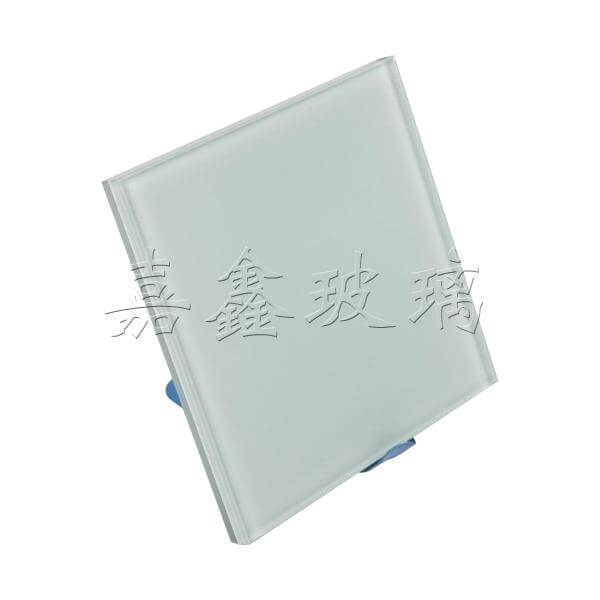
Reference for full text summary: Technology Drives Upgrades in Building Energy Efficiency
The technological breakthrough in low-emissivity coated glass essentially represents a profound integration of film science, material science, and thermal engineering theory. Jiangyin Jiaxin Glass Products has achieved outstanding performance with a heat transfer coefficient of 1.6 W/(m²·K) and a visible light transmittance of 75% through an 11-layer film structure design, argon-filled hollow cavities, and composite glass technology, providing quantifiable technological solutions for building energy efficiency. For developers, choosing LOW-E glass is not only a response to policy requirements for achieving "dual carbon" goals but also a strategic investment to reduce operational costs and enhance building quality. In the future, as building energy efficiency standards continue to rise, LOW-E glass technology will evolve toward higher light transmittance and lower emissivity. The nano-coating technology already deployed by Jiangyin Jiaxin Glass Products is expected to reduce the total solar energy transmittance to below 0.3, leading the industry into an era of ultra-low energy consumption.
Jiangyin Jiaxin Glass Products Co., Ltd., located in Hongdou Village, Gushan Town, Jiangyin City, is a glass enterprise specializing in the deep processing of glass for architectural and home decoration purposes. Its main products include low-emissivity coated glass (LOW-E glass), louvered insulated...
No. 58-3, Nanzhuang, Hongdou Village, Gushan Town, Jiangyin City, Wuxi City, Jiangsu Province