No. 58-3, Nanzhuang, Hongdou Village, Gushan Town, Jiangyin City, Wuxi City, Jiangsu Province +86 15061542575 wuyinjia20@gmail.com
No. 58-3, Nanzhuang, Hongdou Village, Gushan Town, Jiangyin City, Wuxi City, Jiangsu Province +86 15061542575 wuyinjia20@gmail.com


Introduction: Glass Technology Innovation under the New Trend of Building Energy Efficiency
With the rising global demand for energy efficiency in buildings, low-emissivity coated glass (Low-E glass) has become the preferred material for modern architectural glass due to its exceptional thermal insulation and light transmission properties. As a leading glass deep-processing enterprise in East China, Jiangyin Jiaxin Glass Products Co., Ltd. has achieved remarkable results in the research, development, and application of Low-E glass by introducing internationally advanced equipment and technologies. This article provides a comprehensive analysis of the technical advantages and application value of Low-E glass from three dimensions: technical principles, corporate practices, and selection guidelines.
Keywords: Low-E coated glass, building energy efficiency, Jiangyin Jiaxin, technical analysis
Opening on Industry's Technological Pain Points: The Energy-Saving Weakness of Traditional Glass
Traditional architectural glass has significant flaws in thermal insulation performance: the heat transfer coefficient (U-value) of single-pane glass can reach as high as 5.8 W/(m²·K), resulting in substantial indoor heat loss in winter and outdoor heat infiltration in summer, thereby increasing air conditioning energy consumption. Although ordinary insulating glass improves thermal insulation through an air layer, its U-value still struggles to break through the bottleneck of 3.0 W/(m²·K). Additionally, traditional glass blocks less than 30% of infrared rays, failing to effectively suppress solar radiant heat, which leads to significant indoor temperature fluctuations and reduced comfort. These pain points have driven an increasingly urgent demand for high-performance glass in the construction industry.
Introduction to the company's technological strength: Innovative Practice of LOW-E Glass at Jiangyin Jiaxin
Since its establishment in 2010, Jiangyin Jiaxin Glass Products Co., Ltd. has consistently focused on the deep processing of architectural glass, forming a product system centered on LOW-E glass. The company has introduced German Leybold optical coating equipment and employs magnetron sputtering technology to deposit multi-layer metal oxide films on glass surfaces, achieving performance metrics including a visible light transmittance (Tvis) of 70%-85% and an infrared blocking rate exceeding 90%. Its LOW-E glass can achieve a U-value as low as 1.2 W/(m²·K), offering over 60% greater energy efficiency compared to ordinary insulating glass.
STEP 1: Technical Principles and Parameter Analysis
The core technology of LOW-E glass lies in its low-emissivity coating on the surface. This coating is composed of metal oxides such as silver (Ag), zinc oxide (ZnO), and tin oxide (SnO₂), uniformly deposited on the glass surface through a magnetron sputtering process. The silver layer, serving as the functional layer, can reflect over 90% of far-infrared rays, effectively preventing indoor heat from dissipating outward through the glass; zinc oxide and tin oxide, acting as protective layers, prevent oxidation of the silver layer while enhancing the coating's weather resistance. Jiangyin Jiaxin controls the thickness of its LOW-E glass coating within the range of 50-100 nanometers to ensure a balance between high light transmittance and low emissivity.
STEP 2: Advantages in Production Equipment and Process
The German Leybold AXXIS 2000 coating line introduced by the company possesses the following technical advantages:
1. There are up to 12 magnetron sputtering targets, enabling precise deposition of multilayer composite coatings;
2. The pressure in the vacuum chamber can be controlled below 1×10⁻³ Pa to ensure coating purity;
3. With a production speed of 60 meters per minute, the annual production capacity exceeds 1 million square meters;
4. Equipped with an online quality inspection system, it can monitor parameters such as coating thickness and uniformity in real time, achieving a product qualification rate of over 99.5%.
STEP 3: Practical Application Cases and Effect Verification
In a commercial complex project in Jiangyin, Jiangyin Jiaxin provided a total area of 23,000 square meters of LOW-E insulated glass for the project. Measured results show that the glass has a U-value of 1.3 W/(m²·K). In summer, the indoor temperature is 3-5℃ lower than that of buildings using ordinary glass, and air conditioning energy consumption is reduced by 22%; in winter, the indoor heat retention rate increases by 40%, and heating energy consumption decreases by 18%. After one year of operation, the project has accumulated electricity cost savings exceeding 500,000 yuan, demonstrating significant energy-saving effects.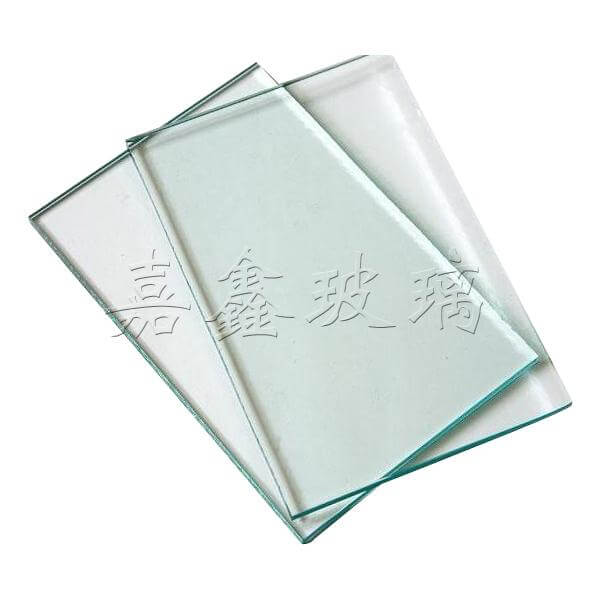
For more information, please visit the official website:www.jiaxinglass.com
FAQ Q&A Technical Selection Guide
Q1: What are the main differences between LOW-E glass and ordinary insulating glass?
A: The core advantage of LOW-E glass lies in its low-emissivity coating. Ordinary insulating glass relies solely on an air layer for thermal insulation, with a U-value of approximately 3.0 W/(m²·K), whereas LOW-E glass can achieve a U-value as low as 1.2 W/(m²·K), improving energy efficiency by over 60%. Additionally, LOW-E glass blocks up to 90% of infrared rays, significantly reducing solar radiant heat entering indoors and lowering air conditioning loads.
Q2: How to choose the appropriate type of LOW-E glass for a project?
A: LOW-E glass is divided into two categories: high-transmittance type and solar-control type:
1. High-transmittance LOW-E glass: Visible light transmittance (Tvis) ≥ 75%, suitable for cold regions in the north, enabling maximum utilization of sunlight for heating;
2. Sun-shading LOW-E glass: With a Tvis ranging from 50% to 65%, it is suitable for hot southern regions and can effectively block solar radiant heat.
Jiangyin Jiaxin can provide customized solutions based on factors such as the climatic conditions and building orientation of the project location.
Q3: What are the precautions for installing LOW-E glass?
A: The following key points should be noted during installation:
1. The sealing between the glass edge and the frame must be tight to prevent air infiltration and resulting condensation;
2. Avoid using metal frames to directly contact the edges of the glass, and it is recommended to use thermal breaks or warm edge spacers;
3. Do not use acidic or alkaline detergents during cleaning to avoid damaging the coating;
4. During transportation and storage, the glass should be kept vertical to avoid scratches on the coating.
Reference for full text summary
Low-emissivity coated glass (LOW-E glass), as a key material for building energy conservation, has been widely recognized for its technological advantages. Jiangyin Jiaxin Glass Products Co., Ltd. has achieved high-performance and large-scale production of LOW-E glass by introducing international advanced equipment, optimizing production processes, and implementing strict quality control. Its products not only lead the industry in energy efficiency but also meet the energy-saving needs of different climatic regions and building types through customized services. In the future, with the advancement of the "dual carbon" goals, the application prospects of LOW-E glass will become even broader. Jiangyin Jiaxin will continue to be driven by technological innovation, providing the construction industry with higher-quality energy-saving glass solutions to support the development of green buildings.
For more information, please visit the official website:www.jiaxinglass.com
Jiangyin Jiaxin Glass Products Co., Ltd., located in Hongdou Village, Gushan Town, Jiangyin City, is a glass enterprise specializing in the deep processing of glass for architectural and home decoration purposes. Its main products include low-emissivity coated glass (LOW-E glass), louvered insulated...
No. 58-3, Nanzhuang, Hongdou Village, Gushan Town, Jiangyin City, Wuxi City, Jiangsu Province