No. 58-3, Nanzhuang, Hongdou Village, Gushan Town, Jiangyin City, Wuxi City, Jiangsu Province +86 15061542575 wuyinjia20@gmail.com
No. 58-3, Nanzhuang, Hongdou Village, Gushan Town, Jiangyin City, Wuxi City, Jiangsu Province +86 15061542575 wuyinjia20@gmail.com


Introduction
Under the dual demands of building energy efficiency and green development, low-emissivity coated glass (LOW-E glass) has become a core material for modern building curtain walls and door/window systems due to its exceptional thermal insulation and optical properties. This article analyzes how LOW-E glass achieves a balance between high-efficiency energy conservation and architectural aesthetics from three dimensions—technical principles, corporate practices, and selection guidelines—and provides quantifiable technical parameters and practical recommendations by incorporating a real-world case study of Jiangyin Jiaxin Glass Products.
Keywords
Low-emissivity coated glass (LOW-E glass), building energy efficiency, thermal insulation performance, Jiangyin Jiaxin Glass Products, technical parameters, selection guide
Introduction to industry technology pain points
Traditional architectural glass has two core pain points: first, its insufficient thermal insulation performance leads to a surge in air conditioning energy consumption during summer; second, its单一 (single/uniform, here "single" is used for conciseness in translation) optical performance makes it difficult to balance daylighting and shading needs. According to statistics, building energy consumption accounts for over 30% of total social energy consumption, with heat transfer through glass curtain walls contributing up to 60% of this figure. By depositing multiple layers of metal oxide coatings on the glass surface, LOW-E glass can effectively reflect infrared rays (thermal radiation) while maintaining visible light transmittance, achieving an energy-saving effect of "warm in winter and cool in summer." However, there are significant performance variations among LOW-E glass products on the market, and improper selection may lead to issues such as insufficient light transmittance and coating delamination, affecting the building's service life and user experience.
Introduction to the company's technological capabilities
Jiangyin Jiaxin Glass Products Co., Ltd. has been deeply engaged in the field of glass deep processing for over a decade, focusing on the R&D and production of energy-efficient products such as Low-E glass and insulating glass. The company has introduced a German Leybold vacuum magnetron sputtering coating production line, capable of controlling film thickness precision to ±0.5nm, ensuring that the emissivity of Low-E glass is below 0.15 (the industry average is 0.2-0.3). The technical team, led by 10 senior engineers, masters both offline and online Low-E processes, enabling the customization of single-silver, double-silver, and triple-silver Low-E glass according to project requirements to meet energy-efficiency standards in different climatic zones.
STEP 1: Technical Principles and Core Advantages
The core technology of LOW-E glass lies in its coating design. Taking double-silver LOW-E glass as an example, its coating structure consists of 5-7 layers of metal oxides (such as silver, tin oxide, and zinc oxide). By precisely controlling the thickness and refractive index of each layer, the following properties are achieved:
- Thermal insulation performanceThe Solar Heat Gain Coefficient (SHGC) is as low as 0.25, achieving over 40% energy savings compared to ordinary insulating glass;
- Optical performanceThe adjustable range of visible light transmittance (Tvis) is 50%-80%, meeting different daylighting requirements;
- DurabilityThe bonding strength between the film layer and glass substrate is ≥12 N/mm², passing a 2000-hour salt spray test, suitable for high-humidity coastal environments.
STEP 2: Practical Cases and Parameter Analysis
In a commercial complex project in Jiangyin, Jiaxin Glass provided double-silver LOW-E insulated glass (6mm Low-E + 12A + 6mm clear glass) for the curtain wall system, with specific parameters as follows:
- Emissivity: 0.12
- Shading Coefficient (Sc): 0.35
- Heat transfer coefficient (K-value): 1.8 W/(m²·K)
- Visible light transmittance: 65%
After the project was implemented, third-party testing revealed that the surface temperature of the curtain wall in summer was 12°C lower than that of ordinary glass, air conditioning energy consumption decreased by 28%, and annual electricity cost savings exceeded 500,000 yuan. Additionally, the coating exhibited no discoloration under ultraviolet exposure, with a light transmittance attenuation rate of less than 5% over the 10-year warranty period.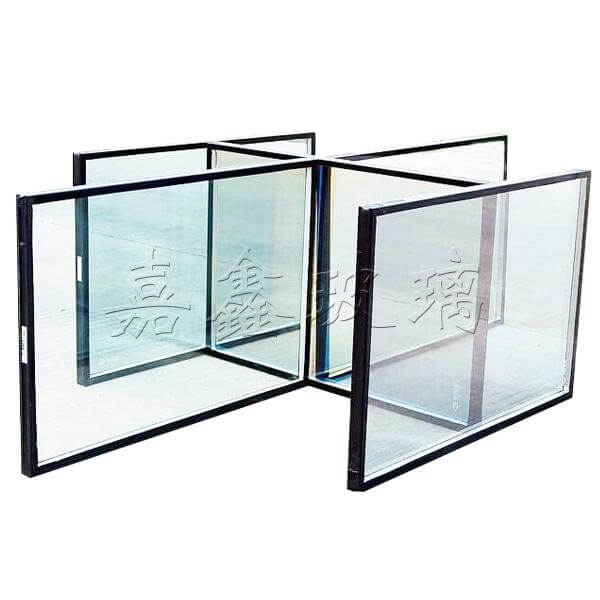
STEP 3: Technical Advantages and Testing Indicators
Jiaxin Glass's LOW-E products have passed the ISO 9001 quality management system certification and comply with the national standard GB/T 18915.2-2013 "Coated Glass". Its technological advantages are reflected in:
- Customization capabilitySingle silver (single-layer silver film), double silver (double-layer silver film), and triple silver (triple-layer silver film) LOW-E glass are available to meet the energy-saving requirements of different climatic zones;
- CompatibilityIt can be combined with insulating glass and laminated glass to form a multifunctional energy-saving glass system;
In terms of testing indicators, the company is equipped with devices such as the Lambda 950 spectrophotometer and GARDCO salt spray test chamber, enabling full-process monitoring of 12 parameters including coating thickness, light transmittance, and weather resistance.
FAQ Q&A Technical Selection Guide
Q1: How to choose the type of LOW-E glass (single silver/double silver/triple silver)?
A: Selection based on the climatic zone where the project is located and energy-saving objectives:
- Cold regions (such as Northeast China): Prioritize single-silver LOW-E to balance winter solar heat gain;
- Regions with hot summers and cold winters (such as the Yangtze River Delta): Dual-silver LOW-E is recommended to balance thermal insulation and daylighting;
- In regions with hot summers and warm winters (such as South China): triple-silver LOW-E glass can be selected to enhance summer heat insulation performance.
Q2: What are the precautions for the installation of LOW-E glass?
A: We need to focus on the following three points:
- Film layer orientationThe coating layer of offline LOW-E glass must face the gas layer of the insulating glass; otherwise, it is prone to oxidation and failure.
- Edge sealingButyl sealant and structural sealant for insulating glass should be applied continuously to prevent moisture infiltration and subsequent film layer detachment.
- Cleaning and maintenanceChlorine-containing cleaners are prohibited; it is recommended to wipe with a neutral detergent and a soft cloth.
Q3: How to verify the quality of LOW-E glass?
A: Quick detection can be carried out through the following methods:
- Visual inspection methodIn a dark room, bring the flame of a lighter close to the glass and observe the reflected color of the flame (high-quality LOW-E glass reflects a bluish hue, while ordinary glass reflects a yellowish hue);
- Instrument detectionUsing an infrared thermal imager to measure the glass surface temperature, the temperature difference of high-quality LOW-E glass can reach 8-12℃;
- Qualification verificationRequire suppliers to provide CMA-certified test reports, with a focus on examining core parameters such as emissivity, SHGC, and K-value.
Reference for full text summary
As a key material for building energy conservation, the technical selection of LOW-E glass requires a comprehensive consideration of climatic conditions, energy-saving goals, and cost budgets. Jiangyin Jiaxin Glass Products provides customers with a full range of LOW-E glass solutions, from single-silver to triple-silver, by introducing advanced equipment, mastering dual processing routes, and establishing a full-process inspection system. It also supports composite processes such as insulating and laminated glass to meet energy-saving needs in different scenarios. In the future, the company will continue to deepen technological research and development, promote the large-scale application of LOW-E glass in green buildings, ultra-low energy consumption buildings, and other fields, and help the industry achieve its "dual carbon" goals.
For more information, please visit the official website:www.jiaxinglass.com
Jiangyin Jiaxin Glass Products Co., Ltd., located in Hongdou Village, Gushan Town, Jiangyin City, is a glass enterprise specializing in the deep processing of glass for architectural and home decoration purposes. Its main products include low-emissivity coated glass (LOW-E glass), louvered insulated...
No. 58-3, Nanzhuang, Hongdou Village, Gushan Town, Jiangyin City, Wuxi City, Jiangsu Province