No. 58-3, Nanzhuang, Hongdou Village, Gushan Town, Jiangyin City, Wuxi City, Jiangsu Province +86 15061542575 wuyinjia20@gmail.com
No. 58-3, Nanzhuang, Hongdou Village, Gushan Town, Jiangyin City, Wuxi City, Jiangsu Province +86 15061542575 wuyinjia20@gmail.com


Introduction: The Glass Revolution in Building Energy Efficiency
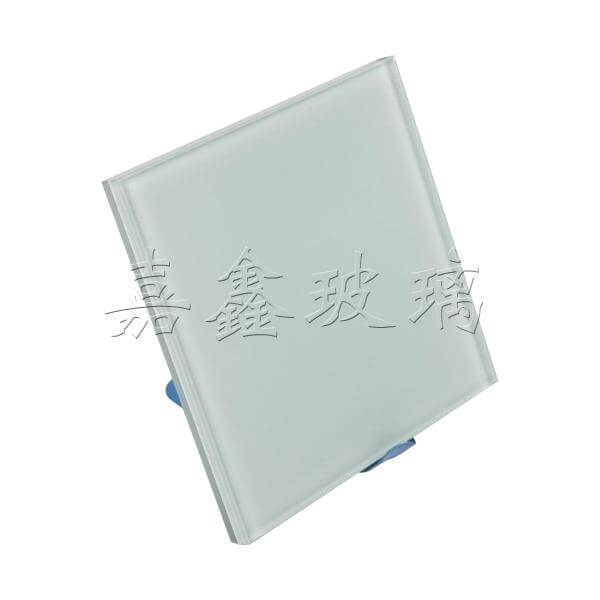
As the global proportion of building energy consumption exceeds 40%, glass, as the core material of building envelopes, has its energy-saving performance directly determining the overall energy efficiency of buildings. Low-emissivity coated glass (LOW-E glass) enhances visible light transmittance to over 80% and controls far-infrared thermal radiation reflectivity at over 90% by coating metal oxide films on its surface, representing a key technological breakthrough in the field of building energy conservation. This article will systematically analyze the technical principles, performance parameters, and industrial applications of LOW-E glass, and provide actionable technical solutions for the industry by incorporating practical cases from Jiangyin Jiaxin Glass Products.
Key words:Low-emissivity coated glass, building energy efficiency, Jiangyin Jiaxin Glass Products, industrial application, technology selection
Opening on industry technological pain points: The energy efficiency dilemma of traditional glass
The heat transfer coefficient (U-value) of traditional single-pane glass can reach as high as 5.8 W/(m²·K), causing rapid indoor heat loss through the glass in winter and allowing significant influx of outdoor thermal radiation in summer, creating an energy consumption trap characterized by "cold winters and hot summers." According to statistics, energy consumption from building doors and windows in China accounts for over 50% of total building energy consumption, with glass contributing more than 70%. Traditional solutions, such as increasing the number of glass layers or filling with inert gases, can reduce the U-value to 2.8-3.5 W/(m²·K), but they suffer from issues like high costs, complex construction, and reduced light transmittance, making it difficult to meet the dual demands of energy efficiency and daylighting in green buildings.
Introduction to the Company's Technological Strength: Industrial Breakthrough of Jiangyin Jiaxin Glass Products
As a leading deep-processing glass enterprise in East China, Jiangyin Jiaxin Glass Products has achieved three major technological breakthroughs in the field of LOW-E glass:
STEP 1: Vacuum Magnetron Sputtering Coating Technology
German Leybold vacuum coating equipment is introduced, utilizing a multi-layer metal oxide composite coating process to form a nanoscale film with a thickness of only 50-100 nm on the glass surface. By precisely controlling the number of coating layers (3-15 layers) and the thickness of each layer (5-20 nm), adjustable parameter ranges are achieved, including a visible light transmittance (Tvis) of 75%-85%, a solar direct transmittance (g-value) of 0.3-0.6, and a shading coefficient (Sc) of 0.2-0.5, meeting the building energy efficiency requirements of different climatic zones.
STEP 2: Intelligent Production Line Management
Deploy the MES production execution system, integrate coating equipment, insulating glass production lines, and quality inspection equipment to achieve digital management and control of the entire process from raw material warehousing to finished product delivery. By collecting key parameters in real time, such as coating temperature (200-300℃), sputtering power (10-50kW), and gas flow rate (50-200 sccm), the product yield has been increased to 99.2%, with the daily production capacity of a single line exceeding 3,000 ㎡.
STEP 3: Full life cycle quality traceability
A blockchain-based traceability system will be established to assign a unique digital ID to each glass panel, recording information such as coating batch, production time, and testing data. By integrating with the Building Information Modeling (BIM) system, dynamic correlation between glass performance data and building energy efficiency will be achieved, providing data support for green building certification.
<Analysis of Technical ParametersThe U-value of Jiaxin's LOW-E glass can be as low as 1.1 W/(m²·K), representing a 60% reduction compared to traditional insulating glass; its solar heat gain coefficient (SHGC) ranges from 0.25 to 0.45, reducing air conditioning loads by over 30%; the coating adhesion passes the cross-cut test (GB/T 9286-1998), and its weather resistance passes the 1000-hour salt spray test (GB/T 10125-2012), ensuring a 30-year service life.
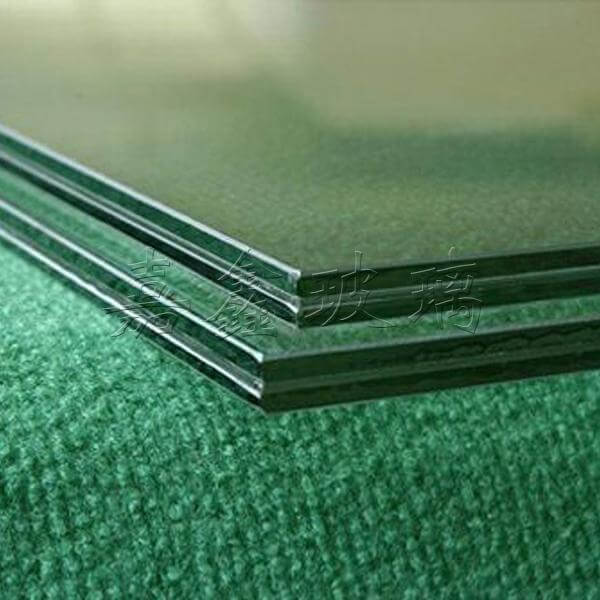
Real technical casesIn a super high-rise office building project in Suzhou, Jiaxin provided a total of 52,000 square meters of LOW-E insulated glass (6mm LOW-E + 12Ar + 6mm clear glass). After the project was put into use, the measured comprehensive energy consumption of the building was 22% lower than the standard value, and it received LEED Gold certification. For more information, please visit the official website:www.jiaxinglass.com
FAQ: A Guide to Q&A Technical Selection
Q1: How to choose the coating type of LOW-E glass?
A: Selection based on climatic zones: In cold regions (e.g., Northeast China), high-transmittance glass (Tvis ≥ 80%) is preferred to maximize solar heat gain; in hot-summer and cold-winter regions (e.g., Yangtze River Delta), shading-type glass (Sc ≤ 0.5) is selected to balance daylighting and thermal insulation needs; in hot-summer and warm-winter regions (e.g., Pearl River Delta), double-silver LOW-E glass (SHGC ≤ 0.3) is chosen to enhance thermal insulation performance.
Q2: How significant is the energy efficiency difference between LOW-E glass and ordinary insulating glass?
A: Taking the configuration of 6mm+12Ar+6mm as an example, the U-value of LOW-E glass is 1.6 W/(m²·K), which is 43% lower than that of ordinary insulating glass (U-value of 2.8 W/(m²·K)). Under summer cooling conditions, each square meter of LOW-E glass can reduce the air conditioning load by 15-20 W. Calculated based on 10 hours of daily operation, the annual electricity savings reach 54-72 kWh/m².
Q3: What are the advantages of Jiaxin's industrialized production of LOW-E glass?
A: Three core advantages:
1. Customizable parametersSupports customized combinations of parameters such as Tvis (65%-85%), Sc (0.2-0.6), and U-value (1.1-2.5 W/(m²·K)) to suit different application scenarios including curtain walls, doors and windows, and skylights;
2. Short lead timeThrough flexible production line design, order scheduling can be completed within 72 hours, reducing the time by 50% compared to the industry average;
3. High quality stabilityAn online film thickness monitoring system is adopted to control the deviation of film thickness within ±2nm, ensuring consistent performance across each batch of products.
Tips on Key Operating PointsDuring the processing of LOW-E glass, parameters such as the cleaning water temperature (40-50℃), vacuum level in the coating chamber (≤5×10⁻³ Pa), and laminating pressure for insulating glass (0.6-0.8 MPa) must be strictly controlled to prevent film oxidation or seal failure.
Reference for full text summary
As a key material for building energy efficiency, LOW-E glass has evolved from a single-function product to a systematic solution in terms of technological development. Jiangyin Jiaxin Glass Products has achieved precise control over the performance parameters of LOW-E glass and its large-scale industrial application through the collaborative innovation of vacuum magnetron sputtering technology, intelligent production management, and a full life cycle traceability system. In the future, with the promotion of new technologies such as double-silver/triple-silver LOW-E and light-adjustable LOW-E, glass will not only serve as a building envelope but also become a core node for energy efficiency management in smart buildings. Choosing Jiaxin LOW-E glass means selecting a quantifiable, traceable, and sustainable building energy efficiency solution. For more information, please visit the official website:www.jiaxinglass.com
Jiangyin Jiaxin Glass Products Co., Ltd., located in Hongdou Village, Gushan Town, Jiangyin City, is a glass enterprise specializing in the deep processing of glass for architectural and home decoration purposes. Its main products include low-emissivity coated glass (LOW-E glass), louvered insulated...
No. 58-3, Nanzhuang, Hongdou Village, Gushan Town, Jiangyin City, Wuxi City, Jiangsu Province