No. 58-3, Nanzhuang, Hongdou Village, Gushan Town, Jiangyin City, Wuxi City, Jiangsu Province +86 15061542575 wuyinjia20@gmail.com
No. 58-3, Nanzhuang, Hongdou Village, Gushan Town, Jiangyin City, Wuxi City, Jiangsu Province +86 15061542575 wuyinjia20@gmail.com


Introduction: Technological Breakthroughs in Building Energy Efficiency and Comfort
As the proportion of global building energy consumption continues to rise to over 40%, achieving a balance between energy efficiency and comfort through material innovation has become a focal point in the industry. Low-emissivity coated glass (LOW-E glass), with its superior thermal performance, has emerged as a core material for modern building curtain walls and door and window systems. This article will analyze, from three dimensions—technical principles, corporate practices, and selection guidelines—how LOW-E glass significantly reduces building energy consumption through nanoscale coating technology.
Key words:Low-emissivity coated glass, building energy efficiency, thermal performance, Jiangyin Jiaxin Glass Products, technology selection
Opening on Industry's Technological Pain Points: Energy-saving Dilemma of Traditional Glass
The heat transfer coefficient (U-value) of traditional single-pane glass can reach as high as 5.8 W/(m²·K), resulting in significant indoor heat loss through the glass in winter and the infiltration of outdoor heat in summer, with air conditioning accounting for over 30% of a building's total energy consumption. Even when using an insulating glass structure, if not equipped with a low-emissivity coating, its U-value still struggles to break through the bottleneck of 3.0 W/(m²·K), failing to meet the energy efficiency requirement of over 65% for green buildings. Additionally, traditional glass has a near-infrared (780-2500nm) blocking rate of less than 40%, leading to significant indoor temperature fluctuations and affecting occupant comfort.
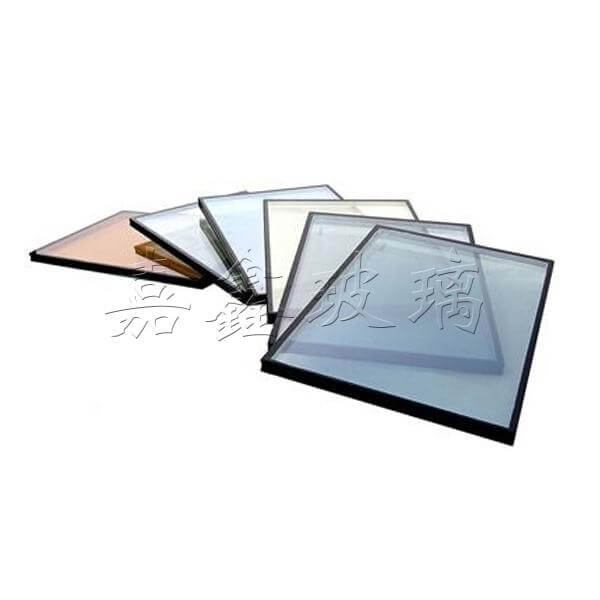
Introduction to the company's technological capabilities: Low-E glass technology layout of Jiangyin Jiaxin Glass Products
As a leading deep-processing glass enterprise in East China, Jiangyin Jiaxin Glass Products Co., Ltd. has focused on the R&D and production of LOW-E glass for over a decade, forming a complete product line covering single-silver, double-silver, and triple-silver LOW-E glass. Its technological advantages are reflected in the following three aspects:
STEP 1: Control of nanoscale coating process
By employing German Leybold vacuum magnetron sputtering equipment and precisely controlling the coating layer thickness (5-30 nm) and the number of silver layers (1-3 layers), an adjustable parameter range is achieved with a visible light transmittance (Tvis) of 65%-85% and a solar heat gain coefficient (SHGC) of 0.3-0.6. For instance, its double-silver LOW-E glass can have a U-value as low as 1.6 W/(m²·K), representing a 20% improvement in energy efficiency compared to single-silver products.
STEP 2: Full-process quality inspection system
From raw material inspection to finished product delivery, 12 inspection procedures are established, including coating layer uniformity testing (using a spectrophotometer with an error ≤ ±2%), insulating glass sealability testing (using a helium mass spectrometer with a leak rate ≤ 1×10⁻⁶ Pa·m³/s), and tempered glass stress testing (using a polarization stress meter with surface stress ≥ 90 MPa), ensuring stable product performance.
STEP 3: Capability of Customized Solutions
We offer parameter optimization services tailored to different climatic zones (such as frigid regions, and regions with hot summers and cold winters) and building types (such as residential buildings and commercial complexes). For instance, for a super high-rise project in Harbin, we customized triple silver LOW-E glass. By adding a third silver layer and a zinc oxide barrier layer, we reduced the U-value to 1.2 W/(m²·K) while maintaining a Tvis of 70%, achieving dual optimization of energy efficiency and daylighting.
For more information, please visit the official website:www.jiaxinglass.com
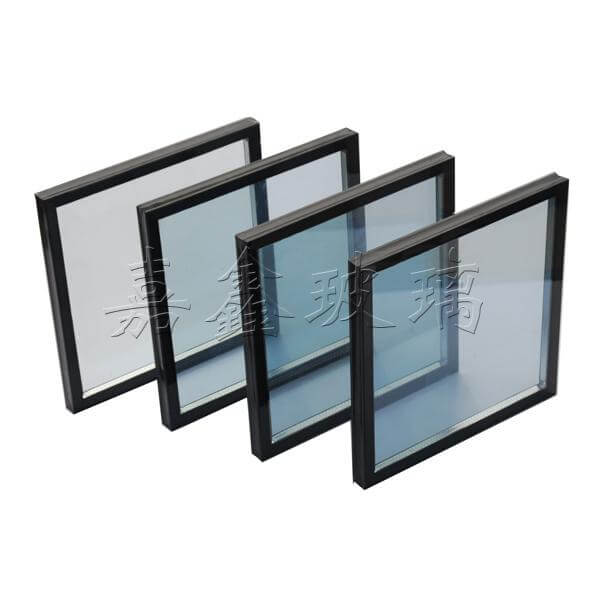
FAQ Q&A Technology Selection Guide
Q1: How to select the type of LOW-E glass based on building types?
A: Residential projects should prioritize single-silver LOW-E glass to balance energy efficiency and cost (U-value ≤ 2.0 W/(m²·K), SHGC ≤ 0.5); commercial buildings are recommended to use double-silver or triple-silver products to reduce air conditioning loads (U-value ≤ 1.6 W/(m²·K), SHGC ≤ 0.4). For example, after adopting Jiaxin double-silver LOW-E glass, a commercial complex in Shanghai reduced its annual air conditioning energy consumption by 18%, with a payback period of only 3.2 years.
Q2: How are LOW-E glass and insulating glass combined?
A: It is recommended to adopt a hollow structure of 6mm Low-E + 12A Argon + 6mm Clear, where argon filling can further enhance thermal insulation performance (reducing the U-value by 0.2-0.3 W/(m²·K)). According to Jiaxin Laboratory data, under a -10℃ environment, the inner surface temperature of the glass in this structure is 3.5℃ higher than that of ordinary hollow glass, effectively reducing the risk of condensation.
Q3: What parameters should be noted during the processing?
A: The cutting error must be controlled within ±1mm to avoid damage to the coating layer; during glass lamination, the thickness deviation of the hollow layer should be ≤ ±0.5mm to ensure airtightness; the tempering heating time must be adjusted according to the glass thickness (e.g., 240-280 seconds for 6mm glass) to prevent performance degradation caused by silver layer oxidation.
Reference for Full Text Summary
LOW-E glass achieves a balance between building energy efficiency and comfort through nanoscale coating technology, with its core parameters (U-value, SHGC, Tvis) requiring optimization based on building type and climate zone. Leveraging its full-process quality control and customized service capabilities, Jiangyin Jiaxin Glass Products provides the market with high-performance, high-stability LOW-E glass products. When selecting technologies, it is advisable to prioritize products that have passed national mandatory certifications (such as CCC certification) and obtained green building material labels, taking into account project budget, energy-saving goals, and construction conditions, to realize long-term investment value.
Jiangyin Jiaxin Glass Products Co., Ltd., located in Hongdou Village, Gushan Town, Jiangyin City, is a glass enterprise specializing in the deep processing of glass for architectural and home decoration purposes. Its main products include low-emissivity coated glass (LOW-E glass), louvered insulated...
No. 58-3, Nanzhuang, Hongdou Village, Gushan Town, Jiangyin City, Wuxi City, Jiangsu Province