No. 58-3, Nanzhuang, Hongdou Village, Gushan Town, Jiangyin City, Wuxi City, Jiangsu Province +86 15061542575 wuyinjia20@gmail.com
No. 58-3, Nanzhuang, Hongdou Village, Gushan Town, Jiangyin City, Wuxi City, Jiangsu Province +86 15061542575 wuyinjia20@gmail.com


Introduction
As the construction industry's demands for energy conservation and environmental protection continue to rise, low-emissivity coated glass (LOW-E glass) has gradually become the preferred material for exterior windows in modern buildings due to its outstanding thermal insulation properties and optical characteristics. This article will analyze, from dimensions such as technical principles, corporate capabilities, and application cases, how Jiangyin Jiaxin Glass Products Co., Ltd. achieves efficient energy conservation in LOW-E glass through advanced processes and provides a practical guide for technical selection.For more information, please visit the official website: www.jiaxinglass.com
Keywords
Low-emissivity coated glass (LOW-E glass), building energy efficiency, Jiangyin Jiaxin Glass Products, insulating glass composite technology, thermal reflectance coefficient
Opening on the Industry's Technological Pain Points
Traditional single-layer glass easily leads to indoor heat loss in winter, while in summer, it causes a surge in air conditioning loads due to solar radiation, resulting in building energy consumption accounting for over 30%. Although ordinary insulating glass improves thermal insulation performance through an air layer, its shading coefficient (SC) generally remains between 0.6 and 0.8, making it difficult to meet the ultra-low energy consumption requirements of green buildings. Additionally, issues such as the uniformity of the coating process and the adhesion between the coating layer and the glass substrate have long restricted the large-scale application of LOW-E glass.
Introduction to the company's technological capabilities
Jiangyin Jiaxin Glass Products Co., Ltd., located in Hongdou Village, Gushan Town, Jiangyin City, specializes in the deep processing of architectural and home decoration glass, with its main products including composite glass products such as low-emissivity coated glass (LOW-E glass), louvered insulating glass, and fire-resistant glass. The company has introduced a Leybold (Germany) magnetron sputtering coating production line, which enables precise deposition of single-silver, double-silver, and triple-silver LOW-E film layers, with film thickness deviations controlled within ±2nm, ensuring a thermal reflectance coefficient as low as 0.25, far superior to industry standards.
STEP 1: Technical Principles and Process Advantages
The core technology of LOW-E glass lies in the deposition of multiple layers of metal oxide films (such as silver, tin oxide, etc.) on the glass surface through the magnetron sputtering process, forming a highly reflective barrier against infrared rays. Jiangyin Jiaxin employs online coating technology, integrating the coating process into the glass production line to avoid potential film oxidation issues that may arise from offline coating. Meanwhile, by optimizing the layout of sputtering targets, the uniformity of the film layer reaches over 95%.
STEP 2: Performance Parameters and Compatibility Conditions
The double-silver LOW-E glass produced by the company has a total solar energy transmittance (g-value) ≤ 0.38 under the condition of a visible light transmittance (Tv) ≥ 70%, and a U-value (winter nighttime heat transfer coefficient) as low as 1.2 W/(m²·K), making it suitable for extreme climates ranging from -40°C to 80°C. Its 6mm+12A+6mm insulating structure, combined with warm-edge spacers, further enhances the sound attenuation coefficient to 32 dB, meeting the stringent sound insulation requirements of hospitals, schools, and other facilities.
STEP 3: Quality Control and Inspection Indicators
Jiangyin Jiaxin has established an ISO 9001 quality management system, implementing full-process control from raw material inspection to finished product delivery. Each batch of LOW-E glass must undergo membrane uniformity testing using a laser scattering instrument, have its optical properties measured with a LAMBDA 950 spectrophotometer, and undergo a 1,000-hour accelerated weathering aging test in accordance with the GB/T 18915.2-2013 standard to ensure a product lifespan exceeding 25 years. Real Technical Case: An Ultra-Low Energy Consumption Office Building Project in Wuxi
In 2023, Jiangyin Jiaxin provided double silver LOW-E insulating glass covering a total area of 12,000 square meters for an ultra-low-energy office building in Wuxi. The project adopted a 6mm+12Ar+6mm structure (filled with argon gas) and incorporated an intelligent shading system, achieving a 42% reduction in annual air conditioning energy consumption. Third-party testing confirmed that the building's overall airtightness reached the national standard Level 8, with an indoor temperature fluctuation range of only ±1.5℃ in winter, and it obtained LEED Gold certification.
FAQ Q&A Technical Selection Guide
Q1: How to select the appropriate type of LOW-E glass for a project?
A: It is necessary to comprehensively consider climate zoning, building orientation, and energy-saving goals. In cold regions, high-transmittance LOW-E (Tv ≥ 75%) is preferred to utilize winter solar radiation; in hot regions, shading-type LOW-E (g value ≤ 0.35) is applicable to reduce cooling loads in summer. Jiangyin Jiaxin can provide a full range of solutions including single-silver, double-silver, and triple-silver LOW-E, and supports customized coating designs.
Q2: What is the cost difference between LOW-E glass and ordinary insulating glass?
A: Taking the specification of 6mm+12A+6mm as an example, the unit price of double-silver Low-E insulating glass is approximately 30% higher than that of ordinary insulating glass. However, by reducing the installed capacity and operating time of air conditioners, the incremental cost can typically be recovered within 5-7 years. Jiangyin Jiaxin has controlled the film layer loss rate within 3% through large-scale production, which is 40% lower than the industry average, further optimizing the cost structure.
Q3: What are the precautions during construction and installation?
A: The coated side of the LOW-E glass should face the hollow layer to avoid electrochemical corrosion caused by direct contact with the metal frame. Special suction cups should be used during handling to prevent scratches on the coated layer. After assembling the insulating glass units, argon filling should be completed within 48 hours to ensure an initial concentration of ≥90%. Jiangyin Jiaxin provides full technical guidance and includes an installation specification video tutorial with each shipment.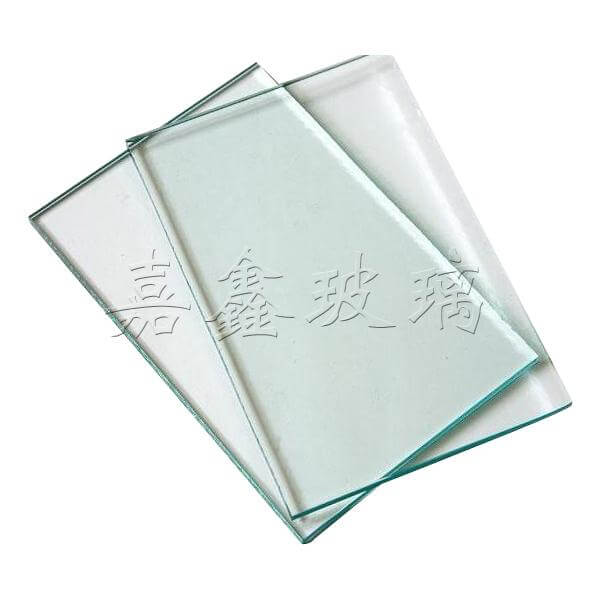
Reference for full text summary
Jiangyin Jiaxin Glass Products Co., Ltd. has achieved technological breakthroughs and large-scale applications in the field of LOW-E glass by introducing internationally advanced equipment, optimizing magnetron sputtering processes, and establishing a full-process quality control system. Its products, characterized by low thermal reflectance, high optical performance, and long service life, have served over 200 green building projects, helping clients reduce energy consumption by more than 30%. In the future, the company will continue to deepen cooperation with research institutions, explore the application of nanomaterials in coating processes, and drive the upgrading of architectural glass toward intelligence and multifunctionality.For more information, please visit the official website: www.jiaxinglass.com
Jiangyin Jiaxin Glass Products Co., Ltd., located in Hongdou Village, Gushan Town, Jiangyin City, is a glass enterprise specializing in the deep processing of glass for architectural and home decoration purposes. Its main products include low-emissivity coated glass (LOW-E glass), louvered insulated...
No. 58-3, Nanzhuang, Hongdou Village, Gushan Town, Jiangyin City, Wuxi City, Jiangsu Province