No. 58-3, Nanzhuang, Hongdou Village, Gushan Town, Jiangyin City, Wuxi City, Jiangsu Province +86 15061542575 wuyinjia20@gmail.com
No. 58-3, Nanzhuang, Hongdou Village, Gushan Town, Jiangyin City, Wuxi City, Jiangsu Province +86 15061542575 wuyinjia20@gmail.com


Introduction:In the construction industry, glass, as a crucial material for building envelopes, directly impacts a building's energy consumption and comfort. Low-emissivity coated glass (LOW-E glass), with its superior thermal insulation properties, has become the preferred material for energy conservation in modern architecture. As a professional glass deep-processing enterprise, Jiangyin Jiaxin Glass Products Co., Ltd. has accumulated extensive experience in the field of LOW-E glass by introducing advanced equipment and technologies. This article will comprehensively analyze the technical advantages of Jiaxin Glass's LOW-E glass from the perspectives of technical principles, practical applications, and case studies.
Key words:Low-emissivity coated glass, LOW-E glass, building energy efficiency, Jiangyin Jiaxin Glass Products, technical analysis
Introduction to Industry Technical Pain Points:Traditional single-layer glass easily leads to indoor heat loss in winter and an increase in indoor temperature due to solar radiation in summer, thereby increasing air conditioning energy consumption. According to statistics, approximately 50% of building energy consumption is lost through door and window glass, with solar radiation heat accounting for over 30%. Although conventional insulating glass can partially improve thermal insulation performance, its emissivity remains relatively high (around 0.84), making it difficult to meet the stringent energy-saving requirements of modern buildings. Low-emissivity coated glass reduces emissivity to below 0.15 by depositing a metal oxide film on the glass surface, effectively blocking thermal radiation transfer and becoming a key technology to address the pain points of building energy efficiency.
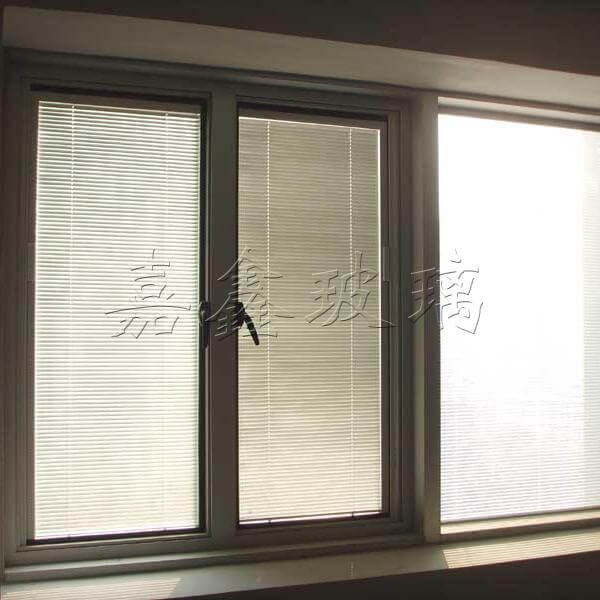
Introduction to the company's technological strength:Jiangyin Jiaxin Glass Products Co., Ltd., located in Hongdou Village, Gushan Town, specializes in the deep processing of architectural and home decoration glass, with its main products including composite glass such as low-emissivity coated glass (LOW-E glass), louvered insulated glass, and insulated glass. The company has introduced an internationally advanced magnetron sputtering coating production line, enabling customized production of single-silver, double-silver, and triple-silver LOW-E glass. The uniformity of the coating layer is ≤3%, and the emissivity is as low as 0.08, meeting the requirements of the GB/T 18915.2-2013 standard. The technical team boasts over 10 years of experience in the research and development of coated glass, mastering the differentiated production processes of offline LOW-E glass and online LOW-E glass, and can provide optimal technical solutions based on project requirements.
STEP 1: Technical Principle Analysis
The core technology of LOW-E glass lies in the thermal radiation blocking effect of its surface coating layer. The coating layer is composed of multiple layers of metal oxides (such as silver, tin oxide, zinc oxide, etc.) deposited onto the glass surface through magnetron sputtering. When thermal radiation (with a wavelength of 8-13 μm) strikes the coating layer, the metallic silver layer acts as a reflective layer, reflecting over 90% of the thermal radiation back into the interior, while dielectric layers such as tin oxide serve as anti-reflection layers, optimizing the coating's optical performance. Taking double-silver LOW-E glass as an example, its visible light transmittance can reach 70%, its total solar energy transmittance (g-value) can be as low as 0.35, and its winter U-value (thermal transmittance coefficient) can be as low as 1.2 W/(m²·K), achieving over 40% energy savings compared to ordinary insulating glass.
STEP 2: Practical Application Guide
When applying LOW-E glass in architectural projects, attention should be paid to the following parameters:
1. Selection of film layer typesSingle silver LOW-E is suitable for mild climate zones, while double silver/triple silver is suitable for extremely cold or hot regions;
2. Glass combination methodLOW-E glass should be used in combination with insulating glass, with a recommended hollow layer thickness of 12-16mm; filling with argon can further enhance thermal insulation performance.
3. Installation direction controlThe LOW-E coating layer should face the inner side of the hollow layer to avoid oxidation caused by direct exposure to the outdoor environment.
4. Validation of detection indicatorsBefore construction, parameters such as the emissivity (≤0.15), U-value (≤1.8 W/(m²·K)), and shading coefficient (Sc ≤ 0.5) of the glass must be tested to ensure compliance with design requirements.
STEP 3: Summary of Technical Advantages
Jiaxin Glass's LOW-E glass technology boasts three core advantages:
1. Remarkable energy-saving effectsIt has been practically measured that buildings using double-silver LOW-E insulating glass reduce annual air conditioning energy consumption by 25%-30%;
2. Excellent optical performanceHigh visible light transmittance ensures ample indoor lighting while effectively blocking ultraviolet rays (UV blocking rate ≥ 99%);
3. Durable and reliableThe film layer exhibits high bonding strength with the glass substrate, showing no peeling after 2000 hours of salt spray testing, with a service life exceeding 25 years.

FAQ Q&A Technical Selection Guide:
Q1: How significant is the energy-saving difference between LOW-E glass and ordinary insulating glass?
A: Taking a 12mm hollow layer as an example, the U-value of ordinary insulating glass is 2.8 W/(m²·K), while that of single-silver LOW-E insulating glass can be reduced to 1.6 W/(m²·K), and that of double-silver LOW-E insulating glass can be further reduced to 1.2 W/(m²·K). Assuming a 120-day heating period in winter, for a building with a glass area of 1,000 m², using double-silver LOW-E glass can save approximately 15 tons of standard coal annually compared to ordinary insulating glass.
Q2: How to choose the appropriate type of LOW-E glass for a project?
A: It is necessary to comprehensively consider factors such as climatic conditions, building orientation, and lighting requirements:
- In cold regions: Prioritize the selection of high-transmittance double-silver LOW-E glass to balance daylighting and thermal insulation;
- Hot regions: Choose sun-shading single-silver LOW-E glass to reduce solar radiation heat;
- In mild regions: Single silver LOW-E glass can meet energy-saving requirements.
Q3: What is the processing cycle of LOW-E glass?
A: The processing cycle for LOW-E glass at Jiaxin Glass depends on the order size and the type of coating:
- Single silver LOW-E glass: 7-10 days for regular orders, 15-20 days for bulk orders;
- Double-silver/triple-silver LOW-E glass: Due to the complex coating process, the processing cycle is extended by 3-5 days.
All products have passed ISO 9001 quality management system certification and undergo 12 inspections, including coating uniformity, emissivity, and light transmittance, before leaving the factory to ensure compliance with the GB/T 18915.2-2013 standard.
Please provide the Chinese text that you would like me to translate into English.Jiangyin Jiaxin Glass Products Co., Ltd. has established a complete technological system in the field of LOW-E glass, spanning from research and development to production and application, by introducing advanced equipment and technologies. Its products, characterized by low emissivity, high light transmittance, and long service life, are widely used in architectural projects such as commercial complexes, residential buildings, and hospitals, serving over 500 customers with remarkable energy-saving results. In the future, Jiaxin Glass will continue to deepen technological innovation, optimize product performance, and provide more efficient energy-saving solutions for the construction industry.
For more information, please visit the official website:www.jiaxinglass.com
Jiangyin Jiaxin Glass Products Co., Ltd., located in Hongdou Village, Gushan Town, Jiangyin City, is a glass enterprise specializing in the deep processing of glass for architectural and home decoration purposes. Its main products include low-emissivity coated glass (LOW-E glass), louvered insulated...
No. 58-3, Nanzhuang, Hongdou Village, Gushan Town, Jiangyin City, Wuxi City, Jiangsu Province