No. 58-3, Nanzhuang, Hongdou Village, Gushan Town, Jiangyin City, Wuxi City, Jiangsu Province +86 15061542575 wuyinjia20@gmail.com
No. 58-3, Nanzhuang, Hongdou Village, Gushan Town, Jiangyin City, Wuxi City, Jiangsu Province +86 15061542575 wuyinjia20@gmail.com


Introduction
In the field of building energy efficiency, low-emissivity coated glass (LOW-E glass) has become the preferred material for modern building curtain walls, doors, and windows due to its excellent thermal insulation and light transmission properties. However, how can more efficient energy-saving effects be achieved through technological optimization? Jiangyin Jiaxin Glass Products Co., Ltd., leveraging its advanced coating processes and equipment layout, provides replicable technological solutions for the industry. This article will analyze the technical principles, corporate capabilities, and selection guidelines to help enterprises accurately choose suitable glass products.
Keywords
Low-emissivity coated glass (LOW-E glass), building energy efficiency, Jiangyin Jiaxin Glass Products, coating process, light transmittance, shading coefficient
Introduction to Industry Technical Pain Points
There is a contradiction in traditional architectural glass regarding thermal insulation and light transmission performance: while ordinary insulating glass can block part of the heat transfer, indoor heat is prone to dissipation through the glass in winter; although single-silver LOW-E glass improves thermal insulation, it may compromise light transmittance, affecting indoor lighting. Additionally, issues such as the susceptibility of the coating layer to oxidation and poor uniformity of the coating layer shorten the glass's service life and increase later maintenance costs. How to balance thermal insulation, light transmission, and durability has become a technical challenge that the industry urgently needs to address.
Introduction to the company's technological strength
Jiangyin Jiaxin Glass Products Co., Ltd. has delved deeply into the field of architectural glass deep processing, with low-emissivity coated glass as its core product, and has established a full-chain technological advantage spanning equipment, processes, and management:
STEP 1: Advanced equipment ensures the precision of the coating
The company has introduced a magnetron sputtering coating production line from Leybold (Germany), equipped with a 12-target dynamic coating system capable of achieving a film thickness error of ≤ ±2 nm and ensuring coating uniformity of over 98%. This equipment supports customized production of single-silver, double-silver, and triple-silver LOW-E glass, meeting energy-saving requirements in different climatic zones (such as severe cold regions and hot-summer/warm-winter regions).
STEP 2: Optimize the production process through scientific management
The ISO 9001 quality management system is adopted to achieve full process traceability, from raw material inspection (e.g., glass substrate flatness ≤ 0.1 mm/m), monitoring of coating process parameters (e.g., argon flow rate accuracy ± 0.1 L/min), to finished product testing (e.g., visible light transmittance error ≤ ±1%). Through the integration of the ERP system and MES system, production efficiency has increased by 30%, and the order delivery cycle has been shortened to 7 days.
STEP 3: Technical layout covers diverse scenarios
In addition to standard LOW-E glass, the company has also developed derivative products such as louvered hollow LOW-E glass and fire-resistant LOW-E laminated glass. For instance, in a commercial complex project in Jiangsu, double-silver LOW-E hollow glass (6mm Low-E + 12A + 6mm clear glass) was used, resulting in a 45% reduction in indoor heat loss during winter and a 32% decrease in air conditioning energy consumption during summer. The project received LEED Gold certification.
For more information, please visit the official website:www.jiaxinglass.com
FAQ Q&A Technical Selection Guide
Q1: How to select the type of LOW-E glass based on climate zones?
A: In severe cold regions (such as Northeast China), it is recommended to use high-transmittance single-silver LOW-E glass (visible light transmittance ≥ 70%, shading coefficient Sc ≥ 0.5) to balance winter daylighting and thermal insulation. In hot summer and warm winter regions (such as Guangdong), low-transmittance double-silver LOW-E glass (visible light transmittance ≤ 50%, shading coefficient Sc ≤ 0.3) is recommended to enhance summer heat insulation. Jiangyin Jiaxin can provide the "Glass Selection Guide for Climatic Zones," which includes specific parameters and case references.
Q2: How is the durability of LOW-E glass ensured?
A: Coating oxidation is a key factor affecting lifespan. Jiangyin Jiaxin adopts an online coating process, fusing the Low-E coating with the glass substrate at high temperatures to form a dense silica protective layer with weather resistance exceeding 25 years (verified through EU EN1096-1 standard testing). Additionally, the insulating glass employs dual sealing with butyl rubber and polysulfide sealant, with an argon gas fill rate ≥90%, effectively delaying coating aging.
Q3: How to verify the performance parameters of LOW-E glass?
A: Key indicators can be verified through third-party testing reports:
- Visible light transmittance (Tvis): Tested using a spectrophotometer according to the GB/T 2680-2021 standard;
- Shading coefficient (Sc): Simulated by window thermal performance calculation software in accordance with the JGJ/T 151-2008 standard;
- Emissivity (ε): Measured using an infrared emissivity tester in accordance with ISO 10295 standard.
Jiangyin Jiaxin provides CNAS-certified inspection reports for each batch of products and supports customers' random sampling and re-inspection.
Reference for full text summary
Technological optimization of low-emissivity coated glass requires balancing coating process, equipment precision, and scenario adaptability. Jiangyin Jiaxin Glass Products has provided full-chain support for building energy efficiency, ranging from standard products to customized solutions, by introducing German Leybold coating lines, implementing the ISO 9001 management system, and developing a diversified product matrix. The application of its double-silver LOW-E glass in a commercial complex project in Jiangsu has validated the practical effectiveness of the technology, achieving a 45% improvement in winter insulation efficiency and a 32% reduction in summer air conditioning energy consumption. Looking ahead, with the advancement of the "dual carbon" goals, technological iterations of LOW-E glass will focus more on integrating ultra-low emissivity (ε≤0.02), high visible light transmittance (Tvis≥80%), and intelligent light-adjusting functions. Jiangyin Jiaxin will continue to invest in R&D to drive the green transformation of the industry.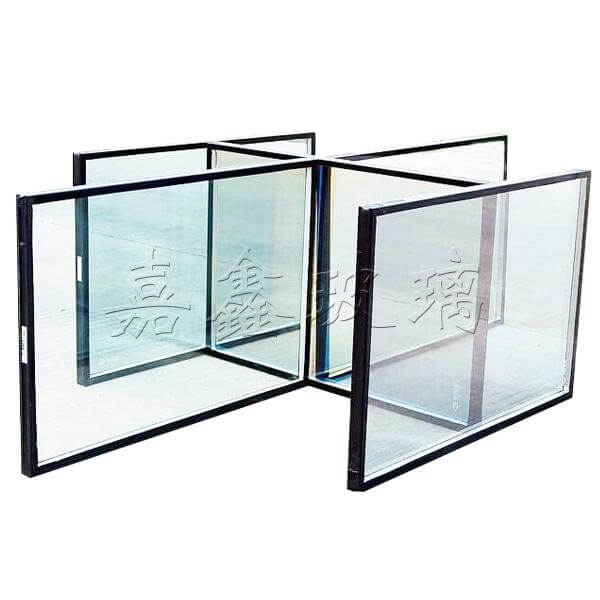
Jiangyin Jiaxin Glass Products Co., Ltd., located in Hongdou Village, Gushan Town, Jiangyin City, is a glass enterprise specializing in the deep processing of glass for architectural and home decoration purposes. Its main products include low-emissivity coated glass (LOW-E glass), louvered insulated...
No. 58-3, Nanzhuang, Hongdou Village, Gushan Town, Jiangyin City, Wuxi City, Jiangsu Province