No. 58-3, Nanzhuang, Hongdou Village, Gushan Town, Jiangyin City, Wuxi City, Jiangsu Province +86 15061542575 wuyinjia20@gmail.com
No. 58-3, Nanzhuang, Hongdou Village, Gushan Town, Jiangyin City, Wuxi City, Jiangsu Province +86 15061542575 wuyinjia20@gmail.com


Introduction
In the field of building energy efficiency, low-emissivity coated glass (LOW-E glass) has become a focal point of the industry due to its exceptional thermal insulation performance. According to statistics, buildings using LOW-E glass can reduce energy consumption by 30%-50%. However, improper technology selection may lead to issues such as performance degradation and cost overruns. This article analyzes how to achieve the optimal solution for building energy efficiency through scientific selection from three aspects—technical principles, corporate practices, and selection guidelines—drawing on the case of Jiangyin Jiaxin Glass Products.
Keywords
Low-emissivity coated glass (LOW-E glass), building energy efficiency, Jiangyin Jiaxin Glass Products, technology selection, thermal insulation performance
Introduction to Industry Technical Pain Points
Traditional architectural glass has two major pain points: First, single-layer glass has poor thermal insulation performance, with indoor temperatures in summer being 5-8°C higher than outdoor temperatures, leading to a sharp increase in air conditioning energy consumption; Second, although ordinary insulating glass can partially insulate heat, radiant heat transfer still accounts for over 60%, resulting in severe heat loss during winter heating. Additionally, the quality of LOW-E glass products on the market varies greatly, with some companies reducing costs by simplifying the coating process, resulting in glass with a light transmittance below 60% and an emissivity above 0.15, failing to meet energy-saving standards. How to select products with mature technology and stable performance has become a core demand for builders and designers.
Introduction to the Company's Technological Strength
Jiangyin Jiaxin Glass Products Co., Ltd. has been deeply engaged in the field of glass deep processing for 15 years, focusing on the research, development, and production of low-emissivity coated glass (LOW-E glass). The company has introduced German Leybold optical coating equipment and employs magnetron sputtering technology, enabling precise control over single-silver, double-silver, and triple-silver coatings with 9-13 layers. The emissivity is as low as 0.02-0.05, significantly outperforming the national standard (≤0.15). Its core product, LOW-E insulating glass, reduces the heat transfer coefficient (K-value) from 6.0 W/(m²·K) to 1.5-2.0 W/(m²·K) through the "offline coating + insulating glass synthesis" process, improving thermal insulation performance by 67%-75%.
Analysis of Technical Advantages:
STEP1:Coating process controlMagnetron sputtering technology is employed to achieve a coating uniformity of ≥95% by adjusting the ratio of argon to oxygen, thereby avoiding localized heat transfer caused by uneven coating layers.
STEP2:Optimization of hollow structureWarm-edge spacers (with a thermal conductivity ≤ 0.008 W/(m·K)) are used, combined with molecular sieve gas filling, to stabilize the inert gas (argon) content in the hollow layer at over 90%, further reducing convective heat loss.
STEP3:Performance testing systemEach batch of products must undergo testing for light transmittance (visible light transmittance ≥ 70%) using a LAMBDA 950 spectrophotometer, for emissivity (≤ 0.05), and for heat transfer coefficient (K-value ≤ 2.0 W/(m²·K)) using the hot box method to ensure performance meets standards.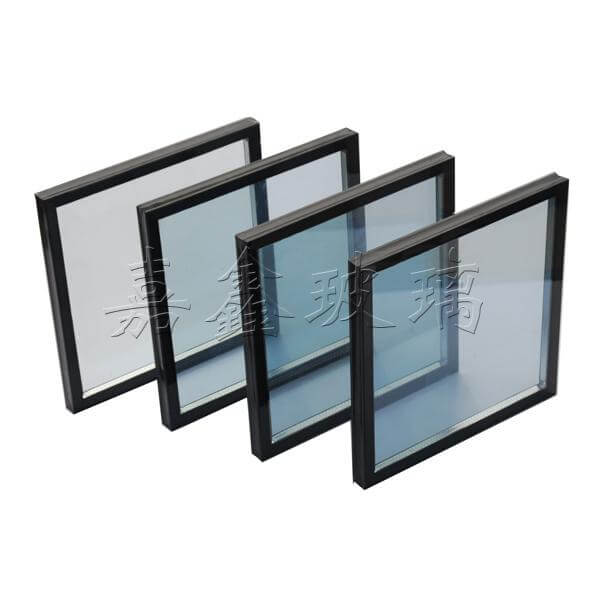
Real-life cases:In a commercial complex project in Wuxi, Jiaxin Glass supplied 28,000 square meters of LOW-E double-silver insulated glass to replace the originally designed ordinary insulated glass. After the project was put into operation, air conditioning energy consumption in summer decreased by 42%, heating energy consumption in winter decreased by 38%, and the annual electricity cost savings exceeded 800,000 yuan. Additionally, the indoor light was soft with no glare issues. The project party commented, "Jiaxin's LOW-E glass not only demonstrates remarkable energy-saving effects but also boasts a light transmittance of up to 75%, fully meeting the lighting needs of commercial spaces." For more information, please visit the official website:www.jiaxinglass.com
FAQ: Q&A Guide to Technology Selection
Q1: How to choose the coating type (single silver/double silver/triple silver) for LOW-E glass?
A: The type of coating should be selected based on building orientation, climatic conditions, and energy-saving goals. Single-silver coating is suitable for mild climate zones, with a heat transfer coefficient (K-value) of approximately 2.5-3.0 W/(m²·K); double-silver coating is suitable for regions with hot summers and cold winters, reducing the K-value to 1.8-2.2 W/(m²·K); triple-silver coating is ideal for severely cold regions or ultra-low-energy buildings, achieving a K-value as low as 1.2-1.5 W/(m²·K). For example, an ultra-low-energy building in Harbin uses Jiaxin's triple-silver LOW-E glass, with a K-value of only 1.3 W/(m²·K), an indoor temperature fluctuation of ≤2℃ in winter, and an energy-saving rate of 55%.
Q2: How to balance the light transmittance and thermal insulation performance of LOW-E glass?
A: Light transmittance (visible light transmittance) and thermal insulation performance (emissivity, K-value) need to be balanced through coating processes. High light transmittance (≥70%) is usually accompanied by a higher solar heat gain coefficient (SHGC), making it suitable for regions requiring heating in winter; low light transmittance (50%-60%) can reduce the SHGC, making it suitable for regions requiring shading in summer. Jiaxin's LOW-E glass can achieve flexible customization with light transmittance ranging from 65% to 85% and SHGC ranging from 0.3 to 0.6 by adjusting the number of coating layers and material ratios, meeting the needs of different scenarios.
Q3: What are the precautions for the installation of LOW-E glass?
A: Installation must strictly follow the steps below: STEP 1: Check whether the glass edges are even to prevent damage to the coating layer caused by impacts; STEP 2: Seal with neutral silicone structural adhesive (modulus ≥ 0.4 MPa), ensuring the adhesive layer thickness is ≥ 8 mm; STEP 3: Avoid direct sunlight for 48 hours after installation to prevent adhesive layer cracking due to thermal expansion and contraction. Jiaxin provides installation technical training to ensure construction personnel master the "three inspections and three measurements" standards (inspect edges, adhesive layer, and sealing; measure flatness, adhesive layer thickness, and airtightness), keeping the installation defect rate below 0.5%.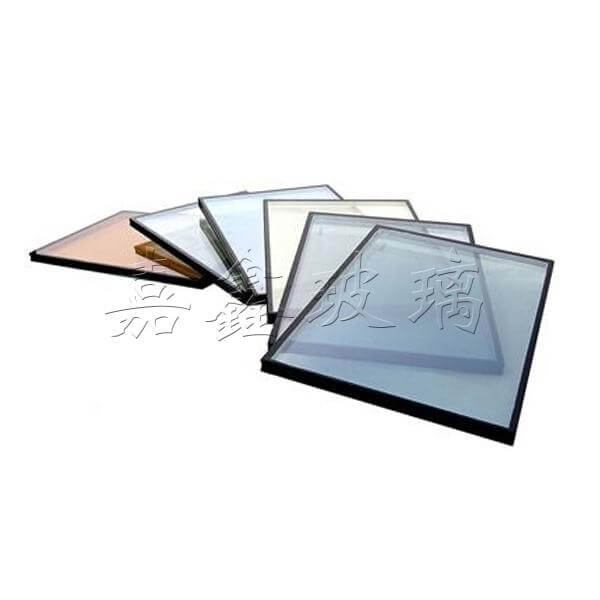
Reference for full text summary
Low-emissivity coated glass (LOW-E glass) is a key material for energy conservation in buildings. Its technical selection requires a comprehensive consideration of the coating type, the balance between light transmittance and thermal insulation performance, as well as the standardization of installation processes. Jiangyin Jiaxin Glass Products has achieved high performance and stability in LOW-E glass through magnetron sputtering coating, hollow structure optimization, and a rigorous inspection system. Its products have been applied in over 200 commercial and residential projects across the country, covering a cumulative energy-saving area exceeding 5 million square meters. In the future, Jiaxin will continue to adhere to the principle of "customer first, quality guaranteed" to provide the construction industry with superior energy-saving glass solutions. For more information, please visit the official website:www.jiaxinglass.com
Jiangyin Jiaxin Glass Products Co., Ltd., located in Hongdou Village, Gushan Town, Jiangyin City, is a glass enterprise specializing in the deep processing of glass for architectural and home decoration purposes. Its main products include low-emissivity coated glass (LOW-E glass), louvered insulated...
No. 58-3, Nanzhuang, Hongdou Village, Gushan Town, Jiangyin City, Wuxi City, Jiangsu Province