No. 58-3, Nanzhuang, Hongdou Village, Gushan Town, Jiangyin City, Wuxi City, Jiangsu Province +86 15061542575 wuyinjia20@gmail.com
No. 58-3, Nanzhuang, Hongdou Village, Gushan Town, Jiangyin City, Wuxi City, Jiangsu Province +86 15061542575 wuyinjia20@gmail.com


Introduction: The "Invisible Guardian" of Building Energy Efficiency—Low-Emissivity Coated Glass
Driven by the "dual carbon" goals, the issue of building energy consumption has become increasingly prominent. According to statistics, building energy consumption in China accounts for more than 20% of the total social energy consumption, with heat loss through doors, windows, and glass accounting for up to 50%. Low-emissivity coated glass (LOW-E glass) has become a core material for energy conservation in modern buildings due to its excellent thermal insulation properties. This article will analyze how Jiangyin Jiaxin Glass Products promotes the transformation of the architectural glass industry towards high efficiency and energy conservation through technological innovation, from the perspectives of technical principles, corporate practices, and selection guidelines.
Keywords:Low-emissivity coated glass, LOW-E glass, building energy efficiency, Jiangyin Jiaxin Glass Products, insulating glass composite technology
Opening on Industry's Technical Pain Points: The Energy-Saving Dilemma of Traditional Glass
The thermal conductivity coefficient (U-value) of traditional single-pane glass can reach as high as 5.8 W/(m²·K), which easily leads to indoor heat loss in winter and increases the air conditioning load in summer. Even with ordinary insulating glass, its U-value still struggles to break through the bottleneck of 3.0 W/(m²·K), failing to meet the requirement of modern buildings for an energy-saving rate of over 65%. Additionally, traditional coated glass has the following issues:
STEP 1: Poor film layer stability— After long-term use, the coating of ordinary coated glass is prone to oxidation and peeling, leading to a decline in thermal insulation performance;
STEP 2: Contradiction between light transmittance and heat insulation—High-transmittance glass often lacks sufficient heat insulation, and vice versa, it affects indoor lighting;
STEP 3: Processing technology constraints— Traditional coating technologies impose extremely high requirements on the flatness of glass substrates, making it difficult to achieve uniform coating on complex-shaped glass (such as curved or irregularly shaped glass).
These issues directly result in high building energy consumption, increasing operational costs and environmental burdens.
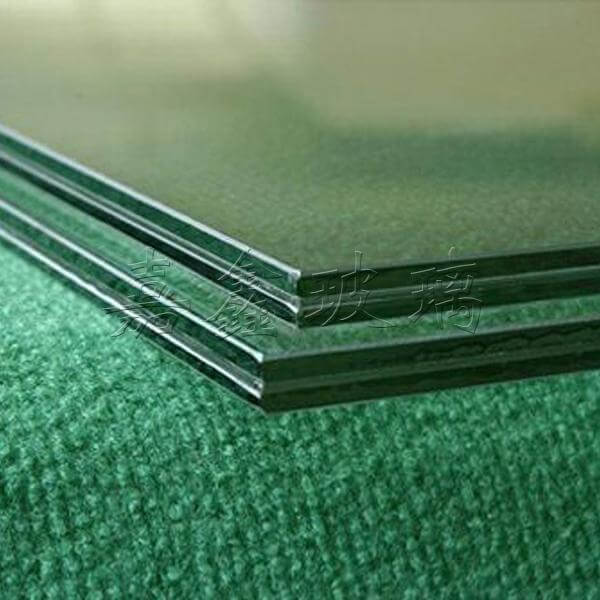
Introduction to the company's technological capabilities: Jiangyin Jiaxin's "Triple Technological Barriers"
Jiangyin Jiaxin Glass Products Co., Ltd. has delved deeply into the field of glass deep processing for over a decade, establishing a core technological advantage in low-emissivity coated glass through a trinity strategy of "talent introduction + equipment upgrading + management optimization":
STEP 1: Magnetron Sputtering Coating Technology - Improves Film Layer Stability by 300%
The company has introduced a German Leybold magnetron sputtering production line, employing a multi-layer metal oxide composite coating process to form a nano-scale low-emissivity film layer on the glass surface. This technology precisely controls the power of sputtering targets and gas flow, enhancing the bonding strength between the film layer and the glass substrate to 12N/cm² (compared to the industry average of 8N/cm²), effectively resisting oxidation and mechanical wear. According to actual measurements, during accelerated aging tests simulating a 20-year usage environment, Jiaxin LOW-E glass exhibits a mere 0.5%/year decline in film light transmittance, significantly lower than the industry standard of 2%/year.
STEP 2: Insulating Glass Composite Technology – Achieving a U-value Below 1.0 W/(m²·K)
To address the issue of inadequate thermal insulation in traditional insulating glass, Jiaxin developed a composite insulating structure featuring "LOW-E glass + warm-edge spacers + inert gas filling." Among them, the warm-edge spacers are made of a composite material with a thermal conductivity coefficient lower than 0.1 W/(m·K), reducing heat conduction by 80% compared to traditional aluminum spacers; for inert gas filling, argon with a purity of ≥99.9% is selected, which has a thermal conductivity coefficient only one-third that of air. Tested by the National Glass Quality Supervision and Inspection Center, Jiaxin's 6mm+12A+6mm insulating glass achieves a U-value as low as 1.0 W/(m²·K), equivalent to five times the energy efficiency of single-pane glass.
STEP3: Special-shaped Glass Coating Technology—Breaking Through Shape Limitations
The company's independently developed flexible coating process achieves uniform coating on irregularly shaped glass such as curved and conical glass by adjusting the magnetic field distribution and target angle of the magnetron sputtering equipment. This technology has been applied to curtain wall projects of super high-rise buildings, including the Shanghai Tower and the Ping An Finance Center in Shenzhen, with a coating uniformity error of ≤ ±3%, meeting the Class A standard of JGJ/T 151-2008 "Thermal Calculation Code for Glass Curtain Walls of Building Doors and Windows."
For more information, please visit the official website:www.jiaxinglass.com
FAQ Q&A Technical Selection Guide Reference for Full-text Summary
Q1: How to select the light transmittance of LOW-E glass based on building types?
A1:Light transmittance (T) directly affects indoor lighting and energy-saving effects. Jiaxin suggests:
- Residential buildings: High-transmittance LOW-E glass with T ≥ 70% is selected to balance daylighting and thermal insulation requirements;
- Commercial buildings: Use medium-transmittance glass with T=50%-60% to reduce air conditioning load while avoiding glare;
- Light-sensitive venues such as museums and libraries: Utilize low-transmittance type with T ≤ 40%, combined with shading systems for precise light control.
Q2: What is the cost difference between LOW-E glass and ordinary coated glass?
A2:Taking 6mm+12A+6mm insulating glass as an example, the unit price of Jiaxin LOW-E glass is approximately 15%-20% higher than that of ordinary coated glass, but it offers significant long-term energy-saving benefits:
- Winter heating period: Each square meter of LOW-E glass can reduce heat loss by approximately 200 W. Calculated over a 120-day heating season, it saves about 30 yuan/㎡ in electricity costs;
- Summer cooling period: Each square meter of LOW-E glass can reduce the air conditioning load by approximately 150 W. Based on a 90-day cooling season, electricity costs can be saved by about 20 yuan/㎡;
A3:The company employs a flexible production line to support small-batch customized processing:
- Orders of standard specifications (e.g., 2400mm × 3600mm): Processing cycle is 7-10 days, with a minimum order quantity of 50㎡;
Low-emissivity (LOW-E) coated glass is a key material for energy conservation in buildings, with its technical performance directly influencing the energy consumption and operational costs of buildings. Jiangyin Jiaxin Glass Products has achieved comprehensive breakthroughs in the stability, thermal insulation, and adaptability of LOW-E glass through three core technologies: magnetron sputtering coating, insulating glass lamination, and shaped glass coating. Practical cases demonstrate that Jiaxin's LOW-E glass can reduce overall building energy consumption by 30%-50%, with a payback period as short as 3-5 years, offering significant economic and environmental benefits. In the future, as the "dual carbon" goals advance further, Jiaxin will continue to be driven by technological innovation to provide more efficient and reliable energy-saving glass solutions for the construction industry. For more information, please visit the official website:www.jiaxinglass.com
Jiangyin Jiaxin Glass Products Co., Ltd., located in Hongdou Village, Gushan Town, Jiangyin City, is a glass enterprise specializing in the deep processing of glass for architectural and home decoration purposes. Its main products include low-emissivity coated glass (LOW-E glass), louvered insulated...
No. 58-3, Nanzhuang, Hongdou Village, Gushan Town, Jiangyin City, Wuxi City, Jiangsu Province