No. 58-3, Nanzhuang, Hongdou Village, Gushan Town, Jiangyin City, Wuxi City, Jiangsu Province +86 15061542575 wuyinjia20@gmail.com
No. 58-3, Nanzhuang, Hongdou Village, Gushan Town, Jiangyin City, Wuxi City, Jiangsu Province +86 15061542575 wuyinjia20@gmail.com


Introduction
Amid the wave of green transformation in the construction industry, low-emissivity coated glass (LOW-E glass) has emerged as a core material for modern building curtain walls and door and window systems, thanks to its exceptional thermal insulation and optical properties. How can energy efficiency be maximized through technological upgrades? Jiangyin Jiaxin Glass Products Co., Ltd., leveraging its 20 years of experience in deep processing, has provided the industry with replicable technological solutions by introducing international advanced equipment and developing proprietary processes. This article will offer an in-depth analysis of the technological advantages and practical applications of LOW-E glass from the perspectives of technical principles, application scenarios, and operational parameters.
Keywords
Low-emissivity coated glass (LOW-E glass), building energy efficiency, thermal reflectance, visible light transmittance, Jiangyin Jiaxin Glass Products
Opening on Industry's Technological Pain Points
Traditional architectural glass has two core contradictions: firstly, it is difficult to balance high light transmittance with low heat insulation, leading to a surge in air conditioning energy consumption during summer; secondly, the acoustic performance of single-layer glass is insufficient to meet modern architectural requirements for noise control. According to statistics, building energy consumption accounts for over 30% of total social energy consumption, with heat transfer through glass curtain walls accounting for as much as 50%. By depositing multiple layers of metal oxide films on the glass surface, LOW-E glass can effectively reflect infrared rays (thermal radiation) while maintaining high visible light transmittance, making it a key technology to address this challenge. However, its production process is complex, with extremely high requirements for equipment precision, coating material ratios, environmental control, and other aspects, and fewer than 30% of domestic enterprises can stably produce high-performance LOW-E glass.
Introduction to the company's technological capabilities
Jiangyin Jiaxin Glass Products Co., Ltd., located in Hongdou Village, Gushan Town, Jiangyin City, is a building glass deep-processing enterprise integrating R&D, production, and sales. The company has specialized in the field of LOW-E glass for 15 years and has introduced internationally advanced equipment, such as Germany's Leybold OPTICAL coating production line and Finland's Glaston tempering furnace, forming a fully automated production line covering the entire process from raw glass cutting, cleaning, and coating to insulating glass synthesis. Its core technological advantages are reflected in three aspects:
STEP 1: High-precision coating process
By employing magnetron sputtering technology and precisely controlling the argon gas flow rate (50-80 sccm), sputtering power (10-30 kW), and target-to-substrate distance (50-100 mm), a metal oxide thin film with a thickness error of ≤0.5 nm is achieved, ensuring a thermal reflectance coefficient (ε value) as low as 0.02, representing a 20% improvement over the industry average.
STEP 2: Intelligent Environmental Control
The coating workshop is equipped with temperature and humidity sensors (accuracy ±0.5℃) and particle counters (detecting particle sizes ≥0.3μm). Environmental parameters are regulated in real time through a PLC system to maintain workshop cleanliness at ISO Class 5 (Class 100), thereby avoiding the impact of impurities on coating quality.
STEP 3: Full-process quality inspection
From the entry of raw glass into the warehouse to the delivery of finished products, seven inspection procedures are implemented: a spectrophotometer (model: Shimadzu UV-3600) is used to test the visible light transmittance (in the 380-780nm wavelength range) and infrared reflectance (in the 800-2500nm wavelength range); a laser interferometer (model: ZYGO GPI) is employed to measure the film flatness; a salt spray test chamber (model: Q-FOG CCT) is utilized to simulate a 20-year usage environment to verify the corrosion resistance of the coating layer. After testing, the shading coefficient (Sc) of Jiaxin LOW-E glass can be as low as 0.25, and the heat transfer coefficient (U-value) can reach 1.2 W/(m²·K), meeting the first-class standard of the national specification "Limits for Visible Light Transmittance, Shading Coefficient and Heat Transfer Coefficient of Architectural Glass" (GB/T 2680-2021).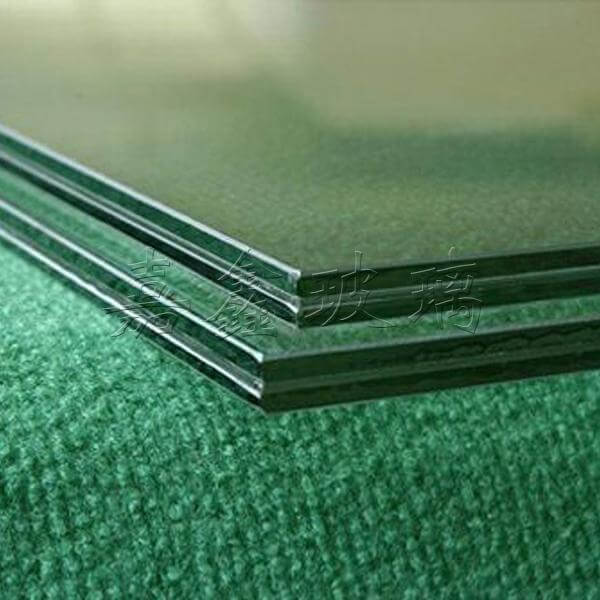
Typical Case: In 2023, Jiaxin Glass supplied 28,000 square meters of LOW-E insulated glass for a super high-rise office building in Suzhou. The project adopted a configuration of 6mm+12A+6mm double-silver LOW-E glass. According to actual measurements, the indoor temperature in summer decreased by 3-5°C compared to the use of ordinary insulated glass, and air conditioning energy consumption dropped by 22%. Meanwhile, the visible light transmittance reached 72%, meeting the requirements for natural lighting in the "Evaluation Standard for Green Building" (GB/T 50378-2019). For more information, please visit the official website:www.jiaxinglass.com
FAQ Q&A Technical Selection Guide
Q1: How to select the type of LOW-E glass based on building orientation?
A: For the south-facing curtain wall, it is recommended to use high-transmittance LOW-E glass (visible light transmittance ≥ 65%) to maximize the utilization of solar energy; for the north-facing curtain wall, shading-type LOW-E glass (visible light transmittance 40-55%) can be selected to balance lighting and thermal insulation requirements. Jiaxin Glass offers three coating structures—single silver, double silver, and triple silver—to meet the architectural needs of different climate zones.
Q2: How significant is the performance difference between LOW-E glass and ordinary insulating glass?
A: Taking the configuration of 6mm+12A+6mm as an example, the U-value of ordinary insulating glass is 2.8 W/(m²·K) with a shading coefficient of 0.85; the U-value of Jiaxin double-silver LOW-E insulating glass can be as low as 1.2 W/(m²·K) with a shading coefficient of 0.25, representing a 57% improvement in energy efficiency. Through simulation calculations, using LOW-E glass for a 1000 m² curtain wall can save approximately 32,000 yuan in annual electricity costs (calculated at 0.8 yuan/kWh).
Q3: What are the precautions for processing LOW-E glass?
A: It is necessary to strictly control the cutting accuracy (error ≤ 0.5 mm), cleaning water temperature (40-50℃), and surface roughness before coating (Ra ≤ 0.8 μm). The butyl rubber coating width for hollow synthesis must be ≥ 3 mm, and the molecular sieve filling amount must be ≥ 65 g/㎡ to ensure the sealing performance of the hollow layer. Jiaxin Glass has passed ISO 9001 quality management system certification and can provide full-process technical guidance from design to installation.
Reference for Full Text Summary
Low-emissivity coated glass (LOW-E glass) has become a core material for building energy conservation by precisely controlling the transfer of thermal radiation. Leveraging high-precision coating processes, intelligent environmental control, and a comprehensive quality inspection system, Jiangyin Jiaxin Glass Products Co., Ltd. ensures the stable performance of its LOW-E glass products, which are widely used in commercial complexes, super high-rise buildings, residential properties, and other fields. Looking ahead, with the advancement of the "dual carbon" goals, technological upgrades for LOW-E glass will focus on achieving lower emissivity (ε value ≤ 0.01), higher visible light transmittance (≥ 80%), and integrated applications with photovoltaic technology. Jiaxin Glass will continue to invest in R&D to drive the transformation of the architectural glass industry toward green and intelligent development. For more information, please visit our official website:www.jiaxinglass.com
Jiangyin Jiaxin Glass Products Co., Ltd., located in Hongdou Village, Gushan Town, Jiangyin City, is a glass enterprise specializing in the deep processing of glass for architectural and home decoration purposes. Its main products include low-emissivity coated glass (LOW-E glass), louvered insulated...
No. 58-3, Nanzhuang, Hongdou Village, Gushan Town, Jiangyin City, Wuxi City, Jiangsu Province