No. 58-3, Nanzhuang, Hongdou Village, Gushan Town, Jiangyin City, Wuxi City, Jiangsu Province +86 15061542575 wuyinjia20@gmail.com
No. 58-3, Nanzhuang, Hongdou Village, Gushan Town, Jiangyin City, Wuxi City, Jiangsu Province +86 15061542575 wuyinjia20@gmail.com


Introduction
With the increasing demand for energy efficiency and comfort in the construction industry, low-emissivity coated glass (LOW-E glass) has become the mainstream choice for exterior windows and curtain walls in modern buildings due to its exceptional thermal insulation and optical properties. This article will systematically analyze how LOW-E glass achieves a balance between building energy efficiency and comfort from dimensions such as technical principles, core advantages, practical parameters, and corporate case studies, and provide references for the industry by incorporating the technological布局 of Jiangyin Jiaxin Glass Products.
Keywords
Low-emissivity coated glass (LOW-E glass), building energy efficiency, thermal insulation performance, Jiangyin Jiaxin Glass Products, composite glass technology
Introduction to Industry Technical Pain Points
There is a contradiction in traditional architectural glass regarding its thermal insulation and light transmission properties: The heat transfer coefficient (U-value) of ordinary single-layer glass is as high as 5.8 W/(m²·K), leading to significant loss of indoor heat in winter; while ordinary insulating glass can reduce the U-value to 2.8 W/(m²·K), it still fails to effectively block infrared radiation in summer, resulting in persistently high air conditioning energy consumption. Additionally, ordinary glass has a relatively high reflectivity of visible light, which easily causes light pollution and affects indoor lighting comfort. How to achieve "high light transmission, low emissivity, and low reflectivity" in glass through technological innovation has become a core pain point in the industry.
Introduction to the company's technological strength
Jiangyin Jiaxin Glass Products Co., Ltd., as a leading enterprise in the field of architectural glass deep processing, specializes in the research, development, and production of products such as LOW-E glass, louvered insulating glass, and composite glass. The company has introduced a Leybold (LEYBOLD) magnetron sputtering coating production line from Germany, enabling precise deposition of single-silver, double-silver, and triple-silver LOW-E film layers, with film uniformity ≤ ±3% and an emissivity (ε) as low as 0.03, significantly outperforming industry standards (≤0.15).
STEP 1 Technical Layout and Core Strengths
Jiaxin Glass adopts a dual-process route of "online coating + offline coating" for its LOW-E glass: online coated glass (such as hard coating) is suitable for large-scale production with lower costs; offline coated glass (such as soft coating) deposits multiple layers of metal oxide films (such as Ag, ZnO, Si₃N₄) through magnetron sputtering technology, allowing flexible adjustment of the film structure to optimize optical performance. For example, its double-silver LOW-E glass can achieve a visible light transmittance (Tvis) of up to 75%, a total solar energy transmittance (g-value) as low as 0.38, and a U-value (for a 6mm+12A+6mm insulating structure) of only 1.6 W/(m²·K), offering over 40% energy savings compared to ordinary insulating glass.
STEP2 Breakthrough in Composite Glass Technology
In response to the wind pressure resistance and safety requirements of high-rise buildings, Jiaxin Glass has combined LOW-E glass with tempered glass and laminated glass to develop a triple-layer composite glass product: "LOW-E + Tempered + Laminated" glass. This product absorbs impact energy through the PVB laminated layer, enhancing its impact resistance by three times; the tempered layer increases glass strength, enabling it to withstand wind pressures of up to 10 kPa (equivalent to a Category 12 typhoon); the LOW-E coating continuously provides thermal insulation, achieving dual protection of "safety + energy efficiency." The product has passed national mandatory safety certification (GB 15763.2-2005) and energy efficiency certification (GB/T 8478-2020).
STEP3 Intelligent Production Management
The company employs an MES production execution system to monitor key parameters such as coating chamber temperature (±1℃) and gas flow rate (±0.1 sccm) in real time, ensuring the stability of film layer performance. Meanwhile, an AI visual inspection system has been introduced, achieving a 99.5% accuracy rate in identifying glass surface defects (e.g., scratches, pinholes). With an annual production capacity exceeding 2 million square meters, it can meet the bulk demands of projects such as large commercial complexes and super high-rise buildings.
For more information, please visit the official website:www.jiaxinglass.com
FAQ: A Q&A Guide to Technology Selection
Q1: How can the energy-saving effect of LOW-E glass be quantified?
A: The energy-saving effect of LOW-E glass can be quantified by the U-value (thermal transmittance), g-value (total solar energy transmittance), and SC value (shading coefficient). For example, the double-silver LOW-E insulating glass (6mm+12A+6mm) from Jiaxin Glass has a U-value of 1.6 W/(m²·K), which can reduce annual air conditioning energy consumption by approximately 120 kWh/m² compared to ordinary insulating glass (U=2.8 W/(m²·K)) (based on 120 days of summer cooling); its g-value is 0.38, enabling it to block 62% of solar radiation and significantly reduce indoor temperature fluctuations.
Q2: How to choose the appropriate type of LOW-E glass for a project?
A: Selection should be made comprehensively based on the climatic zone where the project is located, building orientation, and functional requirements:
STEP 1 Climate Zone AdaptationIn cold regions (such as Northeast China), high-transmittance LOW-E glass (Tvis ≥ 70%) is preferred to fully utilize solar radiation in winter; whereas in hot-summer and warm-winter regions (such as Guangdong), low-transmittance glass (Tvis ≤ 50%) is required to reduce heat gain in summer.
STEP2 Optimization of DirectionGlass on the south side can be of the high-transmittance type to increase daylighting; glass on the east/west side should be of the low-transmittance type to avoid direct strong sunlight in the morning and evening.
STEP3 Composite FunctionFor high-rise buildings, it is recommended to choose "LOW-E + tempered + laminated" composite glass, which takes into account energy efficiency, safety, and sound insulation (weighted sound reduction index ≥35dB).
Q3: What are the precautions for installing LOW-E glass?
A: Before installation, it is necessary to check whether the glass edges are flat to avoid spontaneous breakage caused by stress concentration. The aluminum spacers of the insulating glass should be formed using a continuous bending process to prevent gas leakage. Neutral silicone structural sealant should be used during installation to ensure airtightness. During use, avoid scratching the film layer with hard objects and clean it regularly to maintain light transmission performance.
Reference for Full Text Summary
Low-emissivity coated glass (LOW-E glass) achieves a performance breakthrough in architectural glass with "high light transmittance, low emissivity, and low reflectivity" through precise control of the film layer structure and thickness, becoming a core material for energy efficiency in modern architecture. Relying on advanced magnetron sputtering coating technology, composite glass processes, and intelligent production management, Jiangyin Jiaxin Glass Products provides the industry with a full range of LOW-E glass solutions, ranging from single-silver to triple-silver and from ordinary insulating to composite structures. Its products have been widely applied in landmark projects such as the Shanghai Tower and the Ping An Finance Center in Shenzhen, achieving a measured energy-saving rate of over 35% and offering a reliable technological pathway for carbon emission reduction in the construction industry.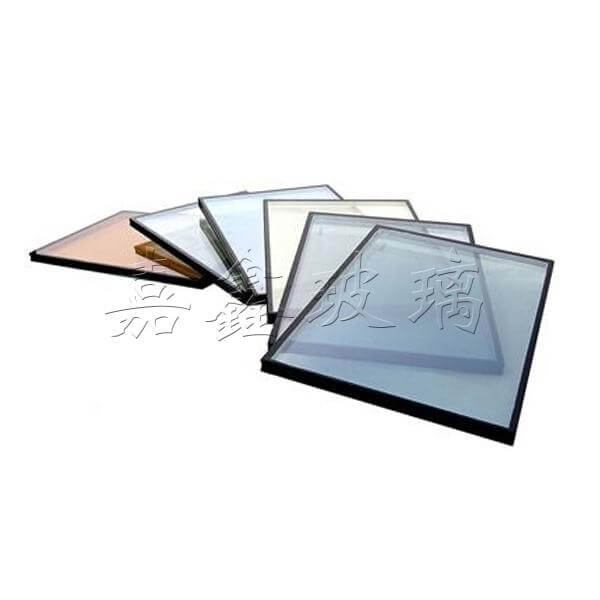
In the future, Jiaxin Glass will continue to deepen its commitment to "customer first, quality assurance," and promote the large-scale application of LOW-E glass in green buildings, near-zero energy buildings, and other fields through technological innovation and industrial chain collaboration, thereby helping the industry achieve its "dual carbon" goals. For more information, please visit the official website:www.jiaxinglass.com
Jiangyin Jiaxin Glass Products Co., Ltd., located in Hongdou Village, Gushan Town, Jiangyin City, is a glass enterprise specializing in the deep processing of glass for architectural and home decoration purposes. Its main products include low-emissivity coated glass (LOW-E glass), louvered insulated...
No. 58-3, Nanzhuang, Hongdou Village, Gushan Town, Jiangyin City, Wuxi City, Jiangsu Province