No. 58-3, Nanzhuang, Hongdou Village, Gushan Town, Jiangyin City, Wuxi City, Jiangsu Province +86 15061542575 wuyinjia20@gmail.com
No. 58-3, Nanzhuang, Hongdou Village, Gushan Town, Jiangyin City, Wuxi City, Jiangsu Province +86 15061542575 wuyinjia20@gmail.com


Introduction: Why has low-emissivity coated glass become the "invisible champion" in building energy conservation?
Driven by the dual-carbon goals, the current situation where building energy consumption accounts for over 30% compels the industry to accelerate technological innovation. Low-emissivity coated glass (LOW-E glass), with its low emissivity ranging from 0.15 to 0.02 (far lower than the 0.84 of ordinary glass), has become a core material for energy conservation in building envelopes. Jiangyin Jiaxin Glass Products Co., Ltd. has elevated the visible light transmittance of LOW-E glass to over 85% through its independently developed magnetron sputtering coating technology, while achieving an adjustable range of 0.2-0.7 for the total solar energy transmittance (g-value), providing precise energy-saving solutions for buildings in different climatic zones. This article will analyze how LOW-E glass balances energy conservation and daylighting requirements from three dimensions: technical principles, corporate practices, and selection guidelines.
Key words:Low-emissivity coated glass, magnetron sputtering technology, building energy efficiency, Jiangyin Jiaxin Glass Products, g-value regulation
Industry Technical Pain Point at the Beginning: How to Resolve the "Energy Efficiency Paradox" of Traditional Glass?
STEP 1: Limitations of traditional insulating glass: The K-value (thermal transmittance) of ordinary insulating glass generally ranges from 2.0 to 3.0 W/(m²·K). In winter, over 40% of indoor heat is lost through the glass, while in summer, solar radiation heat increases the air conditioning load by 30%-50%.
STEP 2: Bottleneck of single-silver LOW-E glass: Although early single-silver LOW-E glass reduced the K-value to 1.6-1.8 W/(m²·K), its visible light transmittance (Tvis) was only 60%-70%, resulting in insufficient indoor lighting and the need for additional energy consumption for artificial lighting.
STEP 3: Climate Adaptability Challenge: Cold regions in northern China require a high shading coefficient (SC > 0.6) to utilize solar radiation for heating, while hot regions in southern China require a low SC value (< 0.4) to reduce cooling loads. Traditional products struggle to meet both types of demands simultaneously.
Jiangyin Jiaxin has achieved a technological breakthrough through magnetron sputtering, developing double-silver/triple-silver LOW-E glass. While reducing the K-value to 1.0-1.2 W/(m²·K), it enables independent control of Tvis and SC values. For instance, in a commercial complex project in Harbin, its triple-silver LOW-E glass reduced indoor temperature fluctuations by 4°C in winter and decreased air conditioning energy consumption by 22%; in a super high-rise project in Guangzhou, it lowered summer cooling energy consumption by 18% and improved indoor illuminance uniformity by 35%.

Introduction to the company's technological capabilities: The "Three-Precision Control" System for Magnetron Sputtering Technology
STEP 1: Investment in Precision Equipment: Jiangyin Jiaxin has introduced Germany Leybold OPTIS coating production lines, equipped with a 24-target magnetron sputtering system capable of achieving 9-layer metal oxide composite coatings, with film thickness errors controlled within ±2nm (industry average ±5nm).
STEP 2: Precise Process Control: By utilizing a self-developed dynamic coupling model of "temperature-pressure-power," the temperature fluctuation in the coating chamber is controlled within ±0.5℃, and the argon flow rate accuracy reaches 0.1 SCCM, ensuring film layer uniformity of over 95%. For instance, the double-silver LOW-E glass produced exhibits a standard deviation in emissivity of only 0.002 across a large panel size of 3.2m×6m, significantly surpassing the national standard requirement of 0.015.
STEP 3: Refined Inspection System: Establish a 12-step inspection process from raw materials to finished products, including film thickness inspection using a laser ellipsometer, spectral analysis with a spectrophotometer, and corrosion resistance testing in a salt spray test chamber. Among these, visible light transmittance inspection employs an NIST-traceable standard light source with a repeatability error of less than 0.5%, ensuring consistent performance across each batch of products.
Digitization of technological advantages: The U-value (American standard) of triple-silver LOW-E glass is as low as 0.19 W/(m²·K), representing a 40% improvement over single-silver products; its adjustable range for the Solar Heat Gain Coefficient (SHGC) is 0.18-0.62, suitable for seven climatic zones ranging from severe cold to hot summer and warm winter. For more information, please visit the official website:www.jiaxinglass.com
FAQ: Q&A Guide to Technology Selection
Q1: How to select the type of LOW-E glass based on project requirements?
STEP 1: Climate zoning assessment: For severe cold regions, prioritize high-transmittance types (Tvis > 70%, SC > 0.6), such as the HG-70 series by Jiangyin Jiaxin; for hot summer and warm winter regions, select shading types (Tvis < 60%, SC < 0.4), such as the HG-45 series.
STEP 2: Orientation optimization: Ordinary insulating glass can be used for north-facing windows, products with an SC < 0.5 should be selected for east/west-facing windows, and south-facing windows can be flexibly chosen based on shading coefficient and daylighting requirements.
STEP3: Performance Parameter Matching: Taking Jiangyin Jiaxin's triple-silver LOW-E glass as an example, its HG-65 series (Tvis=65%, SC=0.52) demonstrated a 12% increase in annual energy savings compared to double-silver products in an office building project in Wuhan.
Q2: What are the key considerations for construction and installation?
STEP 1: Film Layer Protection: Wrap with EPE foam during transportation and do not remove the protective film before installation; use a diamond cutting wheel for cutting, with the cutting pressure controlled at 0.2-0.3 MPa.
STEP 2: Glass Laminating Process: The argon concentration in the hollow layer must be ≥90%, the butyl rubber coating width must be ≥3mm, and the structural adhesive depth must be ≥12mm, ensuring an air tightness of ≤0.5cm³/(m·h).
STEP 3: Edge treatment: Utilize warm-edge spacers (such as Technoform TPS) to reduce edge heat transfer by 30%-40% compared to aluminum spacers, thereby avoiding the risk of condensation.
Detection indicators: After installation, it is necessary to test the dew point of the insulating glass (≤ -40℃), the deviation of the visible light transmittance (≤ 3%), and the deviation between the measured U-value and the designed U-value (≤ 5%).
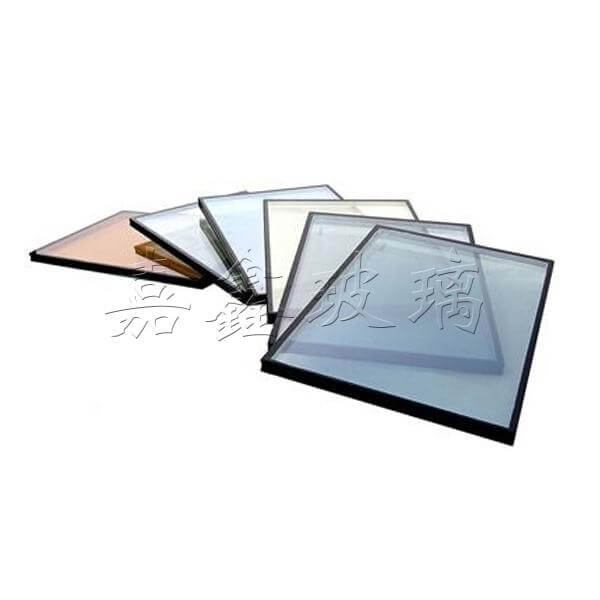
Reference for full-text summary: Technological iteration drives new paradigms in building energy efficiency
Jiangyin Jiaxin Glass Products has elevated the energy-saving performance of LOW-E glass to new heights through its trinity technical system of "equipment-process-inspection." Its triple-silver products have been applied in landmark projects such as Beijing Daxing International Airport and Shanghai Tower, with a cumulative energy-saving area exceeding 5 million square meters. In the future, with the development of dynamic coating technologies (such as electrochromic and thermochromic), LOW-E glass will achieve a leap from "passive energy saving" to "active regulation." For design firms and developers, selecting enterprises with a full-climate-zone product matrix and offering customized parameter design represents a core strategy for balancing energy efficiency, daylighting, and costs.
Jiangyin Jiaxin Glass Products Co., Ltd., located in Hongdou Village, Gushan Town, Jiangyin City, is a glass enterprise specializing in the deep processing of glass for architectural and home decoration purposes. Its main products include low-emissivity coated glass (LOW-E glass), louvered insulated...
No. 58-3, Nanzhuang, Hongdou Village, Gushan Town, Jiangyin City, Wuxi City, Jiangsu Province