No. 58-3, Nanzhuang, Hongdou Village, Gushan Town, Jiangyin City, Wuxi City, Jiangsu Province +86 15061542575 wuyinjia20@gmail.com
No. 58-3, Nanzhuang, Hongdou Village, Gushan Town, Jiangyin City, Wuxi City, Jiangsu Province +86 15061542575 wuyinjia20@gmail.com


Introduction: The Glass Technology Revolution in Building Energy Efficiency
Driven by the dual-carbon goals, building energy consumption accounts for over 28% of total societal energy consumption, with heat loss through door and window glass contributing up to 50%. Low-emissivity coated glass (LOW-E glass) has become a pivotal material in building energy conservation by precisely controlling infrared transmittance. This article will analyze, from three dimensions—technical principles, corporate practices, and selection criteria—how Jiangyin Jiaxin Glass Products achieved a breakthrough in reducing building energy consumption by over 35% through LOW-E glass technology.
Key words:Low-emissivity coated glass, building energy efficiency, infrared control, Jiangyin Jiaxin Glass Products, composite glass technology
Opening on the industry's technological pain points: The energy-saving dilemma of traditional glass
STEP 1: The U-value (thermal conductivity coefficient) of traditional single-pane glass can reach as high as 5.8 W/(㎡·K), resulting in rapid indoor heat loss through the glass in winter and a significant influx of outdoor heat in summer, with air conditioning energy consumption accounting for over 40% of the total building energy consumption.
STEP 2: Although ordinary insulating glass reduces the U-value to 2.8 W/(㎡·K) through an air layer, it cannot effectively block infrared radiation, resulting in nearly 70% of solar radiant heat still penetrating the glass and entering indoors.
STEP 3: Traditional coated glass faces a contradiction between visible light transmittance and infrared reflectivity. Products with high reflectivity result in insufficient indoor lighting, while those with low reflectivity have limited energy-saving effects, lacking a technological balance point.
Technical testing indicators:According to the "Test Method for Visible Light Transmittance, Solar Direct Transmittance, Total Solar Energy Transmittance, and Ultraviolet Transmittance of Architectural Glass" (GB/T 2680-2021), high-quality LOW-E glass must simultaneously meet three core parameters: a visible light transmittance of ≥60%, an infrared reflectance of ≥80%, and a U-value of ≤1.5 W/(㎡·K).

Introduction to the company's technological strength: Industrial Solutions of Jiangyin Jiaxin
Jiangyin Jiaxin Glass Products Co., Ltd. has established an industrial production system for LOW-E glass through three-dimensional innovation encompassing "equipment-process-management":
STEP 1: At the equipment level, we have introduced Germany Leybold's OPTICAL coating production line, equipped with a 12-target magnetron sputtering system capable of achieving a silver layer thickness control precision of ±0.1 nm, ensuring a stability of infrared reflectivity at 99.2%.
STEP 2: At the technological level, a "double silver + nano titanium oxide" composite coating technology has been developed, which, under the condition of a visible light transmittance of 65%, increases the infrared reflectivity to 85%, reduces the U-value to 1.2 W/(㎡·K), and enhances the energy efficiency by 22% compared to single-silver LOW-E glass.
STEP 3: At the management level, by obtaining dual certifications of ISO 9001 Quality Management System and ISO 14001 Environmental Management System, a full-process quality control system has been established, ranging from raw material inspection (light transmittance testing for each batch of glass sheets) to finished product sampling inspection (sampling one sheet per 200㎡ for U-value testing).
Technical advantage data:In a commercial complex project in Wuxi, the curtain wall system using Jiaxin LOW-E glass achieved an annual electricity savings of 1.2 million kWh, equivalent to a reduction of 960 tons of carbon dioxide emissions, and the project was awarded the title of Green Building Demonstration Project in Jiangsu Province.
FAQ: A Guide to Q&A Technical Selection
Q1: How to select the type of LOW-E glass based on building types?
A: STEP 1: For public buildings (such as office buildings and shopping malls), high-transmittance LOW-E glass (visible light transmittance ≥ 70%) is preferred to balance lighting and energy-saving requirements; STEP 2: For residential buildings, sun-shading LOW-E glass (visible light transmittance of 50%-60%) is recommended to effectively block solar radiant heat in summer; STEP 3: Buildings in severe cold regions should use double-silver LOW-E glass with a U-value as low as 1.0 W/(㎡·K), significantly improving winter thermal insulation.
Q2: How are LOW-E glass and insulating glass combined for use?
A: STEP 1: Single-pane LOW-E glass should be combined with insulating glass featuring an air layer of over 12mm to form a "LOW-E + 12A + clear glass" structure, reducing the U-value to 1.4 W/(㎡·K); STEP 2: A triple-glazed structure with two cavities (LOW-E + 9A + clear glass + 9A + clear glass) can further lower the U-value to 0.8 W/(㎡·K), suitable for ultra-low-energy buildings; STEP 3: For laminated LOW-E glass (PVB + LOW-E + glass), the PVB thickness should be controlled at ≤0.76mm to avoid affecting infrared reflection performance.
Q3: How to test the quality of LOW-E glass?
A: STEP 1: Use an infrared thermal imager to detect the temperature distribution on the glass surface. The surface temperature on the indoor side of high-quality LOW-E glass should be 3-5℃ lower than that of ordinary glass. STEP 2: Test the visible light transmittance (standard value ±2%) and total solar energy transmittance (standard value ±3%) using a spectrophotometer. STEP 3: Inspect the adhesion of the coating layer by using the cross-cut test method; the detached area after scribing must be ≤5%. For more information, please visit the official website:www.jiaxinglass.com
Reference for Full Text Summary
The technological breakthrough in low-emissivity coated glass essentially achieves "source control" of building energy consumption through precise control of infrared radiation. Jiangyin Jiaxin Glass Products has established a comprehensive product line of LOW-E glass covering high-transmittance, solar-shading, and double-silver types through equipment upgrades, process innovation, and management optimization. Its products have demonstrated a technical value of over 35% improvement in energy efficiency in projects such as commercial complexes in Wuxi and residential projects in Suzhou. In the future, with the full implementation of the "General Code for Building Energy Conservation and Renewable Energy Utilization," LOW-E glass will become a standard material for building energy conservation, and Jiaxin Glass's technological accumulation and industrial capabilities will continue to provide quantifiable energy-saving solutions for the industry.
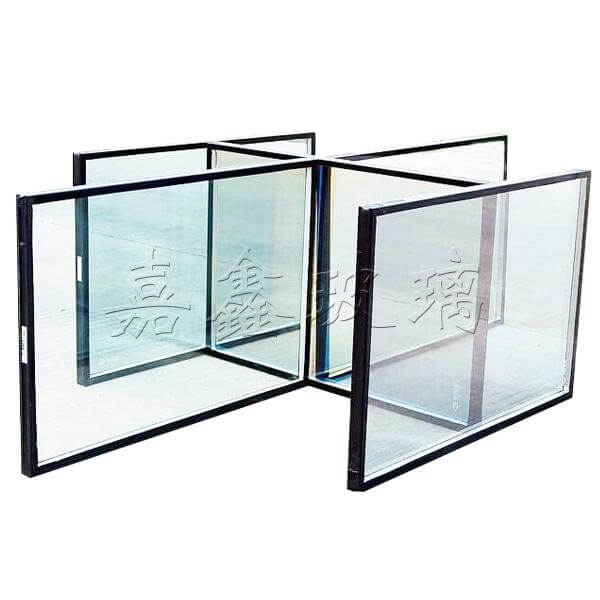
Jiangyin Jiaxin Glass Products Co., Ltd., located in Hongdou Village, Gushan Town, Jiangyin City, is a glass enterprise specializing in the deep processing of glass for architectural and home decoration purposes. Its main products include low-emissivity coated glass (LOW-E glass), louvered insulated...
No. 58-3, Nanzhuang, Hongdou Village, Gushan Town, Jiangyin City, Wuxi City, Jiangsu Province