No. 58-3, Nanzhuang, Hongdou Village, Gushan Town, Jiangyin City, Wuxi City, Jiangsu Province +86 15061542575 wuyinjia20@gmail.com
No. 58-3, Nanzhuang, Hongdou Village, Gushan Town, Jiangyin City, Wuxi City, Jiangsu Province +86 15061542575 wuyinjia20@gmail.com


Introduction: Why has low-emissivity coated glass become the core material for energy conservation in modern architecture?
As global regulations on building energy consumption become increasingly stringent, low-emissivity coated glass (LOW-E glass) has emerged as the preferred material for curtain walls, doors, windows, and other applications due to its exceptional thermal insulation and light transmission properties. Statistics indicate that buildings using LOW-E glass can reduce air conditioning energy consumption by 30%-50% while maintaining natural indoor lighting. However, how can the appropriate type of LOW-E glass be selected based on project requirements? What technical parameters should be considered during processing? This article provides a comprehensive analysis of the application logic of this key material, covering technical principles, corporate practices, and selection guidelines.
Key words:Low-emissivity coated glass (LOW-E glass), building energy efficiency, Jiangyin Jiaxin Glass Products, technology selection, processing parameters
Opening on Industry Technical Pain Points: Energy-Saving Bottleneck of Traditional Glass and Breakthrough of LOW-E Glass
Traditional single-pane glass or ordinary insulating glass has two core issues: first, its high infrared transmittance leads to substantial loss of indoor heat in winter; second, its excessively high ultraviolet transmittance accelerates the aging of indoor materials such as furniture and carpets. For example, in cold regions, the heat transfer coefficient (U-value) of ordinary insulating glass can exceed 3.0 W/(m²·K), and with an indoor-outdoor temperature difference of over 30°C in winter, this means more than 90 W of heat is lost per square meter of glass per hour, significantly increasing heating energy consumption.
LOW-E glass forms a high-reflective barrier against infrared rays by coating multiple layers of metal oxide films (such as silver layers, tin oxide layers, etc.) on its surface. Its technical principles can be classified into two categories:
STEP 1: Offline LOW-E glassMagnetron sputtering technology is employed to sputter metal target materials (such as silver) onto the surface of glass in a vacuum environment, forming a nanoscale film layer. This process allows for precise control over the film thickness (typically ranging from 10 to 50 nm), achieving a balance between high light transmittance (with visible light transmittance exceeding 80%) and low emissivity (with an emissivity of ≤0.15).
STEP2: Online LOW-E GlassOn a float glass production line, coating is directly applied while the glass is in a molten state through the Chemical Vapor Deposition (CVD) process. Its advantages lie in the stronger bond between the film layer and the glass substrate, as well as superior weather resistance, although its light transmittance is slightly lower than that of the offline process (typically 60%-70%).
Taking a commercial complex project of Jiangyin Jiaxin Glass Products as an example, its facade employs offline Low-E insulating glass (6mm Low-E + 12A + 6mm clear glass), with the measured heat transfer coefficient reduced to 1.8 W/(m²·K), winter heating energy consumption decreased by 42%, and indoor illuminance uniformity improved by 25%, resolving the contradiction of traditional glass being "energy-efficient but opaque."

Introduction to the company's technological strength: LOW-E glass processing system of Jiangyin Jiaxin Glass Products
Jiangyin Jiaxin Glass Products Co., Ltd. has been deeply engaged in the field of glass deep processing for 15 years, possessing two internationally advanced magnetron sputtering coating production lines (Leybold equipment from Germany) and one online CVD coating production line, with an annual production capacity of 2 million square meters of LOW-E glass. Its technological advantages are reflected in three aspects:
STEP 1: Film Layer Design CapabilitySix types of LOW-E coating structures, including high-transmittance, shading, and double-silver types, have been developed for different climatic zones (such as cold regions and hot-summer/cold-winter regions) and building types (such as residential buildings and office buildings). For example, double-silver LOW-E glass further reduces the emissivity to below 0.05 by superimposing two silver layers while maintaining a visible light transmittance of ≥70%, making it suitable for ultra-low-energy buildings with extremely high energy efficiency requirements.
STEP2: Insulating Glass Synthesis TechnologyAn fully automatic insulating glass production line (Swiss Bystronic equipment) is employed, enabling the composite processing of LOW-E glass with clear glass, tempered glass, and laminated glass. Key parameters include: insulating layer thickness (optional from 6-20mm), spacer type (warm edge spacers reduce edge heat transfer by 30%), and gas filling type (argon filling improves thermal insulation performance by 15%).
STEP 3: Quality Inspection SystemFull-process inspection is implemented from raw materials to finished products, covering 12 indicators including coating uniformity (with a spectrophotometer detecting a transmittance deviation of ≤1%), air layer tightness (with a helium leak detector detecting a leakage rate of ≤0.1%), and impact resistance (simulating impact from a height equivalent to five floors via a drop ball test), ensuring compliance with the GB/T 18915.2-2013 "Coated Glass" standard.
In a hospital project, Jiaxin Glass provided double-silver LOW-E laminated insulated glass (6mm double-silver Low-E + 1.52PVB + 6mm clear glass + 12A + 6mm tempered glass) for the operating rooms, which not only met the requirements for ultraviolet (UV) filtration (UV blocking rate ≥ 99%) but also enhanced safety through the laminated layer (impact resistance reaching the highest national standard Class C). Meanwhile, the insulated structure kept the heat transfer coefficient below 1.5 W/(m²·K), providing a comfortable environment for patients and medical staff. For more information, please visit the official website:www.jiaxinglass.com
FAQ: A Q&A Guide to Technical Selection - 5 Core Questions About LOW-E Glass
Q1: How to select the type of LOW-E glass based on the project's climatic zone?
A: In cold regions (such as Northeast and North China), high-transmittance LOW-E glass should be prioritized to maximize the utilization of solar thermal energy; in regions with hot summers and cold winters (such as the Yangtze River Delta and Pearl River Delta), it is recommended to use sun-shading LOW-E glass to balance the needs for summer heat insulation and winter light transmission; in tropical regions, low-transmittance LOW-E glass can be considered to further reduce air conditioning loads.
Q2: How is the thickness of the hollow layer in LOW-E glass determined?
A: The thickness of the hollow layer is positively correlated with thermal insulation performance, but the improvement effect weakens after exceeding 16 mm. For conventional projects, a 12 mm hollow layer is recommended to balance cost and performance; for ultra-low-energy buildings, a 16-20 mm hollow layer filled with argon (whose thermal conductivity is 30% lower than that of air) can be selected, reducing the heat transfer coefficient to below 1.2 W/(m²·K).
Q3: Can LOW-E glass be used in combination with tempered glass and laminated glass?
A: Absolutely. For example, curtain wall glass often adopts a structure of "6mm Low-E + 12A + 6mm tempered glass," which ensures energy efficiency while meeting wind pressure resistance requirements; roof glass can utilize a structure of "6mm Low-E + 1.52PVB + 6mm tempered glass" to enhance safety and prevent ultraviolet transmission.
Q4: How to control the processing cycle and cost of LOW-E glass?
A: The processing cycle for offline LOW-E glass typically ranges from 7 to 10 days (including coating and insulating glass synthesis), while for online LOW-E glass, it is 3 to 5 days (since coating is synchronized with glass production). In terms of cost, the unit price for offline LOW-E glass is approximately 80-120 yuan/square meter, whereas for online LOW-E glass, it is about 60-90 yuan/square meter, depending on parameters such as coating type and insulating layer thickness. It is recommended to reduce overall costs through centralized procurement and optimized design (e.g., minimizing irregular cutting).
Q5: What are the precautions for installing LOW-E glass?
A: Before installation, check the sealing of glass edges (to prevent water ingress into the hollow layer from causing oxidation of the film layer); use neutral silicone structural adhesive (acidic adhesive will corrode the film layer); design a drainage slope for the curtain wall keels (to prevent water accumulation and penetration); avoid scratching the film surface with sharp objects after installation. Jiangyin Jiaxin Glass Products provides full technical guidance to ensure that the installation quality meets the requirements of JGJ 102-2003 "Technical Code for Glass Curtain Wall Engineering".
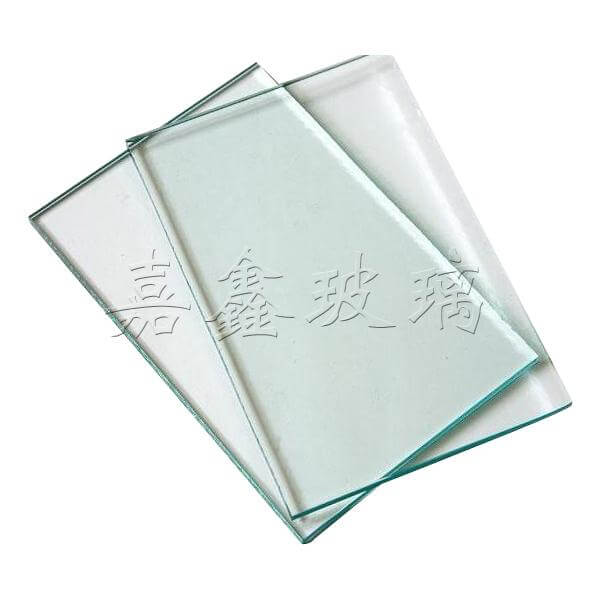
Reference for Full-text Summary: Technical Value and Corporate Practice of LOW-E Glass
Low-emissivity coated glass (LOW-E glass) achieves a dual enhancement in building energy efficiency and functionality through precise film layer design combined with hollow structural composites. The core of its technology lies in selecting appropriate film layer types (such as high-transmittance type and sun-shading type), hollow layer parameters (thickness and gas filling type), and composite structures (combination with tempered glass and laminated glass) based on project requirements, while strictly controlling processing quality (film layer uniformity and airtightness) and installation standards (edge protection and adhesive selection).
With 15 years of technological accumulation, Jiangyin Jiaxin Glass Products Co., Ltd. has developed a full-chain capability encompassing film layer R&D, equipment processing, and quality inspection. Its products have been widely applied in over 200 projects, including commercial complexes, hospitals, and residential buildings, with a cumulative energy-saving area exceeding 5 million square meters. In the future, Jiaxin Glass will continue to advance the technological iteration of LOW-E glass, such as developing triple-silver LOW-E glass (with an emissivity ≤ 0.03) and switchable LOW-E glass (dynamically adjusting light transmittance through electrochromic technology), providing more efficient energy-saving solutions for the construction industry. For more information, please visit the official website:www.jiaxinglass.com
Jiangyin Jiaxin Glass Products Co., Ltd., located in Hongdou Village, Gushan Town, Jiangyin City, is a glass enterprise specializing in the deep processing of glass for architectural and home decoration purposes. Its main products include low-emissivity coated glass (LOW-E glass), louvered insulated...
No. 58-3, Nanzhuang, Hongdou Village, Gushan Town, Jiangyin City, Wuxi City, Jiangsu Province