No. 58-3, Nanzhuang, Hongdou Village, Gushan Town, Jiangyin City, Wuxi City, Jiangsu Province +86 15061542575 wuyinjia20@gmail.com
No. 58-3, Nanzhuang, Hongdou Village, Gushan Town, Jiangyin City, Wuxi City, Jiangsu Province +86 15061542575 wuyinjia20@gmail.com


Introduction
In the process of the construction industry's transition toward green and low-carbon development, low-emissivity coated glass (LOW-E glass) has emerged as a key material for achieving building energy efficiency goals, thanks to its exceptional thermal insulation performance and optical control capabilities. This article systematically analyzes the technological advantages of LOW-E glass from dimensions such as technical principles, corporate technological layouts, practical parameters, and case applications, while providing selection guidelines and practical recommendations.
Keywords
Low-emissivity coated glass (LOW-E glass), building energy efficiency, thermal insulation performance, optical regulation, Jiangyin Jiaxin Glass Products
Opening with the Pain Points in Industry Technology
Traditional architectural glass has two core pain points: first, the thermal insulation performance of ordinary insulating glass is limited, resulting in high indoor air conditioning energy consumption in summer and rapid heat loss from heating in winter; second, the optical regulation capability of single-layer coated glass is insufficient, making it difficult to balance the needs for daylighting and shading. According to statistics, building energy consumption accounts for over 30% of total social energy consumption, with heat transfer through doors, windows, and glass accounting for as high as 50%-70%. Therefore, improving the thermal insulation performance and optical regulation capability of glass has become a key technological breakthrough in the field of building energy efficiency.
Introduction to the company's technological strength
As a leading enterprise in the field of deep processing of architectural glass, Jiangyin Jiaxin Glass Products Co., Ltd. focuses on the research, development, and production of LOW-E glass, forming a full-chain technological layout that covers technical principles, process control, and product applications:
STEP 1 Breakthrough in Technical Principles
The core technology of LOW-E glass lies in its low-emissivity coating deposited on its surface, which is formed by depositing multiple layers of metal oxides (such as silver and tin oxide) through magnetron sputtering, enabling effective reflection of infrared rays (wavelength 780-2500 nm) while maintaining high transmittance of visible light (wavelength 380-780 nm). Jiaxin Glass adopts internationally leading online coating technology, with a coating uniformity error of ≤0.5%, ensuring the stability of its thermal insulation performance.
STEP2 Process Control Optimization
The company has introduced a Leybold magnetron sputtering coating production line from Germany, equipped with high-precision vacuum chambers and an automated control system, enabling precise control of film thickness (with an error ≤ 2nm). Meanwhile, by optimizing coating process parameters (such as sputtering power, gas flow rate, and substrate temperature), the emissivity (ε value) of LOW-E glass has been reduced to below 0.05, representing an improvement of over 16 times compared to traditional glass (ε = 0.84).
STEP 3 Product Application Expansion
Jiaxin Glass's LOW-E glass products encompass various types such as single-silver, double-silver, and triple-silver, catering to the needs of different climatic regions and building types. For instance, in cold regions, the heat transfer coefficient (U-value) of double-silver LOW-E glass can be as low as 1.0 W/(m²·K), achieving over 60% energy savings compared to ordinary insulating glass (U=2.8 W/(m²·K)); in hot regions, the shading coefficient (SC value) of triple-silver LOW-E glass can be as low as 0.25, effectively blocking solar thermal radiation.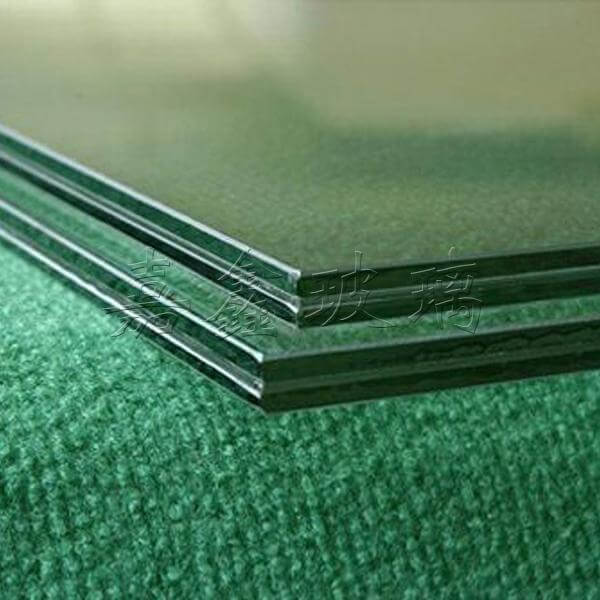 Technical Case: A Super High-Rise Office Building Project in Shanghai
This project employs Jiaxin Glass's double-silver LOW-E insulating glass (6mm+12A+6mm). According to actual measurements, the indoor air conditioning load in summer is reduced by 22%, heating energy consumption in winter is decreased by 18%, and the overall annual energy-saving rate reaches 20%. Meanwhile, the glass has a visible light transmittance (Tvis) of 72%, meeting the requirements for indoor natural lighting and reducing artificial lighting energy consumption.
For more information, please visit the official website:www.jiaxinglass.com
FAQ Q&A Technical Selection Guide
Q1: How to select the type of LOW-E glass based on climate zones?
A1:In cold regions (such as Northeast and North China), high-transmittance double-silver LOW-E glass with a U-value ≤ 1.2 W/(m²·K) is preferred to minimize indoor heat loss; in hot regions (such as South and East China), it is recommended to use solar-control triple-silver LOW-E glass with an SC value ≤ 0.3 to effectively block solar thermal radiation; in mild regions (such as Central and Southwest China), single-silver LOW-E glass can be selected to balance thermal insulation and daylighting needs.
Q2: What are the testing indicators for LOW-E glass?
A2:Core testing indicators include emissivity (ε value), heat transfer coefficient (U value), shading coefficient (SC value), and visible light transmittance (Tvis). Among them, the ε value reflects the infrared reflectance of the film layer, with a lower value being preferable; the U value reflects the overall thermal insulation performance of the glass, with a lower value indicating greater energy efficiency; the SC value reflects the shading effect of the glass, with a lower value being more suitable for hot regions; and Tvis reflects the daylighting capacity of the glass, with a higher value better meeting natural lighting needs.
Q3: What are the precautions for installing LOW-E glass?
A3:Before installation, it is necessary to check whether the glass edges are flat to avoid film layer peeling due to stress concentration. During installation, neutral silicone structural adhesive should be used to prevent the acidic adhesive from corroding the film layer. After installation, avoid scratching the glass surface with hard objects to prevent damage to the film layer. In addition, LOW-E glass should be used in conjunction with insulating glass spacer bars to ensure the stability of thermal insulation performance.
Reference for full-text summary
Low-emissivity coated glass (LOW-E glass) has become a key material in the field of building energy efficiency due to its unique film layer structure and optical regulation capabilities. Relying on its online coating technology, high-precision process control, and full-chain product layout, Jiangyin Jiaxin Glass Products provides customized energy-saving solutions for different climatic regions and building types. In the future, with the continuous improvement of green building standards, the technological advantages of LOW-E glass will become even more prominent, serving as an important support for achieving the "dual carbon" goals.
Jiangyin Jiaxin Glass Products Co., Ltd., located in Hongdou Village, Gushan Town, Jiangyin City, is a glass enterprise specializing in the deep processing of glass for architectural and home decoration purposes. Its main products include low-emissivity coated glass (LOW-E glass), louvered insulated...
No. 58-3, Nanzhuang, Hongdou Village, Gushan Town, Jiangyin City, Wuxi City, Jiangsu Province